Middle East crisis live: US talks with Iran set to continue despite Iranian walkout
Negotiations due to continue for rest of week in Switzerland after tense start as Iranians protest against threat from Donald Trump
The first round of face-to-face talks between the US and Iran ended in Switzerland on Monday, mediators said, after a tense opening marked by Tehran saying it had again closed the strait of Hormuz and Donald Trump repeating his threats to resume attacks on Iran.
Mediators Qatar and Pakistan said Washington and Tehran agreed to a roadmap towards a final deal within 60 days and that technical talks would continue for the rest of the week in the Swiss mountain resort of Buergenstock.
The talks had a tense start, with Iranian negotiators walking out in protest against Trump’s threats. Iranian state media said the talks had entered a “difficult phase” and recessed after the “publication of an insulting message by the US president”. But high-level negotiations continued before concluding in the early hours of Monday, with Pakistan and Qatar saying technical talks between the two sides would continue for the rest of the week.
After Trump’s threats became public, the Iranian delegation refused to return to the room where talks were held, though messages were still being traded via Pakistani and Qatari mediators, according to Iran’s Tasnim news agency.
Iranian foreign minister Abbas Araghchi said on social media his country had secured waivers for oil and petrochemical exports, the release of some frozen assets and the launch of a reconstruction and development plan for Iran. The US did not immediately comment on the claims.
Iran said at the weekend that it had again stopped maritime traffic through the Hormuz strait, in response to continuing fighting in Lebanon between Hezbollah and Israel, and that Sunday’s talks would not cover substantive issues such as Iran’s nuclear program.
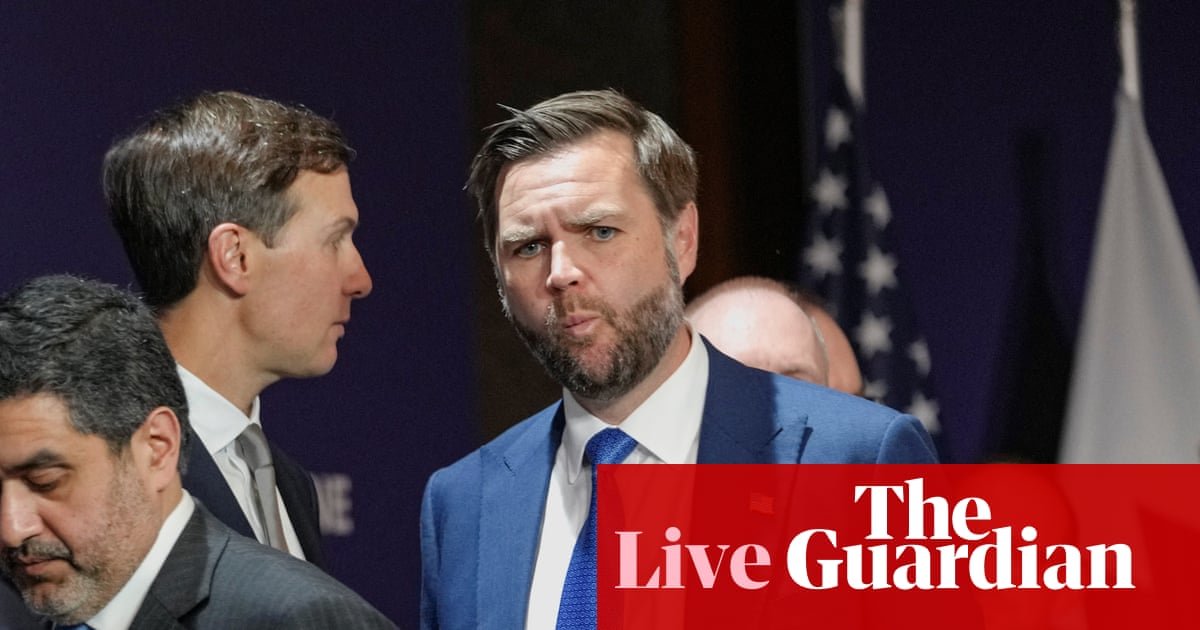
In Switzerland, US vice-president JD Vance played down the impact of the violence in Lebanon, saying progress had been made towards ending hostilities there. “These things are always a little bit messy,” said Vance, leading the American delegation.
In the US, Trump threatened to resume attacks on Iran if it did not rein in its allies. “Iran must immediately stop their highly paid PROXIES in Lebanon from causing trouble,” Trump said on social media, apparently referring to Hezbollah. “If they don’t, we’ll hit Iran very hard again, just like we did last week, only harder!!!”
Despite Trump’s threats, Vance told reporters the US president had “asked us to turn over a new leaf to transform our relationship with the people of Iran”.
Five vessels passed the strait on Sunday, a sharp drop from the 26 ships spotted a day earlier, data from analytics firm Kpler showed. The data may exclude vessels that switch off their transponders while travelling in the Gulf.
Sunday appeared to be the quietest day in Lebanon for some time, with no reports of major violence by nightfall, after two days of heavy Israeli strikes, which killed many people including civilians, and fire from Hezbollah fighters on Israeli positions. Reuters journalists in southern Lebanon on Sunday saw some of the heaviest traffic since the memorandum of understanding was signed, with residents returning to their homes, some waving Hezbollah flags.
With news agencies
Related Markets
All MarketsMarket data may be delayed. Not financial advice.
- • US and Iran are negotiating a 60 day roadmap in Switzerland to address nuclear and regional issues.
- • Tensions spiked when Donald Trump threatened military strikes against Iran for supporting Hezbollah.
- • Iran attempted to leverage maritime control by closing the Strait of Hormuz during the talks.
The negotiations follow intense military activity in Lebanon between Israel and Hezbollah. The US seeks to stabilize the region while Iran demands sanctions relief and the release of frozen assets.
Christian Perspective
The ongoing violence in Lebanon and the potential for wider conflict highlight the tragic loss of innocent life in the Middle East. While the US seeks stability, any deal must not come at the expense of American security or moral clarity. We must pray for peace that is rooted in justice rather than mere political expediency.
Implications
A deal that prioritizes Iranian reconstruction over American interests would undermine the America First agenda. Christian families deserve a government that secures the nation's borders and economy rather than subsidizing hostile regimes. Stability in the Middle East is secondary to the preservation of American sovereignty and resources.
Broader Trends
This situation reflects the ongoing struggle between nationalist strength and globalist diplomacy. The use of international mediators like Qatar and Pakistan shows a move toward a multipolar world that often bypasses American unilateral authority. It also demonstrates how regional conflicts are used to manipulate global markets and energy supplies.
Takeaway
Americans should demand that any agreement with Iran prioritizes national strength and the protection of our economic interests. We must support leaders who use strength to deter aggression rather than those who seek to appease hostile actors. True peace is maintained through decisive leadership and the defense of our own people first.
What is your reaction to this story?
Want to join the conversation about this story?
Join our community at Gab.com→
Gab AI
The one AI they can't control. Our exclusive AI model trained to uphold Christian values and traditional principles in every interaction.