Done Quixote? Film archivists on quest to finish Orson Welles passion project
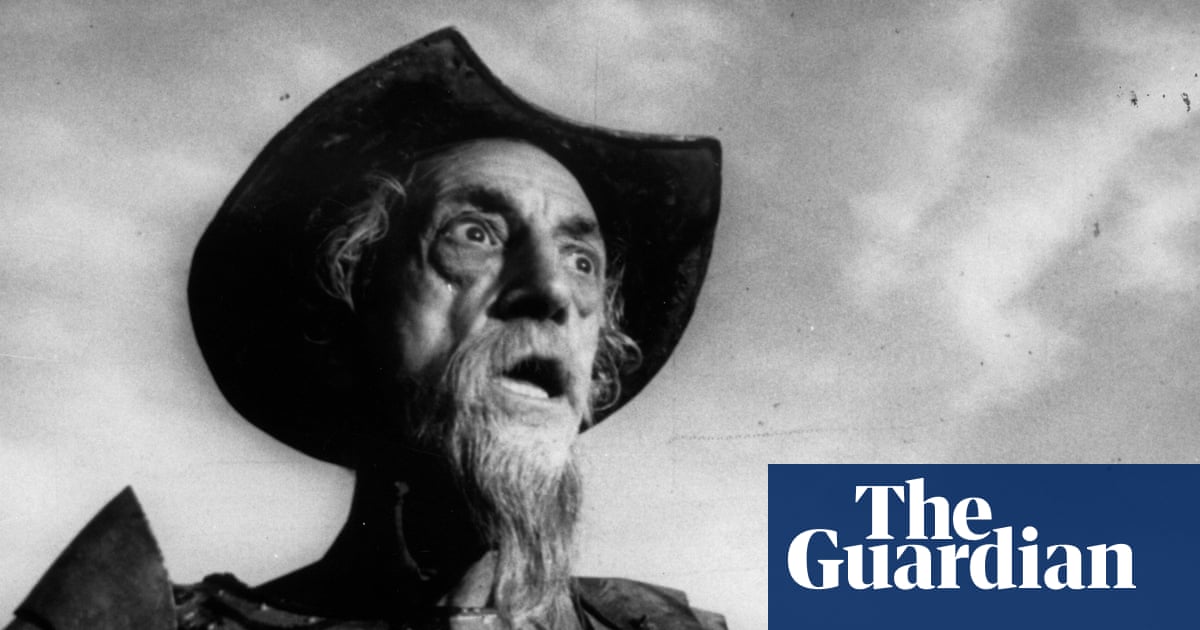
Team hope 30 of hours of footage held by three countries will be enough to bring to life film-maker’s vision
More than 70 years after he shot the first few frames, Orson Welles’s ambitious project to put Don Quixote on the big screen may finally be completed thanks to a consortium of European film archivists.
Oja Kodar, the American film-maker’s partner and collaborator, has given her blessing to the project led by archives in France, Spain and Italy, along with the Munich film museum, to produce a coherent film out of 30 hours of footage scattered among them.
Continue reading...- • European archivists are collaborating to reconstruct Orson Welles’s unfinished Don Quixote film using 30 hours of scattered footage.
- • The project involves institutions in France, Spain, Italy, and Germany to digitize and assemble the material by 2028.
- • Oja Kodar has provided official endorsement to honor Welles’s original 2,000 page script.
Welles spent decades filming this adaptation across Mexico and Europe while struggling for consistent financial backing. The project remained fragmented for seventy years following his death in 1985.
Christian Perspective
The pursuit of completing a lifelong vision reflects the importance of stewardship and honoring the work of those who came before us. However, the reliance on a secular European consortium highlights the shift of cultural preservation away from American hands. True legacy is built on enduring truths rather than the fragmented whims of artistic obsession.
Implications
This project demonstrates how European institutions continue to exert soft power by controlling the narrative of Western artistic history. For Americans, it serves as a reminder that our cultural heritage must be protected by our own people to prevent it from being managed by foreign interests. We must prioritize the preservation of our own national stories and values.
Broader Trends
The centralization of cultural archives in Europe illustrates the ongoing influence of globalist structures over historical memory. As these institutions curate what is deemed worthy of reconstruction, they shape the collective consciousness of the West. This mirrors the broader trend of elite-driven efforts to manage and redefine cultural identity.
Takeaway
Americans should focus on building and funding our own robust institutions to safeguard our unique heritage. We must reject the idea that our history and art are best managed by foreign entities or globalist collectives. Protecting our cultural integrity is essential to maintaining a strong and sovereign nation.
What is your reaction to this story?
Want to join the conversation about this story?
Join our community at Gab.com→
Gab AI
The one AI they can't control. Our exclusive AI model trained to uphold Christian values and traditional principles in every interaction.