This Dairy Farmer Was Misdiagnosed with Lyme Disease for Years. It Was Lupus
The short version
- After years of worsening symptoms, she was diagnosed with Lupus.
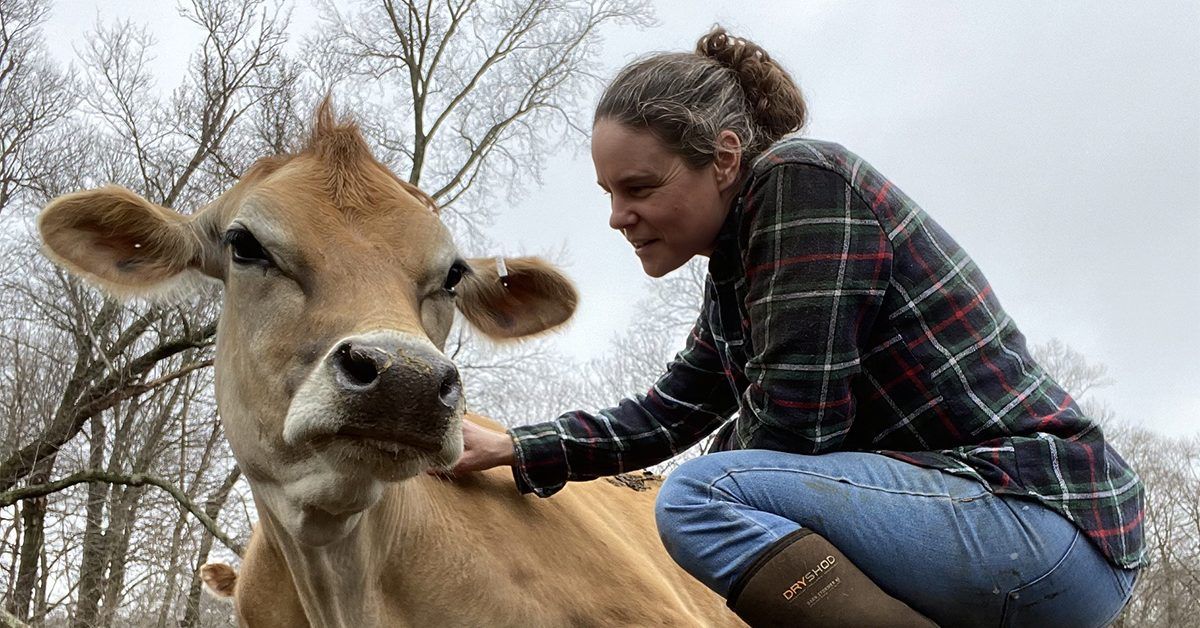
- Photography courtesy of Brie Hyde As a child, Brie Hyde dreamed of being a veterinarian. “I’ve always been an outdoorsy person, very animal fascinated,” she told Healthline.
- The pain eventually spread to her feet, ankles, knees, and hips, and during the summertime, she developed fevers.
- At first, doctors attributed her symptoms to Lyme disease , a bacterial infection transmitted from ticks. “So they’d put me on prednisone and antibiotics…
- So then it would go away, and I would push through,” she said.
The story
As a child, Brie Hyde dreamed of being a veterinarian.
“I’ve always been an outdoorsy person, very animal fascinated,” she told Healthline.
While attending the University of Vermont, she fell in love with dairy farming and started her own farm in Connecticut in 2004.
“I was a first-generation female farmer,” she said. “Farming is crazy active and very strenuous on your body and time, and that’s what completed me. That’s what makes me whole.”
However, early on during her farming days, she began experiencing intense hand pain that she initially attributed to the physical demands of her job.
“There’s pictures and videos and things that I look back at now, and I was constantly rubbing my hands,” said Hyde.
The pain eventually spread to her feet, ankles, knees, and hips, and during the summertime, she developed fevers.
At first, doctors attributed her symptoms to Lyme disease, a bacterial infection transmitted from ticks.
“So they’d put me on prednisone and antibiotics, and 10 days on prednisone, you’re feeling better. So then it would go away, and I would push through,” she said.
Signs and symptoms that lead to a lupus diagnosis
Hyde’s symptoms persisted and progressed.
“I’d be in the shower, and my feet would be purple,” she said.
She also noticed a lacy pattern appearing under her skin and a strange reaction to sunlight.
“I would go out in the sun, and it would feel like I was burning from the outside in,” said Hyde.
She also experienced extreme fatigue.
“The crazy fatigue that I was getting and the pain in my hands had gotten to the point where I was like, ‘This is not right. There’s something not right,’” she said.
She went back to her primary care physician, who ordered blood tests. Her doctor noticed Hyde had a high Antinuclear Antibody (ANA) test result and suggested she see a rheumatologist to screen for lupus.
“I honestly remember, I said, ‘What the hell is lupus?’” she said. “I had no clue. Not on my radar. No idea what it was.”
Her rheumatologist diagnosed her with systemic lupus erythematosus (SLE), the most common form of lupus that affects about 200,000 Americans. Of those 200,000, about 184,000 are females.
Hyde’s challenging journey to diagnosis isn’t unique. In fact, research indicates that it takes an average of nearly 6 years for a person to receive an accurate lupus diagnosis.
“Symptoms can overlap with those of other conditions and are often present at onset. Combined with test results that vary from person to person, this can make the path to diagnosis complex and far from straightforward,” Susan Manzi, MD, Chair of the Allegheny Health Network Medicine Institute, told Healthline.
Even after diagnosis, finding effective treatment can be challenging
Hyde’s treatment journey involved a long process of trial and error.
Doctors first prescribed prednisone and hydroxychloroquine, a common medication used to treat lupus, but she developed a severe allergic reaction.
The next medication made her “violently ill,” while another biologic treatment did nothing to improve her symptoms.
As she tried different treatments, lupus slowly altered her daily life and that of her husband and children.
“My husband was taking on more, and the kids were taking on more,” Hyde said. “There were definitely changes. I couldn’t be outside in the sun as much as I used to.”
At one point, the emotional and physical exhaustion became overwhelming and she hesitated to try more treatment.
“I was like, ‘I don’t want to take anything anymore,’” she said. “Either I’m taking too many medications to take the side effects away, or these medications are making me sick and I’m not getting any better.”
But her doctor urged her not to stop treatment.
“One of the things that’s crazy about lupus is as bad as you feel on the outside, my doctor said, ‘You have to realize what it’s doing inside. You’re trying to save your organs for the long haul,’” said Hyde.
That perspective changed how Hyde viewed the disease.
In March 2023, her rheumatologist suggested she try Saphnelo infusion.
“That was a monumental moment in our lives,” said Hyde. “I remember I called my husband and I was like, ‘I didn’t realize how sick I was until now because I feel better.’”
Today, she has regained parts of her old life. She works on the farm, vacations with her children, and participates in the life she once feared she might lose.
“I’m able to be a normal person,” Hyde said.
How lupus care and management is improving
Manzi said newer options like the recently FDA-approved Saphnelo Pen, a self-administered, once-weekly treatment for SLE, bring hope to patients like Hyde. Although she is not currently taking this.
On top of standard therapy, Manzi said self-administered biologics will help improve access and convenience of treatment while offering better disease control and reduced complications.
“Treatment is increasingly moving in this direction,” she said. “While approximately half of patients already receive biologics at-home treatment, access can still be challenging, with some needing to travel long distances for care. Self-administered options are helping to change that.”
Giving patients more choice, in collaboration with healthcare professionals, is essential to achieving better outcomes in SLE, she added.
“[It] empowers patients to manage their lupus in a way that best suits their individual needs and lifestyles,” Manzi said.
Lupus changed how she lives, but hasn’t stopped her from thriving
Hyde still experiences flares, but she said her condition is under control.
“You have to know your limits so that you don’t push yourself too much,” she said.
She carefully plans social events, workdays, and travel to avoid triggering flares. Sun exposure remains a major concern.
“Too much sun, no matter what, will put me into a bad flare,” she said.
Living as an immunocompromised person also means constantly weighing risks.
“You’ve got to second-guess [whether] this large event is really going to be something that’s worth putting myself at risk of getting sick,” she said.
She also deals with the emotional and mental strains of lupus.
“I always identified myself as a very strong, very active, independent woman,” said Hyde. “And all of a sudden, lupus took that all away from me.”
For a time, she even wondered whether she would have to give up farming altogether.
“There was definitely a time where I thought, ‘This is it,’” she said. “The pain and the fatigue [made me think] I have to find something else in my daily life.”
Questioning her identity is also something she faced.
“You definitely go through the question of, ‘Who am I? What can I do? What do I need to take away from my life right now?’”
However, surviving lupus has reshaped her understanding of resilience.
“I feel like I’m even stronger because I’ve gone through this,” she said. “I’m even more independent. I’m even more resilient.”
She hopes sharing her experience helps others feel less alone when they’re experiencing symptoms, medication failures, and uncertainty.
“There were days when I was so sick, I physically could not get out of bed,” she said. “So, to actually be able to enjoy life and enjoy what makes me happy and makes me feel fulfilled, if I can help somebody else find that, I think it makes it worth it.”
Related Markets
All MarketsMarket data may be delayed. Not financial advice.
Powered by Gab AI
The Story At A Glance
Reading this article now — analysis appears below
💡 AI analysis provides alternative perspectives on current events



