A Small Lump in Her Neck Led to 2 Rare Tumors and a 24-Hour Surgery
The short version
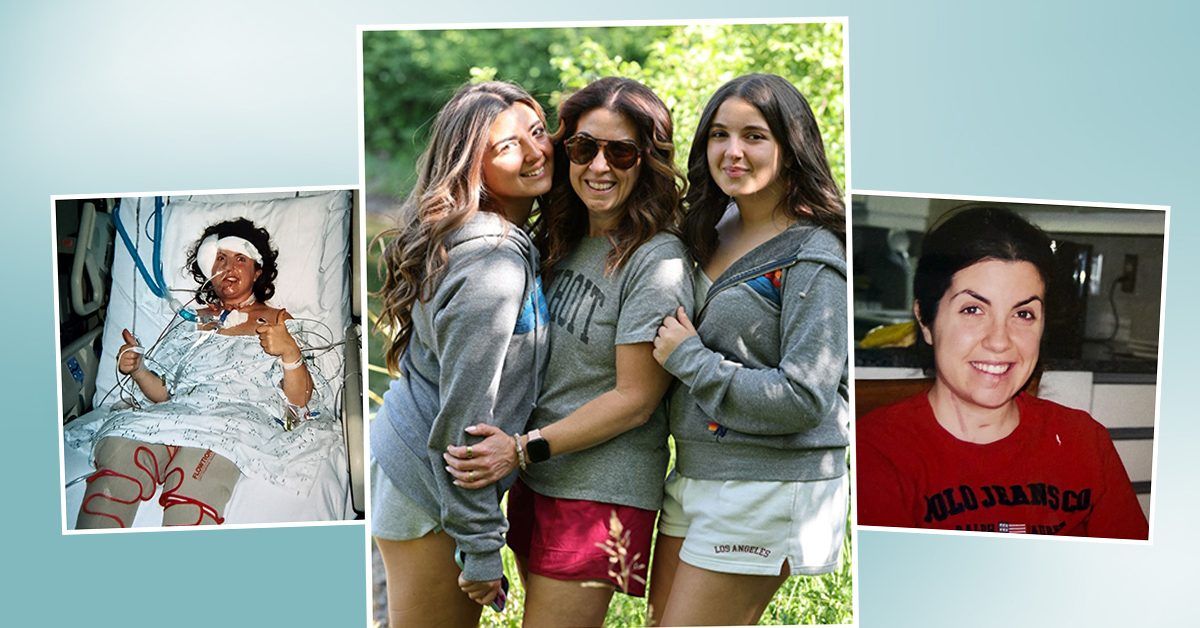
- Now, she is a thriving mom of two daughters.
- Image Credit: Photos by Jayme Cohen Lynde/Collage by Andrew Nguyen A lump in Jayme Cohen Lynde’s neck led to a carotid body tumor diagnosis and a second rare tumor called a…
- Surgery to remove the paraganglioma lasted 24 hours and required months of recovery, including relearning how to speak and swallow.
- Years later, doctors discovered a recurring tumor and a new tumor during routine follow-up care.
- After seeking a second opinion, Cohen Lynde and her doctor opted to monitor the recurring tumor rather than pursue radiation treatment.
The story
- A lump in Jayme Cohen Lynde’s neck led to a carotid body tumor diagnosis and a second rare tumor called a paraganglioma.
- Surgery to remove the paraganglioma lasted 24 hours and required months of recovery, including relearning how to speak and swallow.
- Years later, doctors discovered a recurring tumor and a new tumor during routine follow-up care.
- After seeking a second opinion, Cohen Lynde and her doctor opted to monitor the recurring tumor rather than pursue radiation treatment.
In 2000, Jayme Cohen Lynde was finishing her junior year at Michigan State University when she noticed a lump on the side of her neck.
While she was largely symptom-free, she followed up with a specialist and learned she had a carotid body tumor, a rare growth that develops near the carotid arteries in the neck.
Because the tumor was benign (noncancerous), her doctors told her she could finish the school year and spend the summer in New York for an internship.
When she returned home in August, she expected to undergo a relatively minor surgery with a short recovery. Instead, the specialist who treated her wasn’t convinced they had the full picture.
“The weekend before the surgery, [the specialist] had me do all these extra tests,” she told Healthline. “What we found out was, not only was there a carotid tumor living on my carotid artery, but there was a paraganglioma tumor that was living on the base of my skull.”
Paragangliomas are rare neuroendocrine tumors that can develop in various parts of the body, including along cranial nerves.
Because the paraganglioma appeared to be growing slowly, doctors decided to remove the carotid body tumor as planned first and allow Cohen Lynde to complete her senior year of college before addressing the second tumor.
“It was an 8-hour surgery, and it took me [about] a week to recover,” she said.
Cohen Lynde returned to school, completed her senior year, and began preparing to move to New York City for a job in advertising.
A follow-up MRI with contrast, however, revealed that the paraganglioma was affecting blood flow to her brain. Doctors believed she needed another surgery before moving forward with her plans.
Surgery hindered her ability to speak, swallow
When she met with her doctor, he outlined two possible approaches.
He explained that one option would be to operate directly through her skull. However, the risks included stroke, long-term complications, and even death.
The second option involved assembling a team of specialists, including a second ENT and a plastic surgeon, to access the tumor through her mouth. The surgery would require removing a tooth, breaking her jaw, and opening part of her face to reach the tumor.
The tradeoff was that she would need a feeding tube and a tracheostomy. She also wouldn’t be able to speak because the surgery would affect her vagus nerve. However, her doctor believed she would eventually recover, even if he couldn’t predict exactly how long it would take.
Cohen Lynde chose the second option. What was expected to be a 12-hour surgery ultimately lasted 24 hours. However, doctors were able to remove the entire tumor.
Recovery became her full-time job
When she woke up after surgery, Cohen Lynde couldn’t talk. She had a feeding tube in her nose and couldn’t perform many basic tasks independently.
“Even two weeks later, when I was home, my mom had to get in the shower with me,” she said.
Recovery became her full-time job. Cohen Lynde couldn’t speak for around 10 months, and her feeding tube was eventually moved from her nose to her stomach.
Once she had healed enough, she began working with an ENT specializing in the vocal cords. He developed an implant for her right vocal cord, and she worked with a speech therapist several times a week as she relearned how to speak, swallow, and eat.
“I made my parents take pictures of me. They weren’t happy about that. But I had them take pictures once a week, because I wanted to see that I was recovering. I wanted to see the swelling going down, and I needed to see somehow that I was healing,” Cohen Lynde said.
Though swallowing remains difficult for her today, she made it through the long recovery by focusing on her goal of moving to New York and building a career in advertising — a goal she ultimately achieved.
Recurrence brought new challenges and a second opinion
While Cohen Lynde built her career in advertising and became a mom to two daughters, she continued to receive annual checkups. A
lthough her surgeries had been successful, she still required ongoing monitoring to watch for tumor recurrence.
Years later, during a telehealth appointment, Cohen Lynde learned that one of her tumors had recurred and that she had developed a new tumor behind her ear. She also learned that her doctor had discovered the recurrence a year earlier.
She was stunned to learn not only that the tumor had recurred, but that her doctor was recommending radiation therapy.
The recommendation didn’t sit right with her. At 45, she was otherwise healthy and worried about how radiation treatment might affect her ability to care for her daughters as a single mother.
Because she felt uncomfortable moving forward, she decided to seek a second opinion.
“Getting a second opinion is one of the most important steps a patient can take when facing a serious diagnosis or treatment plan. Medicine is not always clear-cut and can be nuanced,” Robert Glatter, MD, attending physician in the Department of Emergency Medicine at Lenox Hill Hospital in New York City, and assistant professor of Emergency Medicine at Zucker School of Medicine at Hofstra/Northwell, told Healthline.
He noted that different physicians may interpret the same test results differently, recommend alternative treatments, or even arrive at a different diagnosis altogether.
“A second opinion can confirm that the original plan is the right one — or it can open the door to less invasive options, newer therapies, or a completely different approach,” he said. “Patients should know that asking for a second opinion is not rude or disrespectful. Most physicians welcome it. A good doctor wants their patient to feel certain about their care.”
Cohen Lynde eventually found another specialist using Healthgrades, a member of the RVO Health family of brands.
After reviewing her history, the physician agreed that radiation wasn’t necessary at that time.
He explained that the recurring tumor was growing extremely slowly, about 1 millimeter every other year. Together, they decided to continue monitoring it rather than pursue treatment immediately.
As for the new tumor behind her ear, he believed it could be removed through a relatively straightforward surgery with a short recovery.
“He was amazing, he was great with me. I’m like, this is the best conversation I’ve ever had with a doctor,” she told Healthline. “[He] was by far the most incredible doctor I’d ever been to in my life.”
She underwent the procedure and this time, recovered quickly.
Advocating for your health can make a difference
Cohen Lynde said she hopes sharing her experience will inspire others to advocate for themselves, trust their instincts when something doesn’t feel right, and get a second opinion.
“Patients and loved ones aren’t [often] thinking about a second opinion. They just want to check off their list,” said Cohen Lynde. “[They’ll] go to the doctor, and they’ll just listen, potentially, or maybe not even listen to whatever that doctor says, and just go on with their day.”
Looking back on her experience, Cohen Lynde believes it’s important for patients to slow down, ask questions, and seek additional perspectives when something doesn’t feel right.
For her, taking the time to get a second opinion made all the difference.
Jayme Cohen Lynde is currently the Senior Director of National Accounts for the sales team at RVO Health, the parent company of Healthline.
Related Markets
All MarketsMarket data may be delayed. Not financial advice.
Powered by Gab AI
The Story At A Glance
Reading this article now — analysis appears below
💡 AI analysis provides alternative perspectives on current events



