EMT Simone Kelly On the Opioid Overdose That Went Viral: ‘Don't Be a Bystander’
The short version
- Here, she shares her passion for treating addiction.
- Kelly, 24, a pre-med student and volunteer EMT, is pursuing a calling in emergency psychiatry and addiction.
- Courtesy of Simone Kelly Simone Kelly was off-duty during the New York Knicks celebration parade in Lower Manhattan when she climbed a subway platform at the World Trade Center to…
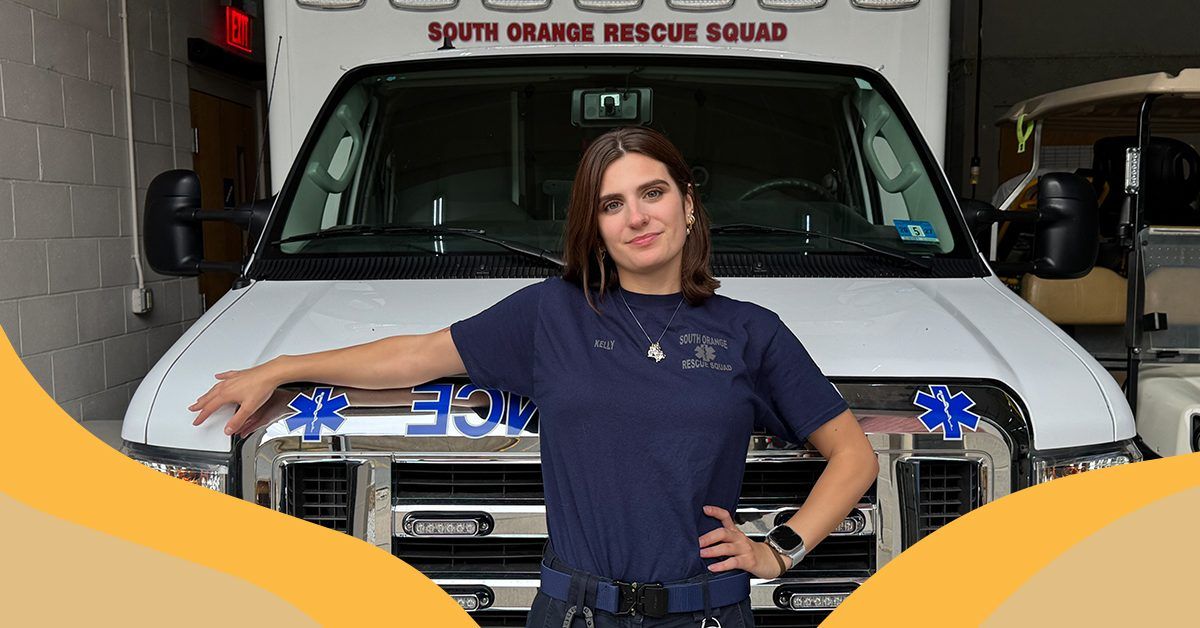
- Kelly, a 24-year-old volunteer EMT with the South Orange Rescue Squad in New Jersey, and a pre-med student at Drew University, captured the attention and hearts of millions.
- Her act of heroism demonstrated that anyone can step in during an opioid emergency .
The story
Simone Kelly was off-duty during the New York Knicks celebration parade in Lower Manhattan when she climbed a subway platform at the World Trade Center to save a man’s life with Narcan on June 18.
Kelly, a 24-year-old volunteer EMT with the South Orange Rescue Squad in New Jersey, and a pre-med student at Drew University, captured the attention and hearts of millions. Her act of heroism demonstrated that anyone can step in during an opioid emergency. Kelly was joined by another anonymous healthcare worker and several others.
“It was a bit chaotic — people in the crowd were just throwing things they thought might help,” Kelly told Healthline.
“A bottle of water came up, and we poured that on him, hoping he’s just overheating from hyperthermia. Then someone tossed up Narcan, and I was glad there was someone else in the crowd who was gauging what this could be. At that point, there is no harm in administering Narcan, so that is what we did,” she said.
Kelly said she normally carries intranasal naloxone with her everywhere, but that day, she left it at home to lighten her load at the parade.
“It’s on my keys. It’s very bulky, and my keys have broken numerous times, not necessarily from the Narcan. But that day I did not have it,” Kelly said. “I remember standing in my kitchen with my keys in one hand and the Narcan in the other, like I don’t have pockets, I can’t bring a bag. I’ve always brought it, but never had to use it on the street.”
Kelly’s passion for treating those with addiction is evident. She’s studying neuroscience with a minor in psychology and chemistry, and says she’s found some of her favorite people riding the ambulance as an EMT.
Her calling, she says, is in emergency psychiatry and addiction.
“On the ambulance, I find a certain type of compassion and empathy toward those patients that — from my experience out in the world — not everyone has, so it is my belief that if you have the patience and the bandwidth to work with people who need help in that way, you should 100% go into it,” Kelly said.
“So I’ve really been dedicating a lot of my time to uplifting those communities and empowering those voices.”
And Kelly wasted no time in doing just that. As an advocate for OnPoint NYC, an organization that provides people who use drugs with clean syringes, overdose prevention, and nonjudgmental health services, she’s helped raise nearly $8,000.
Healthline spoke with Kelly to learn more about what happened during the viral moment and how it inspired her to speak out about addiction. This interview has been lightly edited for clarity and length.
What were the signs of an overdose that prompted you to act?
Kelly: Unresponsiveness, like if someone is passed out and not responding, there are a few different directions it can go. If you want to tell if it’s an opiate overdose, you’re going to look at their eyes and their pupils. If they’re very constricted and small, that’s usually a telltale sign of opiate overdoses.
I’m not saying there aren’t other reasons someone might have constricted pupils. But when you have someone unresponsive with pinpoint pupils, and on top of that, you see shallow, slow breathing — that’s what I saw up there, that’s what prompted me to use the Narcan.
Were you surprised that the rescue went viral?
Kelly: I think there was an inkling in the back of my mind when we were up there, and there were so many phones recording us that I had a feeling that I might come across this again.
I had no idea the magnitude, nor the opportunities and doors that have opened to continue this conversation and empower others to take action. It has turned into a platform where I can discuss harm reduction and get in touch with those who feel strongly about it, and meet with organizations and coalitions working on the front lines.
There have been numerous people who have reached out to say thank you for what you’ve done, like one person who said, “It touched me greatly because no one was there for my brother last year when it happened to him.”
What doors has the rescue opened for you?
Kelly: Our New Jersey Congresswoman, Analilia Mejia (D) spoke about this event during a congressional hearing and she mentioned my name.
I was also just in the New York City Health Commissioner’s office [Alistar F. Martin, MD], and I was able to have a conversation with him about the events that transpired, and I picked his brain about everything that happened on top of that platform, like, “Hey, what would you have done? This is what I saw, what if it was this? What if I was wrong?”
Every time you do any sort of medicine, there’s always in the back of your head, “I could be wrong, this could be wrong, I’m not right,” and you just need to kind of shove that to the back of your mind.
That’s why that talk with the Commissioner was so important, because it was like, “Oh, this seasoned physician who’s been doing this for decades would also do the same thing. OK, I can stop beating myself up about it, that maybe all this attention is fraudulent, because “what if it wasn’t an overdose?” has definitely been on my mind.
Why are you passionate about OnPoint NYC?
When I was just getting a lot of attention on my profile and people were starting to remember my name, I wanted it to be associated with a cause that I felt strongly about. At the moment, I am not a stakeholder in what they do; I am just a fan girl in awe of the work they’re doing to reach those who are not ready to accept help.
If someone is ready, we can find them treatment, we can put them in detox, we can get them started on meds, we can put them in a 12-step program — there are many supportive measures we can do when someone is ready to admit that they have a problem or they want to get help.
But we’re not reaching the communities that are out there dying by the millions because they do not see it as a problem. We aren’t reaching the people who are arguably the highest risk population for these types of overdose events, because we’re kind of just turning a blind eye, like, well, when they’re ready, they can come to us.
What OnPoint does is engage in something called harm reduction. Condoms for sex is a form of harm reduction. They’re acknowledging that people will do this anyway, so how can we minimize the risk?
People are going to use drugs whether we like it or not. How can we make sure that they’re doing it in a safe spot, that they can test their drugs, that, if they overdose, they’re not being ignored?
They are really doing God’s work out there, like they’re doing the heavy lifting, they’re tending to populations that have fallen through the system’s cracks.
What do you hope people will take away from what happened?
Kelly: This man could have just as easily been on the ground, and we would have turned our heads and kept walking, and that would have been a life that we lost.
Only when there’s public attention do people really start to consider the possibility that they could be of service in an everyday occurrence. Don’t be a bystander. Addiction is not a choice, and it is a painful experience to be someone with addiction, a cycle that I don’t think anyone chooses to be in.
Instead of scoffing or turning our heads, we have the option to be compassionate and treat them like we would treat a neighbor or anyone else, because who am I to look at someone who engages in self-medication and say you are less than me. I think we could be much more tolerant.
Related Markets
All MarketsMarket data may be delayed. Not financial advice.
How this story developed
Full timelineAlto has tracked this across 2 days of coverage from 1 outlet.
- EMT Simone Kelly On the Opioid Overdose That Went Viral: ‘Don't Be a Bystander’You are here
Powered by Gab AI
The Story At A Glance
Reading this article now — analysis appears below
💡 AI analysis provides alternative perspectives on current events



