Heart Failure Care Was Hours Away in Rural Missouri. Remote Monitoring Changed That
The short version
- After surviving a heart attack, Angie Lindsey developed heart failure that required her to travel hours from her rural Missouri home for specialized care.
- An implanted remote heart-monitoring device now allows her care team to track changes in her heart health and adjust treatment without frequent hospital visits.
- Lindsey says the technology has helped her avoid hospitalizations, regain her independence, and return to the activities she loves.
- In 2019, at 59 years old, Angie Lindsey was getting ready for a family event when she felt exhausted and ill. “I felt dragged all day,” she said.
- Her daughter, who is a nurse, stopped by and took her vital signs. “I told her what was going on, and she said, ‘Well, Mom, I think we need to get you somewhere.
The story
- After surviving a heart attack, Angie Lindsey developed heart failure that required her to travel hours from her rural Missouri home for specialized care.
- An implanted remote heart-monitoring device now allows her care team to track changes in her heart health and adjust treatment without frequent hospital visits.
- Lindsey says the technology has helped her avoid hospitalizations, regain her independence, and return to the activities she loves.
In 2019, at 59 years old, Angie Lindsey was getting ready for a family event when she felt exhausted and ill.
“I felt dragged all day,” she said.
Her daughter, who is a nurse, stopped by and took her vital signs.
“I told her what was going on, and she said, ‘Well, Mom, I think we need to get you somewhere. I don’t know, your heart sounds okay, but something’s not right,’” recalled Lindsey.
They went directly to the emergency room, where doctors first suspected a pulmonary embolism. However, bloodwork revealed that Lindsey’s troponin level, a marker of heart damage that should be close to zero, was 4,400.
Doctors determined she was having a massive heart attack. Because she lives in a small town in Missouri, they transported her 45 miles to a hospital equipped to treat her. Two days later, doctors placed a stent.
The heart attack left her with congestive heart failure and a battle with fluid retention. Her condition forced her to retire from her job as a nursing home administrator.
Managing heart failure in a rural community
After her heart attack, Lindsey continued to face other health challenges. Near the end of 2022, she spent a month in the hospital as her gallbladder threatened to rupture and her organs began to suffer.
In January 2026, she had severe fluid retention that caused her to gain 29 pounds in 12 days.
“A gallon of milk weighs eight pounds, so figure three, eight gallons of milk around your neck, your chest, your heart. It was not very comfortable,” she said.
To manage her ongoing heart issues, she found a specialist at Mercy Hospital South near St. Louis, which was 2 and a half hours away. The doctor fitted her with a 30-day heart monitor but couldn’t pinpoint what was triggering her episodes.
Sitting in her cousin’s home after an appointment in St. Louis, she found herself sinking into a hard question.
“I remember sitting there…getting really sad, thinking, ‘Is this how my life is going to be? I’m just going to exist,’” she said.
How remote heart failure monitoring works
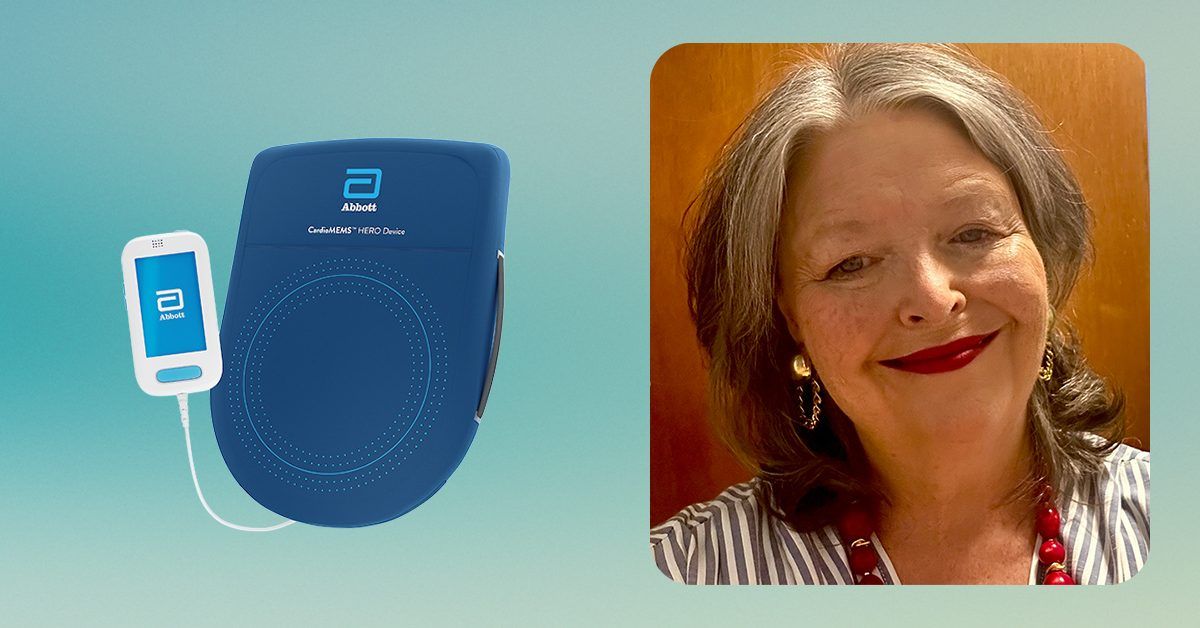
In April 2026, Lindsey received Abbott’s implanted, paperclip-sized pulmonary artery (PA) pressure sensor called CardioMEMS HERO Device.
The sensor is implanted near the heart, where rising PA pressures signal worsening heart failure, and works remotely, taking Lindsey’s PA pressure readings and sending the data to her care team. The readings notify her doctors of any concerning findings, allowing her to be monitored without having to drive hours for care.
The procedure was quick and outpatient, requiring her to be in the hospital for only a few hours.
“It was explained to me that it would be minimally invasive,” Lindsey said. “It’s not going to fix my heart, but it’s going to help them manage it much better.”
Charles Carey, MD, cardiologist and medical director of the heart failure program at Mercy South in St. Louis, said the device works when the patient lies on a pad or pillow in the morning. This triggers a radio-frequency signal to the lung artery sensor, which then determines the pulmonary artery pressures.
“There is no battery required in the sensor, and it can last the life of the patient,” he told Healthline. “Once a patient undergoes a reading, the result is sent automatically to our office.”
Just days after going home, Lindsey’s care team called with a reading that was running high and walked her through an adjusted medication plan over the phone.
“We try to maximize guideline-directed medical therapy, but the most common treatment is increasing diuretics, which help remove extra sodium and reduce the left atrial filling pressures,” said Carey. “Our goal is to have them avoid going to the emergency room or the hospital by adjusting medicines to prevent heart failure symptoms.”
While he believes the technology is useful in urban areas, he said it’s even more advantageous in rural areas where it’s harder to see a doctor or nurse practitioner close to home.
“I think heart failure, which you have to live with every day, has even more benefits since this technology allows us to assess easily while the patient is at home, and can be done daily,” Carey said. “This data improves patient care and supplements our care and data. It gives us useful data that we cannot obtain just by history or physical exam alone.”
By Lindsey’s next virtual visit, her numbers were back to normal.
“I know the device works…and it gives me confidence that I know they can address it, so I don’t end up in the hospital,” she said.
Quality of life can improve with remote heart monitoring
Lindsey’s newfound confidence has changed the shape of her days.
“I don’t feel like I have to sit in my home and not do anything. I feel like I can get out, and I can go. I can live a normal life as best I can. But I also know they’re monitoring what’s going on, so if I have real problems, they’re gonna know,” she said.
Every morning, before she gets out of bed, she takes a reading with the device that takes less than five minutes.
“I even timed it; four minutes and 43 seconds, from the time I turned it on until the reading was sent,” Lindsey said.
With that daily reassurance, she is back to doing the things she’d quietly given up. She took a trip to the ocean, which she said is her “happy place,” and traveled alone for the first time in years for a cousins’ reunion over the Fourth of July, taking in fireworks and an outdoor opera in St. Louis.
“I got to get out and get in the pool and just have a good time and not worry about, is my heart okay? Am I doing okay?”
More trips are on the calendar, including one she can hardly believe: a flight to Arlington, Texas, with her daughter to see the boy band BTS, followed by a trip to San Francisco, for an Abbott town hall, where she will participate as an Abbott ambassador.
“I haven’t flown in over 50 years,” Lindsey said.
Finding purpose while living with heart failure
When Lindsey retired due to her heart health, she leaned on watercolor painting, something she hadn’t touched since junior high. Her first attempt at painting birds didn’t go the way she’d hoped.
“They just looked like blobs on the page,” she said. “I said, ‘Lord, do you think you could do something with my hands and my eyes and help me paint something better?’”
To her surprise, hours later, she finished her first piece, a set of bluebirds, that she still keeps close by. Since then, her paintings of birds, nature, and people’s personal pets have found their way into a local art festival, a one-woman show, and homes across the country.
“It has given me an outlet and kept me hopeful and kept me feeling useful,” Lindsey said. “Having health issues as you get older is not easy, and sometimes it gives you less reason to get up in the morning and less reason to take care of yourself.”
She said the Abbott device has given her the opportunity to live life through paintings, the trips, and the mornings by the ocean, and she hopes others going through similar health issues feel inspired.
“[God] has given me a way to help others and let them see hope,” she said.
Related Markets
All MarketsMarket data may be delayed. Not financial advice.
Powered by Gab AI
The Story At A Glance
Reading this article now — analysis appears below
💡 AI analysis provides alternative perspectives on current events



