Moderna, Merck Melanoma Vaccine May Help Reduce Recurrence, Spread
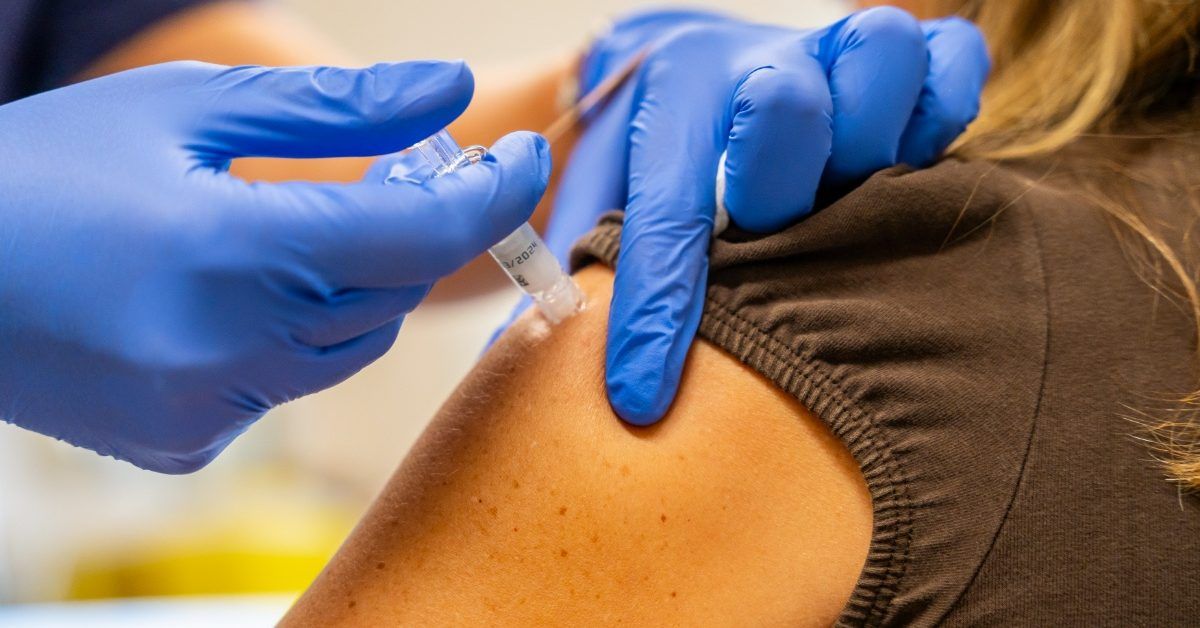
- A late-stage trial found that a personalized mRNA therapy for melanoma outperformed Keytruda alone on two important measures of treatment success.
- The experimental treatment is tailored to the unique mutations in each patient’s tumor to help the immune system recognize and attack cancer cells.
- Experts say the findings are encouraging, but detailed results are still needed to understand the treatment’s potential benefits and safety.
Moderna and Merck announced August 19 that a phase 3 trial of their experimental personalized mRNA cancer therapy, intismeran, in combination with Keytruda (pembrolizumab), met two key endpoints in people with high risk melanoma.
The trial met its primary endpoint of recurrence-free survival, meaning the combination reduced the risk of melanoma returning or death compared with Keytruda alone. It also met a key secondary endpoint of distant metastasis-free survival, which measures the time before cancer spreads to another part of the body or death.
The companies have not yet released detailed efficacy or safety results from the phase 3 trial.
Previous phase 2b results found that intismeran plus Keytruda (pembrolizumab) was associated with a 49% lower risk of melanoma recurrence or death and a 59% lower risk of distant metastasis or death compared with Keytruda alone.
“Today’s results represent a landmark moment for adjuvant melanoma treatment,” Georgina Long, AO, PhD, Medical Director of Melanoma Institute Australia (MIA) and the study’s principal investigator, said in a press release.
“This is the first Phase 3 study to show that intismeran, a treatment designed based on the unique mutational ‘fingerprint’ of a patient’s own tumor, given in combination with pembrolizumab, can reduce the risk of recurrence or death in patients with completely resected stage IIB-IV melanoma compared to KEYTRUDA alone,” she said.
How does a personalized melanoma vaccine work?
Intismeran is an investigational, custom-made vaccine being studied in people with high risk, resected cutaneous melanoma. The vaccine is manufactured individually for each patient.
Intismeran uses messenger RNA (mRNA) technology to encode up to 34 patient-specific neoantigens. Neoantigens are new proteins that form when mutations occur in tumor DNA. They are identified by sequencing each person’s tumor.
The vaccine is designed to train T cells to recognize and target these neoantigens, priming the immune system. Keytruda is a PD-1 checkpoint inhibitor that helps the immune system recognize and attack cancer cells.
One way to think about the combination is that Keytruda releases the brakes on the immune system, while intismeran gives it directions to find the cancer.
The phase 3 trial is still ongoing, and intismeran remains investigational and has not been approved by the Food and Drug Administration (FDA). According to the Moderna and Merck press release, the companies plan to submit the findings to regulatory authorities and present the full results at an upcoming medical meeting.
Implications for melanoma treatment
While the phase 3 results are encouraging, more detailed data are needed to understand how much the combination could improve melanoma treatment.
“These first Phase 3 findings for intismeran in combination with KEYTRUDA as adjuvant therapy reinforce the promise of a more personalized approach to cancer treatment,” Dean Y. Li, MD, president of Merck Research Laboratories, said in a press release.
Kim Margolin, MD, medical oncologist and medical director of The Borstein Family Foundation Melanoma Program at Providence Saint John’s Cancer Institute in Santa Monica, CA, who was not involved in the study, said the announcement is encouraging, but cautioned that it is difficult to assess the clinical significance without seeing the detailed data.
“Several important questions remain. First, we need to establish how much additional benefit the personalized mRNA therapy provides compared with established adjuvant immunotherapy. A statistically significant improvement is important, but the magnitude of the benefit and its durability are ultimately what matter to patients and clinicians,” Margolin said.
“Safety is another major consideration. Immune-based treatments can produce immune-related adverse events because activation of the immune system can sometimes result in attacks against normal tissues. We would need to know whether adding an individualized neoantigen vaccine increases the frequency or severity of these toxicities, including potentially new autoimmune complications,” she added.
The findings suggest that personalized mRNA therapies could eventually play a role in melanoma treatment. However, more detailed efficacy and safety data from the phase 3 trial are needed to determine the potential clinical benefits and risks.
Related Markets
All MarketsMarket data may be delayed. Not financial advice.
💡 AI analysis provides alternative perspectives on current events



