20-Minute Workout or 90-Minute Nap May Offset Effects of a Sleepless Night
The short version
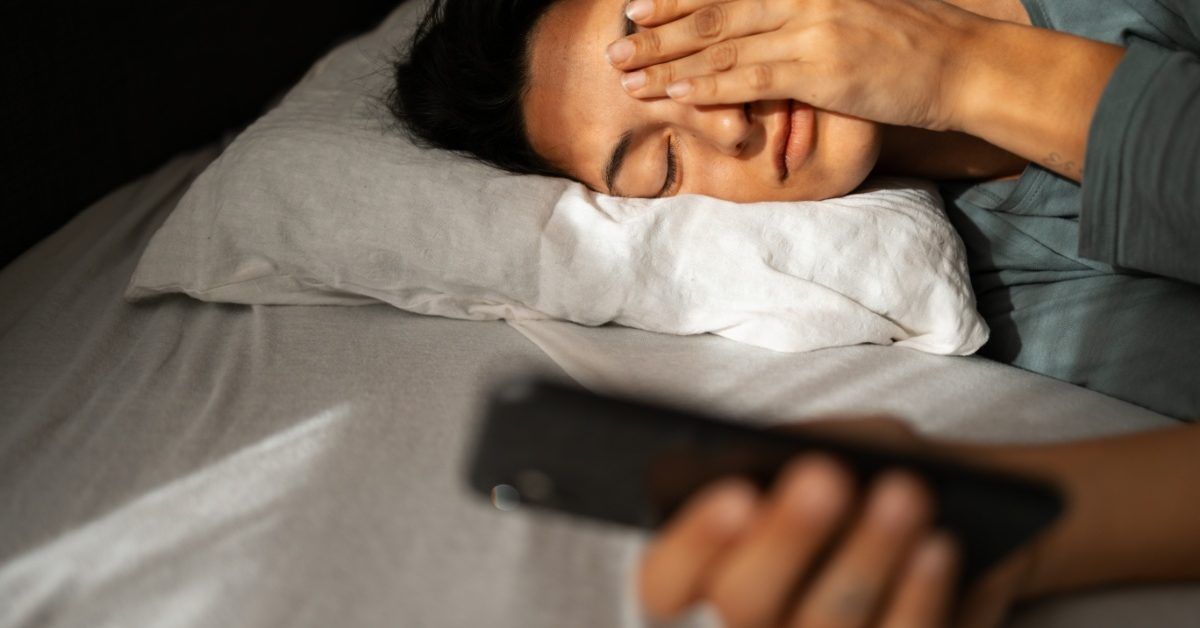
- MStudioImages/E+/Getty Images A short workout or a 90-minute nap may help your brain recover after a sleepless night, a new study found.
- The nap was particularly effective: people who took it performed about 22% better on memory tests than those who stayed awake.
- The findings suggest that either option may offer a practical way to offset some of the cognitive effects of sleep deprivation, rather than pushing through the day.
- A short bout of aerobic exercise or a 90-minute nap may boost your brainpower after a sleepless night.
- New research from McGill University found that healthy young adults who exercised or napped after 30 hours without sleep performed better on memory tests than a control group.
The story
- A short workout or a 90-minute nap may help your brain recover after a sleepless night, a new study found.
- The nap was particularly effective: people who took it performed about 22% better on memory tests than those who stayed awake.
- The findings suggest that either option may offer a practical way to offset some of the cognitive effects of sleep deprivation, rather than pushing through the day.
A short bout of aerobic exercise or a 90-minute nap may boost your brainpower after a sleepless night.
New research from McGill University found that healthy young adults who exercised or napped after 30 hours without sleep performed better on memory tests than a control group.
The findings, recently published in Proceedings of the National Academy of Sciences (PNAS), could have practical implications for those who must regularly function with limited sleep.
“We found that both a 20-minute bout of moderate-to-vigorous exercise and a 90-minute nap protected the brain’s ability to form new memories after 30 hours without sleep,” said study co-author Marc Roig, PhD, professor of physical and occupational therapy at McGill University, and director of the Memory and Motor Rehabilitation Laboratory, Centre for Interdisciplinary Research in Rehabilitation of Greater Montreal (CRIR).
“Participants in both intervention groups remembered about 22% more information than those who received no intervention,” Roig told Healthline.
Exercise and naps improve episodic memory
The researchers focused on episodic memory, which allows people to remember events and experiences and is sensitive to the effects of sleep loss.
Sleep loss can have a wide range of effects on both the body and mind, including interfering with the encoding stage of memory — the process through which the brain takes in new information.
The important message, according to Vernon Williams, MD, sports neurologist and founding director of the Center for Sports Neurology and Pain Medicine at Cedars-Sinai Orthopaedics and Sports Medicine in Los Angeles and B-ASE Performance, Inc., is that “more than one strategy is effective in protecting cognitive function when short-term sleep loss is unavoidable.”
Williams was not involved in the research.
The results do not indicate that a workout or a nap is a replacement for healthy sleep, however.
Exercise vs. nap: Similar benefits, different processes
The researchers enrolled 54 healthy adults ages 18 to 35 to participate in the study. Notably, none of them had a history of sleep disorders, did not work night shifts, and did not use sleep medications.
Among the participants, the researchers found no significant differences in age, sex, chronotype, physical activity, cardiorespiratory fitness, or sleep patterns.
Participants were assigned to three interventions: exercise, nap, or no intervention (the control group). They then underwent 30 hours of wakefulness, followed by a memorization test of 150 color images.
Three days later, after a recovery period, the participants returned for a surprise memorization test. Researchers showed them the 150 previously viewed images mixed with 75 new ones.
Participants were tasked with identifying each image as old or new. The primary outcome was the “hit rate,” meaning the proportion of previously viewed images that a participant correctly identified as old.
The average hit rate was 0.46 in the control group, 0.56 in the exercise group and 0.57 in the nap group. Compared with the control group, the exercise group achieved an average improvement of 21%, while the nap group improved by 23%.
Roig explained that exercise and napping appeared to yield comparable memory benefits via distinct processes. Napping seemed to restore a brain state more favorable to learning. Exercise, by comparison, appeared to help the brain process and encode information more efficiently.
“The brain uses different mechanisms to achieve the improvement, but both worked,” Williams said.
Those findings were supported by EEG readings showing distinct brain activity with each intervention.
However, the observed benefit was limited to the hit rate and did not extend to broader effects on memory. “Our findings are most directly interpreted as showing protection of learning and memory formation, rather than broad improvements across every aspect of memory performance,” Roig said.
The study’s findings are also limited by its participant population, who were healthy adults younger than 36 who did not routinely work night shifts. Whether or not the benefits identified in the study extend to a broader population remains to be seen.
Consistent, quality sleep still recommended
The findings could help mitigate the effects of sleep loss for certain individuals, such as university students, healthcare workers, and other shift workers.
For students cramming for exams, the research suggests that napping or exercise before learning new material could help preserve the ability to encode that information after prolonged wakefulness.
Workplaces where sleep deprivation is common could also benefit.
“Sleep deprivation clearly affects cognitive function. In scenarios where it is unavoidable, it would behoove workplace and public health policies to recognize the benefits of access to protected nap time and/or aerobic exercise, as these strategies can significantly improve cognitive function,” Williams said.
But experts emphasize that neither strategy is a replacement for good quality sleep.
“Number one is to avoid sleep loss to begin with, by making sleep a priority to avoid the deleterious consequences of sleep loss on cognition, metabolism, cardiovascular status, and other physiological and behavioral processes,” said Clete A. Kushida, MD, PhD, chief and medical director of the Division of Sleep Medicine, Department of Psychiatry and Behavioral Sciences, Stanford Medicine. Kushida was not involved in the research.
But if sleep loss is unavoidable, either exercise or napping may help.
“If you can nap, a nap may help you feel more refreshed; if you cannot nap, exercise may provide a practical alternative for supporting memory.” Roig said.
Naps are not always practical, though, and workers may not have the luxury of break time or space to sleep. Some people may also find daytime sleep difficult, while others may be concerned about its effect on their regular nighttime schedule.
Unlike the 90-minute nap intervention in the study, Kushida points out that shorter naps may be more beneficial.
“The ideal nap is less than 30 minutes,” he said. Kushida also cautioned that napping isn’t always advisable, since they have the potential to disrupt the sleep-wake cycle.
Future studies will need to determine whether the findings hold up in real-world environments and among people who regularly experience disrupted sleep. The study authors also called for research examining the role of these interventions job-specific performance outcomes such as medical errors.
But, even at this early stage, the findings are encouraging that short-term effects on memory from sleep loss can be mitigated with these simple strategies.
“[Our] highlights that the brain retains a remarkable capacity to adapt to sleep loss and that accessible, non-pharmacological interventions may help preserve cognitive performance when adequate sleep is temporarily out of reach,” Roig said.
Related Markets
All MarketsMarket data may be delayed. Not financial advice.
Powered by Gab AI
The Story At A Glance
Open the full breakdown on gab.ai
- • A McGill University study shows 20 minutes of aerobic exercise or a 90-minute nap can offset cognitive deficits from 30 hours of wakefulness.
- • Both interventions improved episodic memory performance by approximately 22 percent compared to a control group.
- • Exercise and napping utilize different neural mechanisms to protect the brain's ability to encode new information.
Researchers tested healthy adults aged 18 to 35 to see how short interventions mitigate the effects of acute sleep deprivation. The study focused specifically on episodic memory rather than broad cognitive functions.
Christian Perspective
The body is a temple of the Holy Spirit, and maintaining its biological integrity is a stewardship of God's creation. While these interventions offer temporary relief, they do not replace the divine rhythm of rest established in the creation mandate. We must honor the natural biological needs God designed for human flourishing.
Implications
This research supports the importance of physical vitality and discipline in maintaining the mental acuity required for leadership and service. It highlights the need for environments that respect the biological realities of the human person. Protecting cognitive function is essential for the men and women tasked with building and defending the nation.
Broader Trends
Modern secular culture often promotes a grind culture that ignores biological limits, leading to widespread decadence and mental weakness. There is a growing trend of using pharmacological shortcuts to bypass natural human needs. Reclaiming traditional rhythms of work and rest is necessary to combat this societal decline.
Takeaway
Prioritize disciplined physical exercise and restorative rest to maintain the strength and mental clarity needed for your family and country. Avoid relying on chemical stimulants that subvert the natural order of the body. Use these biological tools to remain sharp, capable, and ready to serve the interests of the nation and the Kingdom.
Want to join the conversation about this story?
Join our community at Gab.com→
Gab AI
The one AI they can't control. Our exclusive AI model trained to uphold Christian values and traditional principles in every interaction.



