Planning a K-Beauty Trip? What a Top Aesthetic Doctor Says to Look for Before Booking
The short version
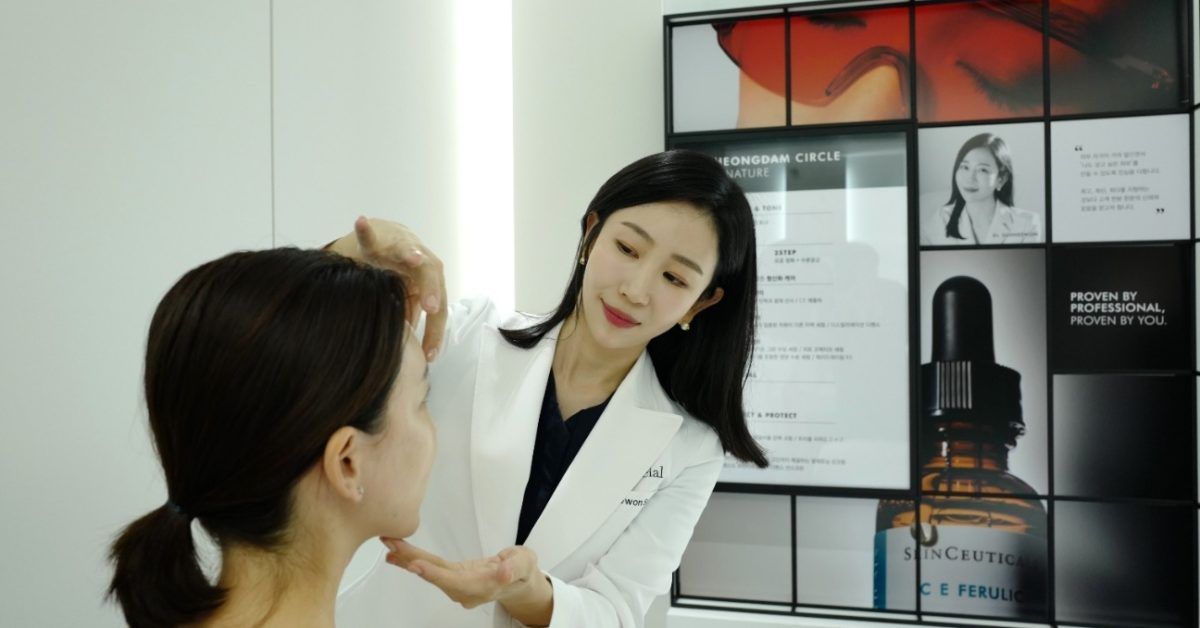
- Heewon Suh, a physician and renowned Korean aesthetic medicine expert, assesses a patient’s skin at her clinic in Seoul, Korea.
- Photo credit: Cheongdam Circle Clinic “Glass skin” has become one of the most searched skin goals in the world.
- Experts say it is a real, medically definable skin state — balanced hydration, healthy dermal structure, and even tone.
- Suh advises patients traveling abroad for treatment to prioritize finding reputable, credentialed doctors, consultation quality, language support…
- She also offers tips on post-procedure skin care routines to support the longevity of cosmetic treatments.
The story
- “Glass skin” has become one of the most searched skin goals in the world. Experts say it is a real, medically definable skin state — balanced hydration, healthy dermal structure, and even tone.
- Christine Maguire, Executive Vice President and Chief Business Officer at RVO Health, the parent company of Healthline Media, sat down with renowned aesthetic medicine expert and physician, Heewon Suh, MD, to understand what travelers should know before booking a treatment abroad.
- Dr. Suh advises patients traveling abroad for treatment to prioritize finding reputable, credentialed doctors, consultation quality, language support, and structured follow-up care over price or trends. She also offers tips on post-procedure skin care routines to support the longevity of cosmetic treatments.
Walk down a street called Dosan-daero in the Gangnam District of Seoul, South Korea, and you’ll pass more skin and aesthetics clinics in five blocks than most American cities have in total. That density is not an accident — it’s the engine behind why Seoul has become the world’s reference point for aesthetic skin care, according to Heewon Suh, MD, a board certified family medicine specialist trained at Seoul Asan Medical Center and one of the most globally credentialed figures in Korean aesthetic medicine.
“Seoul is a city with high medical accessibility and intense competition among dermatology clinics,” Dr. Suh told me during my visit to Cheongdam CiRCLE, the clinic she leads as chief physician. “New devices or procedures are not merely introduced — they are judged by their actual clinical outcomes. If their effectiveness and safety are not sufficiently proven, they are naturally phased out.”
In other words, the market is the peer review. What survives in Seoul survives for a reason.
Dr. Suh is an expert trainer in aesthetic procedures, including FILLMED, Sinclair (Silhouette Soft and Ellansé), and Juvelook. She’s also a HydraFacial Global Ambassador and head of Korea’s only HydraFacial Center of Excellence. Her clinic was also designated Korea’s first SkinCeuticals SkinLab, one of only a handful worldwide.
I came with the questions I hear most often — starting with the one everyone asks.
What ‘glass skin’ means, medically
Ask a doctor in Seoul about glass skin, and you won’t hear anything about highlighter or filters.
“From a medical perspective, it refers to a state in which the skin’s oil and moisture balance is perfectly regulated, the dermal layer is firmly supported by healthy collagen and elastin for a smooth texture, and a clear, blemish-free translucency is achieved,” Dr. Suh explained.
That definition matters because it reframes glass skin from an aesthetic trend into a measurable skin condition — one built in layers, not achieved in a single appointment.
Dr. Suh describes it as a two-part equation: an “outside glow” and an “inside glow.”
The outside glow typically starts with hydradermabrasion, a moisture-based exfoliation and cleansing treatment that clears pores and removes dead skin cells. “This improves skin texture and translucency, creating an optimal environment where subsequent treatments can work more uniformly,” she said. The payoff is immediate clarity and visible radiance.
The inside glow is where the longer game begins. Skin booster treatments are microinjections that deliver active ingredients, such as hyaluronic acid and polynucleotides, directly into the dermis, helping to improve the skin’s regenerative environment and moisture retention over time.
“Glass skin is not the outcome of a single procedure,” Dr. Suh said, “but a realistically achievable skin condition attained through a stepwise, well-balanced approach that simultaneously improves both the skin’s surface and its deeper layers.”
Korean skin treatments vs. Western aesthetic model
While Western aesthetic medicine often relies on standardized, protocol-driven guidelines, Korean practice builds on those clinical baselines—layering what Dr. Suh calls “ultra-personalized design” tailored to individual skin biology and structural architecture.
If Western aesthetic medicine tends to run on standardized guidelines, Korean practice runs on what Dr. Suh calls “ultra-personalized design.”
Part of that is cultural. A strong emphasis on returning to daily life quickly has pushed Korean practitioners to develop techniques that maximize results while minimizing downtime — a priority that shows up in everything from device selection to injection depth.
But the most distinctive difference may be what happens after you leave the clinic. Korean dermatology has built what Dr. Suh calls “Clinic-to-Home” integrated care: a post-treatment management system that extends the protocol into the patient’s daily routine, from tailored skin care regimens to barrier-repair products designed to sustain clinical results.
“Treatment at the clinic is not the end of the journey,” she said. “What truly matters is the Clinic-to-Home routine that continues into daily life.”
It’s a philosophy that eventually led Dr. Suh to develop her own skin care line, equal:ogy, born from a gap she kept seeing in practice: commercial products that couldn’t extend the regenerative goals of in-clinic skin boosters into home care. Her patented “Equalizer Complex” translates skin booster ingredient synergies into topical form, with targeted formulations for hard-to-treat zones like the neck, eyes, and mouth.
Which skin treatment is right for you
For patients navigating a menu of unfamiliar treatment names, Dr. Suh offers a simple framework:
- Lasers refine targets on the skin’s surface — pigment, texture, tone.
- Skin boosters deliver nutrients directly into the dermis to drive fundamental regeneration. Combined with lasers, she notes, they can meaningfully accelerate recovery.
- Rejuvenation facials are maintenance — supporting barrier repair and preserving results. “The final piece of the puzzle,” as she puts it.
Timelines vary by category. Hydradermabrasion and energy-based devices (such as radiofrequency and ultrasound tightening) offer relatively rapid, visible improvements in texture and firmness. Thread lifts can deliver immediate contouring. But building what Dr. Suh calls “skin stamina” — long-term regenerative capacity — requires cumulative treatment. Skin boosters work progressively, improving the skin’s regenerative environment session over session rather than delivering a one-time fix.
Notably, this reflects a broader shift in K-Beauty itself. “In the past, the focus was on dramatic transformations,” Dr. Suh said. “Gone are the days of simply filling depressions with fillers. Today, treatments that fundamentally improve skin structure and stimulate collagen production have become mainstream.” The goal now is an outcome where the procedure isn’t obvious — the skin just looks naturally healthy.
Traveling for ‘glass skin’ treatment: What to know
Medical tourism to South Korea has surged, and skin treatments are a leading driver. For international patients, Dr. Suh’s guidance is clear.
“You must verify that the clinic is officially certified as an Authorized Medical Institution for International Patients,” she said. “This certification is a critical standard that guarantees the quality of care and the safety of medical tourism,” Dr. Suh said.
She recommends that patients find a trustworthy clinic with high quality consultations to assess their skin type, lifestyle, and goals before making any treatment recommendations — rather than steering them toward whatever is trending. Ask whether a professional medical interpretation system is in place, and whether fees are applied transparently and equally to local and international patients.
For travelers with limited stays, Dr. Suh suggests prioritizing texture, natural lifting, and regeneration over treatments that create dramatic volume changes, tailoring plans to each patient’s schedule, flight dates, and professional life.
The real measure of trust, she says, is whether the clinic provides consistent pre- and post-procedure support within a well-organized system — not just the procedure itself.
The aftercare mistakes that undo good results
The most common ways patients sabotage their own outcomes, according to Dr. Suh, include layering aggressive functional skin care products onto freshly treated, sensitized skin, drinking alcohol, smoking, and reverting to their usual routine instead of the personalized post-care plan.
Sunscreen and skin barrier repair are nonnegotiable. Post-procedure skin is temporarily more vulnerable to external stimuli, and consistent sun protection prevents the pigmentation and inflammation that can erase a treatment’s benefit.
“The success of a procedure depends not only on in-clinic treatment,” she said, “but also on consistent sun protection, barrier restoration, and daily skin care afterward.”
‘Pro-aging,’ not anti-aging
What stayed with me most from our conversation was Dr. Suh’s framing of the entire endeavor. She doesn’t talk about turning back the clock. She talks about “Pro-Aging” — working with the aging process rather than denying it.
“Aging gracefully is not about forcibly turning back the clock through artificial changes,” she told me, “but about strengthening the skin’s natural resilience and promoting regeneration in a subtle, natural way — maintaining the healthiest, clearest state appropriate for each age.”
Her favorite part of the job isn’t the procedure at all. It’s the moment after, “when patients light up and discover healthy changes in their own reflection,” and the longer arc that follows, when a clinical prescription becomes a sustainable daily routine.
That may be the most exportable lesson of Korean dermatology: the treatment is the beginning. The routine is the result.
This article is based on an interview with Heewon Suh, MD, chief physician of Cheongdam CiRCLE Clinic in Seoul, board certified family medicine specialist, and expert trainer for FILLMED, Sinclair, and HydraFacial. It is for informational purposes only and is not a substitute for professional medical advice. Consult a qualified healthcare professional before undergoing any cosmetic or dermatologic procedure.
Related Markets
All MarketsMarket data may be delayed. Not financial advice.
Powered by Gab AI
The Story At A Glance
Open the full breakdown on gab.ai
- • Dr. Heewon Suh outlines the medical definition of glass skin as a state of balanced hydration and dermal structure.
- • Korean aesthetic medicine emphasizes ultra-personalized design and integrated clinic-to-home care over standardized Western protocols.
- • Medical tourism to Seoul is surging, driven by high competition and specialized regenerative treatments.
The article explores the rise of South Korea as a global leader in aesthetic medicine through the expertise of Dr. Heewon Suh. It contrasts the intensive, results-driven Korean model with the more rigid, protocol-based approach found in the West.
Christian Perspective
While maintaining the body as a temple is a virtue, the pursuit of "glass skin" can border on the vanity and idolatry of the self. Christians should distinguish between healthy stewardship of one's appearance and a desperate attempt to deny the natural aging process ordained by God. True beauty is found in the spirit, though physical health remains a worthy pursuit.
Implications
The shift toward "pro-aging" rather than "anti-aging" aligns better with accepting the natural order of life and death. However, the massive commercialization of these procedures reflects a secular culture obsessed with superficial perfection. This can distract from the deeper, more meaningful work of building strong families and communities.
Broader Trends
The popularity of K-beauty highlights the growing influence of East Asian cultural and economic power on Western consumer habits. This shift demonstrates how globalized markets can reshape even the most intimate aspects of personal identity and self-image. It also shows a move away from Western-centric standards toward a more fragmented, globalized aesthetic.
Takeaway
Prioritize health and natural resilience over the pursuit of artificial, trend-driven perfection. Focus resources on building lasting strength and character rather than chasing fleeting, expensive cosmetic ideals. True vitality comes from disciplined living and honoring the biological reality of the body God provided.
Want to join the conversation about this story?
Join our community at Gab.com→
Gab AI
The one AI they can't control. Our exclusive AI model trained to uphold Christian values and traditional principles in every interaction.



