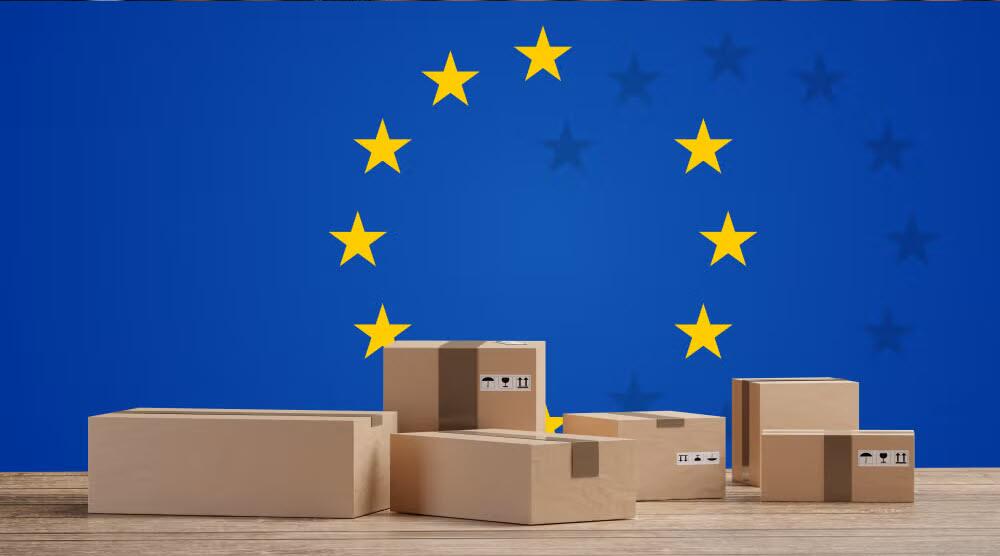
EU Packaging Rules Create Another Bureaucratic Monster
The short version
- On August 12, the so-called EU Packaging and Packaging Waste Regulation ( PPWR ) will enter into force, reorganizing the recycling framework for packaging across Europe.
- Adopted last year, the regulation becomes binding for all EU member states and companies on August 12 and, as an EU regulation, does not require transposition into national law.
- The PPWR will replace the current patchwork of national packaging recycling laws with a unified framework for the EU single market.
- Until then, Germany’s existing Packaging Act (VerpackG) remains in effect.
- A beautiful narrative — especially for those who stand to profit from it.
The story
Submitted by Thomas Kolbe
Regulation follows regulation. On August 12, the so-called EU Packaging and Packaging Waste Regulation (PPWR) will enter into force, reorganizing the recycling framework for packaging across Europe. Adopted last year, the regulation becomes binding for all EU member states and companies on August 12 and, as an EU regulation, does not require transposition into national law. The PPWR will replace the current patchwork of national packaging recycling laws with a unified framework for the EU single market. Until then, Germany’s existing Packaging Act (VerpackG) remains in effect.
Brussels always tells the same story: regulation is supposed to strengthen the European single market and harmonize economic and environmental objectives. A beautiful narrative — especially for those who stand to profit from it. Similar dynamics have already emerged in other sectors, such as carbon emissions trading. In the end, compliance costs for affected businesses rise, the bureaucratic apparatus expands through new control and sanctioning mechanisms, and the overall economy loses competitiveness.
According to the European Commission, the goal of the regulatory push is to ensure that by 2030 only recyclable packaging materials circulate within the EU economy. The regulation aims to reduce packaging waste, increase corporate recycling quotas, and firmly embed the circular economy into a binding legal framework. The PPWR is one of the building blocks of the Green Deal, which seeks to lead the EU economy toward a carbon-neutral future through an increasingly detailed and expansive regulatory architecture covering national recycling efforts as well as sector-specific initiatives.
Brussels’ regulatory activism offers repeated insights into the logic of bureaucratic systems. Such systems develop a kind of life of their own and an inherent drive to acquire ever more competencies and powers — an evolutionary struggle for institutional survival that gradually eliminates any meaningful feedback loop with the economic system bureaucracy claims to regulate. This recurring process has consequences: increasingly detached from business realities, ideologically driven compliance pressure continues to mount across affected sectors. As a result, adaptation, documentation, and implementation costs require businesses to devote ever more resources simply to satisfy regulatory demands.
The biggest burden imposed by the new regulation will fall on companies selling goods across borders without maintaining their own local branch offices in destination countries. The PPWR forces such firms to hire local authorized representatives or specialized service providers to manage registration, documentation, and communication with local authorities in detail in order to oversee the packaging recycling process. The regulation is structured in such a way that there is practically no possibility of integrating these requirements into normal business operations without significant bureaucracy and expense.
The EU is thereby creating yet another artificial compliance market. It generates business opportunities for consultants and service providers that would likely not survive in a truly free market. This development is already familiar from the ever-expanding climate regulation architecture. And, as is typical with excessive bureaucracy, large corporations with their own branch networks naturally enjoy major cost advantages over smaller niche businesses, which must now spend substantial time, money, and personnel building compliance networks of their own. None of this resembles an integrated European single market anymore. The economy increasingly serves as a playground for the ideological fantasies of an ever-growing class of officials.
What we are witnessing here is a fundamental ideological, administrative, and political problem. The packaging regulation fits into the broader structure of intrusive, hyper-detailed, and sanction-heavy regulation from an authority that no longer recognizes the signs of the times — namely the economic crisis that its own policies have helped fuel. Germany’s annual bureaucratic burden is estimated by the ifo Institute at roughly €146 billion in direct and indirect costs — an absolute disaster for the country as a business location. Moreover, this policy of micromanagement stifles innovation in materials, logistics, and recycling technologies, and will ultimately deliver worse outcomes at far higher cost than a free market would.
Petty, exhausting, and expensive, Euro-bureaucracy is steadily eroding Europe’s competitiveness and turning private-sector investment into a gamble. The idea of the free market — namely that consumer demand for cleaner and more environmentally friendly production and logistics can be expressed through competition itself, one of civilization’s greatest achievements — appears to have largely vanished within today’s EU.
In contrast to competing jurisdictions such as the United States, which are lowering compliance costs through deregulation, Europe’s misguided trajectory becomes especially obvious. One final statistic illustrates the scale of the problem: according to an analysis by the Institute for Employment Research (IAB), German businesses alone have had to dedicate roughly 325,000 additional workers over the past three years simply to manage growing bureaucratic requirements.
These are staggering figures that reveal the true scale of Euro-bureaucracy. And at present, it does not appear that opposition forces are strong enough to divert the EU from its current path away from market economics and toward state management and ever-expanding bureaucracy.
* * *
About the author: Thomas Kolbe, a German graduate economist, has worked for over 25 years as a journalist and media producer for clients from various industries and business associations. As a publicist, he focuses on economic processes and observes geopolitical events from the perspective of the capital markets. His publications follow a philosophy that focuses on the individual and their right to self-determination.
Related Markets
All MarketsMarket data may be delayed. Not financial advice.
Powered by Gab AI
The Story At A Glance
Reading this article now — analysis appears below
💡 AI analysis provides alternative perspectives on current events