Millions Of Americans Are Giving Up On Buying New Cars
The short version
- Since 2020, roughly one million potential buyers have exited the market, and industry forecasts suggest they are unlikely to return soon, according to Wall Street Journal .
- Although automakers initially expected sales to recover to pre-pandemic levels, persistent economic pressures have kept demand below earlier expectations.
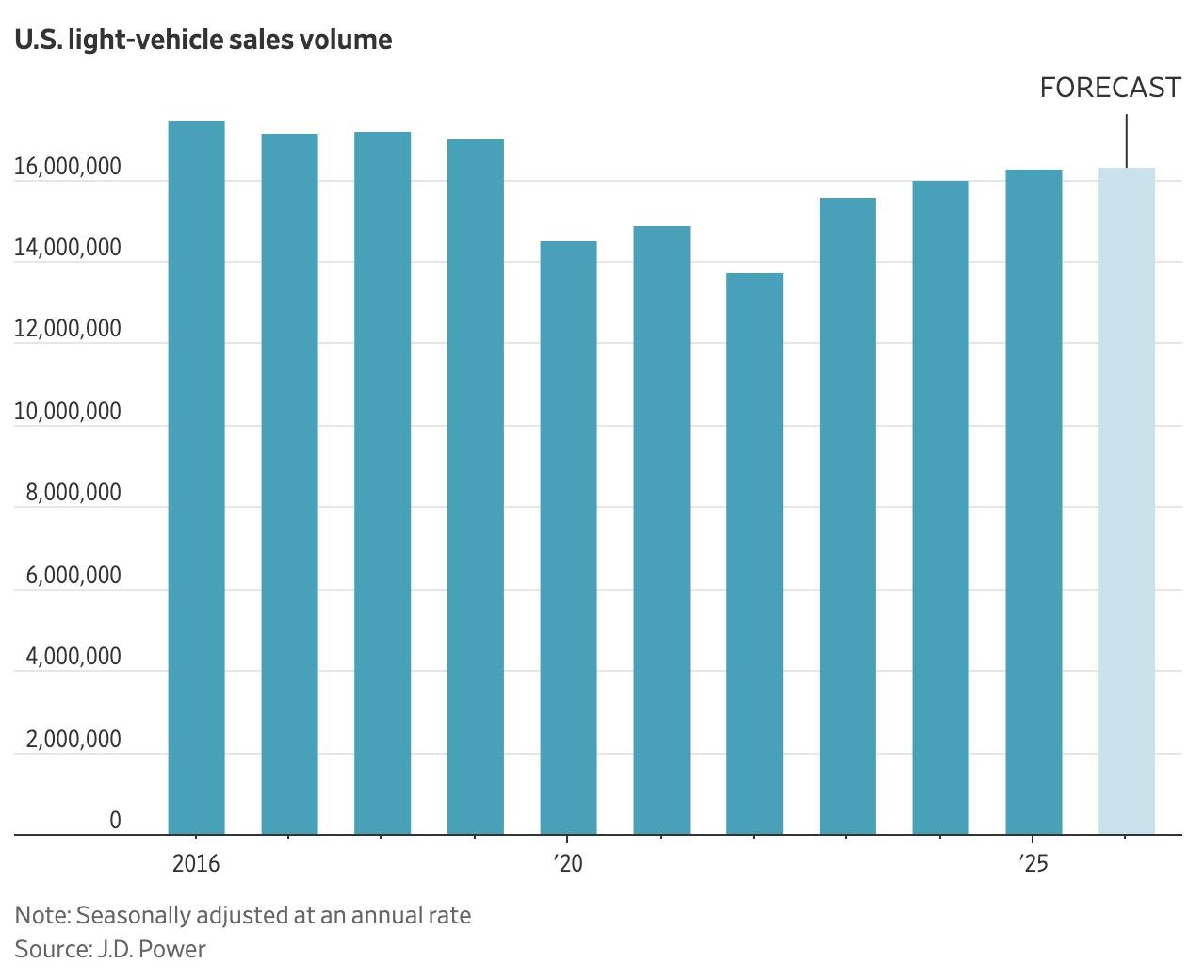
- Before COVID-19, U.S. new-vehicle sales typically reached around 17 million units annually.
- Today, most forecasts place demand closer to 16 million vehicles or less, with little chance of a full recovery in the near future.
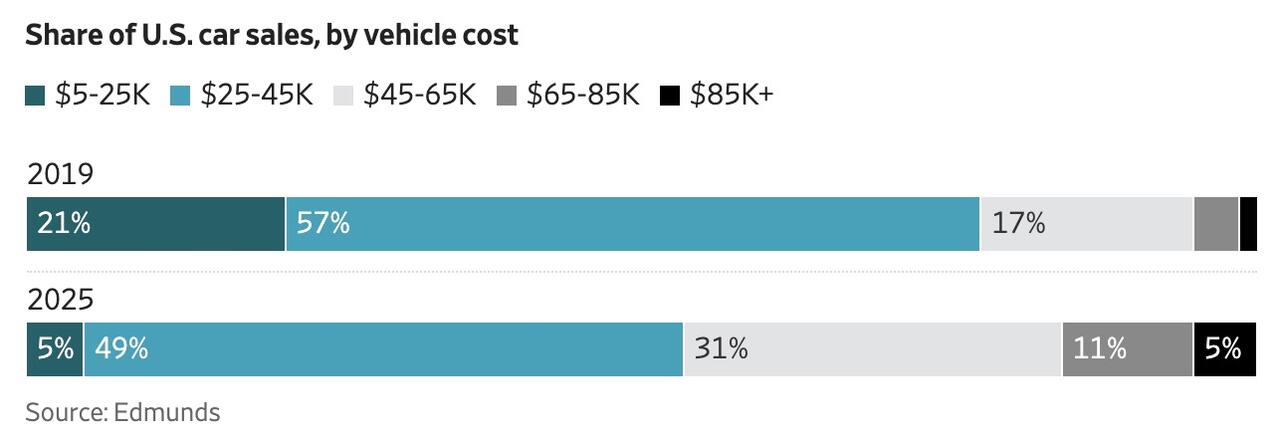
- One major reason is cost: the average new vehicle now sells for nearly $50,000, and many models exceed $55,000.
The story
A growing number of Americans can no longer afford to buy new vehicles. Since 2020, roughly one million potential buyers have exited the market, and industry forecasts suggest they are unlikely to return soon, according to Wall Street Journal.
Although automakers initially expected sales to recover to pre-pandemic levels, persistent economic pressures have kept demand below earlier expectations.
Before COVID-19, U.S. new-vehicle sales typically reached around 17 million units annually. Today, most forecasts place demand closer to 16 million vehicles or less, with little chance of a full recovery in the near future. One major reason is cost: the average new vehicle now sells for nearly $50,000, and many models exceed $55,000. As entry-level options disappear, new cars have become increasingly out of reach for middle-income households.
The WSJ writes that automakers recognize that affordability has become a major obstacle. While some companies have announced plans to introduce less expensive models, substantial price reductions are not expected anytime soon. Rather than competing through discounts, manufacturers have concentrated on producing higher-margin vehicles such as pickups, SUVs, and premium trims.
The industry's approach changed during the pandemic, when supply shortages limited production but allowed companies to maintain strong profits through higher prices. That experience convinced many automakers that selling fewer vehicles can be more profitable than chasing volume through aggressive incentives. As a result, manufacturers have become more cautious about discounting and more focused on protecting profit margins.
Consumers who are priced out of the new-car market often look to used vehicles instead, but prices there have also risen significantly. Many households have responded by delaying purchases altogether and keeping their current vehicles longer. This trend has pushed the average age of cars and light trucks on U.S. roads to a record level of roughly 13 years.
At the same time, automakers face mounting expenses from tariffs, supply-chain challenges, and large investments in electric vehicle development. These costs further reduce the incentive to prioritize low-priced vehicles. Companies such as GM and Ford continue to emphasize trucks, SUVs, and other profitable models that generate stronger returns than compact economy cars.
Some manufacturers, including Stellantis, have pledged to expand their lineup of lower-cost vehicles in the coming years. Meanwhile, brands such as Toyota, Nissan, and Hyundai still offer some of the market's more affordable options, although they too have increasingly shifted toward SUVs and larger vehicles.
Industry analysts increasingly believe that annual U.S. vehicle sales may remain below the pre-pandemic norm for years to come. Returning to the 17-million-unit level would likely require a much larger supply of vehicles priced under $40,000. Until that happens, many consumers will continue postponing purchases and extending the life of the vehicles they already own.
Related Markets
All MarketsMarket data may be delayed. Not financial advice.
How other outlets covered this
Compare allAlto found this story at 2 outlets. Same event, different framing — compare the headlines.
How this story developed
Full timelineAlto has tracked this across 4 days of coverage from 2 outlets.
- Millions Of Americans Are Giving Up On Buying New CarsYou are here
Powered by Gab AI
The Story At A Glance
Reading this article now — analysis appears below
💡 AI analysis provides alternative perspectives on current events