"Replacing Lower Value Human Capital": Banks Cut Staff As Recent Grads Face Off Against AI For Jobs

The short version
- Warwick University student Andre Bonnick, for example, spends hours preparing for automated screening interviews rather than conversations with human recruiters.
- While he hopes to secure a role in finance, he is also weighing options such as further study as entry-level opportunities become more competitive.
- Industry leaders have been increasingly candid about AI’s impact on employment.
- JPMorgan CEO Jamie Dimon stated that the technology “will eliminate jobs,” while other bank executives have acknowledged that some roles may no longer be needed as automation…
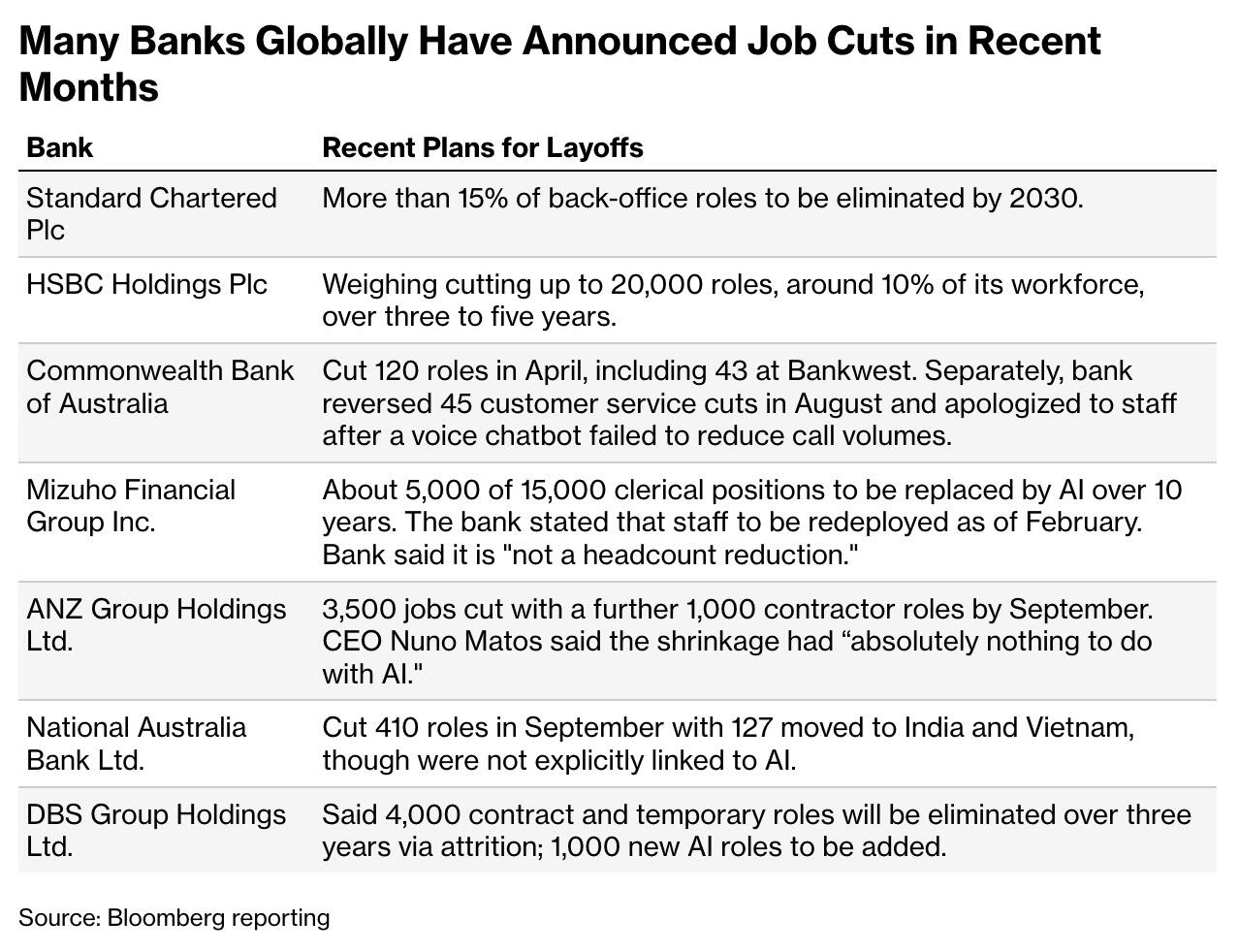
- Standard Chartered CEO Bill Winters described the shift as “replacing in some cases lower-value human capital” with technology investments, comments for which he later apologized.
The story
As AI reshapes banking, students entering the industry are confronting a double challenge: navigating AI-driven hiring processes today while wondering how many traditional finance jobs will remain tomorrow, according to Bloomberg.
Warwick University student Andre Bonnick, for example, spends hours preparing for automated screening interviews rather than conversations with human recruiters. While he hopes to secure a role in finance, he is also weighing options such as further study as entry-level opportunities become more competitive.
Industry leaders have been increasingly candid about AI’s impact on employment. JPMorgan CEO Jamie Dimon stated that the technology “will eliminate jobs,” while other bank executives have acknowledged that some roles may no longer be needed as automation expands. Standard Chartered CEO Bill Winters described the shift as “replacing in some cases lower-value human capital” with technology investments, comments for which he later apologized.
Bloomberg writes that the pressure is already visible at the junior level. Banks are reducing analyst intake programs and investing heavily in AI capabilities, leading many graduates to question the long-term stability of careers that were once viewed as secure and lucrative. Even so, experts argue that banks cannot eliminate junior hiring altogether because the industry still relies on developing future leaders through apprenticeship-style career paths.
For now, most institutions are deploying AI in specific areas such as customer support, compliance, transaction monitoring, and wealth management rather than replacing entire functions. Banks including Citigroup and Barclays report efficiency gains from AI tools, while digital-first firms such as Revolut are embedding AI directly into customer-facing products.
Yet uncertainty remains. Employment lawyers warn that automation could disproportionately affect middle-office and administrative roles, while some industry observers question whether companies are attributing workforce reductions to AI when broader cost-cutting may be the real driver.
Although major banks continue to recruit interns and graduates, many are seeking productivity gains without increasing headcount. As a result, breaking into finance is becoming more difficult just as AI begins to transform the nature of the jobs themselves.
Related Markets
All MarketsMarket data may be delayed. Not financial advice.
How other outlets covered this
Compare allAlto found this story at 2 outlets. Same event, different framing — compare the headlines.
How this story developed
Full timelineAlto has tracked this across 11 days of coverage from 2 outlets.
Powered by Gab AI
The Story At A Glance
Reading this article now — analysis appears below
💡 AI analysis provides alternative perspectives on current events