China Revives Heavy Naval Firepower With New 155mm Gun That "Could Support An Attack On Taiwan"
The short version
- Recent reports indicate that the PLA Navy is testing a new 155mm naval gun, a calibre larger than any main gun currently in active naval service.
- The weapon has been observed aboard the experimental vessel Wu Yunduo , which appears to have completed a round of sea trials near Dalian earlier this year.
- Such testing would typically assess accuracy, fire-control performance, platform stability and the weapon’s ability to sustain repeated firing under operational conditions.
- The gun first attracted attention in 2024 when a prototype was photographed during transport.
- Information visible on the system suggested it was manufactured by Norinco, weighs nearly 22 tonnes and can fire precision-guided ammunition.
The story
As modern naval combat increasingly relies on aircraft, missiles and unmanned systems, China is investing in a capability many navies have largely moved away from: heavy naval artillery, according to South China Morning Post.
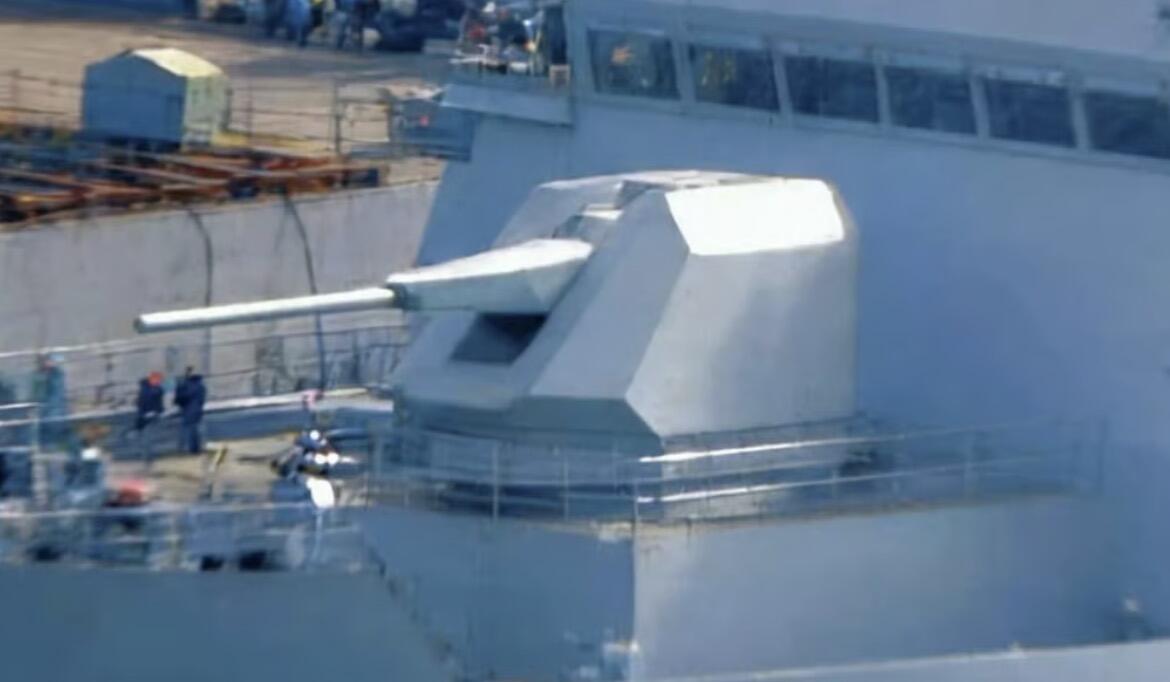
Recent reports indicate that the PLA Navy is testing a new 155mm naval gun, a calibre larger than any main gun currently in active naval service. The weapon has been observed aboard the experimental vessel Wu Yunduo, which appears to have completed a round of sea trials near Dalian earlier this year. Such testing would typically assess accuracy, fire-control performance, platform stability and the weapon’s ability to sustain repeated firing under operational conditions.
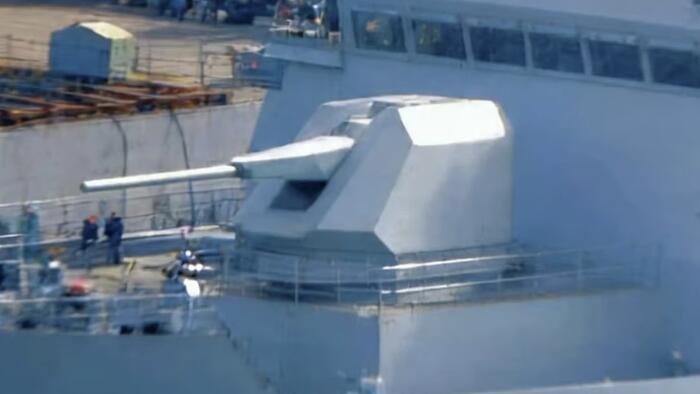
The gun first attracted attention in 2024 when a prototype was photographed during transport. Information visible on the system suggested it was manufactured by Norinco, weighs nearly 22 tonnes and can fire precision-guided ammunition. Images released later showed the weapon installed on a test ship, with a turret design that appears intended to reduce radar visibility.
The SCMP writes that the project stands out because large-calibre naval guns have long been overshadowed by missiles and carrier aviation. For decades, navies have favoured weapons capable of striking targets far beyond the horizon with greater precision. As a result, ship guns have largely been relegated to supporting troops ashore or handling limited surface engagements.
China’s interest in reviving heavy naval gunfire appears closely tied to amphibious warfare. In any large-scale landing operation, sustained bombardment of coastal defences could be essential. Compared with missiles, naval artillery can deliver a much higher volume of fire at significantly lower cost, making it useful for suppressing defensive positions and supporting advancing forces.
Analysts note that a 155mm system would represent a substantial increase in capability over the PLA Navy’s existing 130mm guns carried by its most advanced destroyers. Depending on the ammunition used, the new weapon could potentially engage targets more than 100km away and perhaps even beyond 200km. Operating at such distances would require support from drones or other reconnaissance assets to locate targets, assess damage and correct fire.
Economics may be just as important as range. Precision missiles remain expensive, particularly when used against relatively low-value targets. A naval gun can provide sustained firepower at a fraction of the cost, making it attractive for coastal bombardment, suppression missions and prolonged operations. Additional savings could come from sharing ammunition and logistics with the PLA Army’s existing family of 155mm artillery systems, which already includes guided, rocket-assisted and extended-range projectiles.
The US Navy’s experience offers a contrasting example. Although its Zumwalt-class destroyers were equipped with 155mm guns, the programme struggled because specialised long-range ammunition became prohibitively expensive, ultimately leading to the guns’ replacement with missile-focused systems.
China has not revealed which ships may eventually carry the new weapon. Amphibious vessels are considered strong candidates because their current armament is relatively limited when it comes to shore bombardment. Installing a larger gun could significantly improve fire-support capabilities during expeditionary or landing operations.
The weapon may also have applications beyond attacking land targets. Military observers suggest it could be used against drone swarms, unmanned surface vessels and other emerging threats when paired with specialised ammunition. In lower-intensity missions, it could provide a cost-effective alternative to missiles for maritime patrol, anti-piracy operations, warning shots and the interception of non-compliant vessels.
While China continues to develop advanced technologies such as railguns and laser weapons, the new 155mm system reflects a more practical approach: enhancing naval firepower with a mature, proven technology that can be fielded relatively quickly and integrated into existing military logistics networks.
Related Markets
All MarketsMarket data may be delayed. Not financial advice.
Powered by Gab AI
The Story At A Glance
Reading this article now — analysis appears below
💡 AI analysis provides alternative perspectives on current events