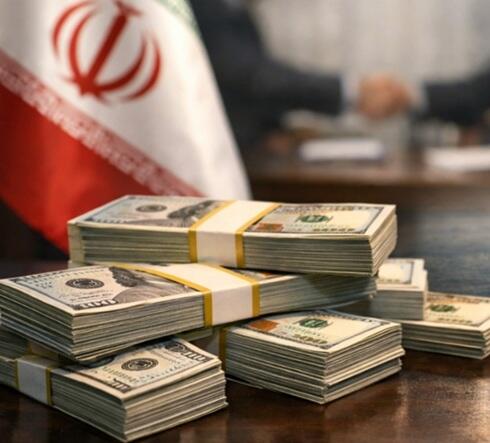
Iran Says US To Unfreeze $12BN, Insists It Alone Will Decide How Funds Used, Contradicting Vance
The short version
- It also comes after the US Treasury Department announced temporary sanctions relief, namely freeing up Iranian oil and petrochemical sales until August 1st.
- Concerning the frozen asset partial release, Tehran is now emphasizing that it alone will decide how the funds will be used .
- But this may be another area where the headlines and declarations are too far out front, given Washington has sought to impose some caveats which likely remain unacceptable to the…
- For example Vice President JD Vance made clear his stance Monday that Iranian assets had not yet been unfrozen as part of the deal, describing that if there were…
- He has emphasized - perhaps wishing to address American domestic criticisms - that the funds would not be used to support terrorism.
The story
Among the biggest latest developments in the immediate wake of the Switzerland meeting is that Iranian Parliament Speaker Mohammad Bagher Ghalibaf has announced an agreement has been reached for the United States to release $12 billion in frozen Iranian assets.
It also comes after the US Treasury Department announced temporary sanctions relief, namely freeing up Iranian oil and petrochemical sales until August 1st. Concerning the frozen asset partial release, Tehran is now emphasizing that it alone will decide how the funds will be used.
But this may be another area where the headlines and declarations are too far out front, given Washington has sought to impose some caveats which likely remain unacceptable to the Iranians side. For example Vice President JD Vance made clear his stance Monday that Iranian assets had not yet been unfrozen as part of the deal, describing that if there were, they must be limited in use and implementation - to purchase US agricultural goods. He has emphasized - perhaps wishing to address American domestic criticisms - that the funds would not be used to support terrorism.
Ali Bahreini, the Iranian ambassador to the United Nations, has already firmly rejected the soybean plan, saying at a UN press briefing, "Iran is the only country who will decide what to do with its assets, which are going to be defrozen."
In total a whopping $50 billion could eventually be released under the MoU framework - something which will drive Republican hawsk mad. Al Jazeera reports Tuesday, citing the Iranian side:
A spokesperson said the agreement would allow Iran access to previously frozen assets, although the US says restrictions would remain in place under the arrangement.
According to sources familiar with the negotiations, two separate tranches of $6bn were originally agreed in Doha, with the final signing ceremony intended to take place in Switzerland. The Iranian spokesperson now says that process has been completed.
Under the reported framework, an initial $12bn in Iranian funds would be released. During the 60-day negotiation period, a further $12bn could be unlocked. If the parties ultimately reach a final agreement, the value of sanctions relief and released funds could reportedly rise to as much as $50bn.
Another point of disagreement remains the entry of IAEA nuclear inspectors into the Islamic Republic. Vance had hailed Tehran already agreed to this, while Iran's leaders are in effect saying not so fast. It's but one of several major contradictions in public rhetoric coming from either side in the wake of the top-level round one meeting in Switzerland.
Something interesting - which Washington may or may not be on board with - is that Tehran is now signaling openness to Russia hosting its enriched nuclear material.
Iran says the Strait of Hormuz is “fully” open to commercial shipping and that large volumes of oil have been transported through the waterway in recent days, according to the semi-official Iranian Students’ News Agency.
— Javier Blas (@JavierBlas) June 23, 2026
Al Arabiya reports that Iran's aforementioned UN ambassador says "transferring enriched uranium to Russia is under consideration." This could indeed be enough to satisfy President Trump, considering it would be a 'lesser evil' option if indeed the Iranians are actually ready for such a plan (which Moscow has offered several times to facilitate over the past year).
Lebanon is another issue which could threaten to unravel all the progress made thus far, but reports cite a 'cautious calm' across the south, but with some limited, sporadic exchanges of fire.
One correspondent on the ground reports, "Here in Tyre, people driving across the city this morning are picking up bits of rubble, starting to clear things out and searching for what they can salvage among their destroyed homes and businesses. That is what people are using this moment of calm for."
However, there's been reports of at least two new Lebanese deaths. In one instance Lebanese national media indicated "A young man was killed and two others were injured” when Israeli soldiers "opened machine gun fire in their direction while they were standing near an excavator which was clearing a road" in a locality near the town of Nabatieh - per the National News Agency. Hezbollah is saying Tuesday that this violates the ceasefire agreement.
The situation on Monday was such that the Iranian delegation almost quit the Sunday-Monday talks completely, Iran's top negotiator has explained:
Iran's Ghalibaf:
— Clash Report (@clashreport) June 22, 2026
In the middle of the discussions, I learned that Trump had made threatening remarks regarding our president, the negotiating team, and possible attacks on our territory.
I told Vance: “We are here engaged in talks, and according to the signed understanding,… pic.twitter.com/Oi0jKrXf19
* * *
Below are some latest developments on the US-Iran peace front via Middle East Eye:
- Iranian Parliament Speaker Mohammad Bagher Ghalibaf said an agreement had been reached to release $12bn in frozen Iranian assets.
- The US Treasury Department announced temporary sanctions relief allowing Iranian oil and petrochemical sales until 1 August.
- Washington said the measures follow Iran’s commitment to permit international nuclear inspections after intensive talks in Switzerland.
- President Donald Trump said released Iranian funds would be used to purchase food and agricultural products from US farmers.
- Iran’s Central Bank rejected Trump’s comments, saying Tehran is under no obligation to spend released funds on American goods.
- Iranian officials said technical negotiations with the United States have concluded and the process is entering a new phase.
- President Masoud Pezeshkian said the effectiveness of future talks depends on all sides fully implementing their commitments.
- A US official said Centcom has launched a monitoring mechanism in Lebanon to provide American officials with assessments of fighting on the ground.
- Israeli officials reiterated that military operations in Lebanon would continue despite ongoing diplomatic progress between Washington and Tehran.
- Markets and regional observers continued to focus on sanctions implementation, Hormuz shipping activity and the durability of the broader agreement.
Related Markets
All MarketsMarket data may be delayed. Not financial advice.
Powered by Gab AI
The Story At A Glance
Reading this article now — analysis appears below
💡 AI analysis provides alternative perspectives on current events