How Can We Restore Trusted Elections?
.jpg?itok=NJrQ411i)
The short version
- Authored by Christian Milord via The Epoch Times , It's mind-boggling that elections and election results take so long to complete…
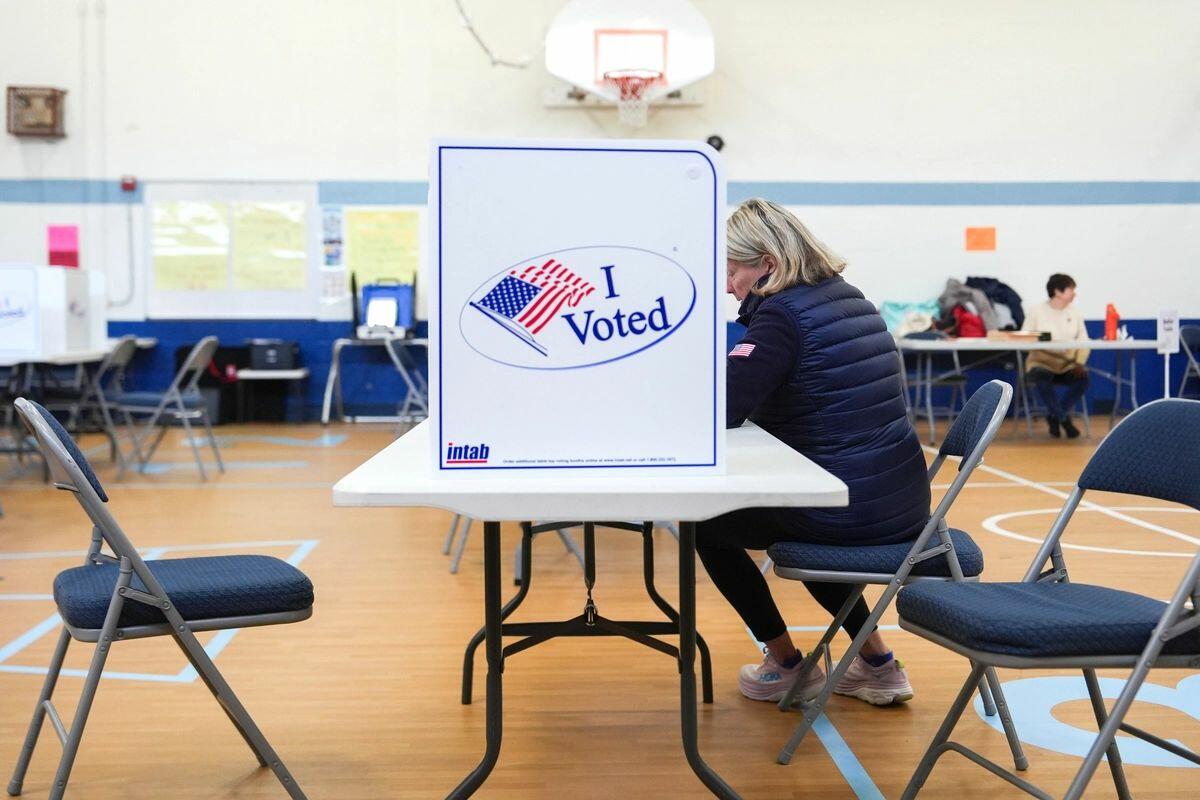
- A person votes in the Virginia redistricting referendum at Lyles-Crouch Traditional Academy, Tuesday, April 21, 2026, in Alexandria, Va.
- AP Photo/Julia Demaree Nikhinson It's inexcusable that our modern society can't establish firm timelines and expedite tabulation when many nations, both developed and developing…
- Many of those countries lack the election technologies that the United States takes for granted.
- In the case of very close elections similar to the George W.
The story
Authored by Christian Milord via The Epoch Times,
It's mind-boggling that elections and election results take so long to complete, especially in a developed nation such as the United States.
It's inexcusable that our modern society can't establish firm timelines and expedite tabulation when many nations, both developed and developing, announce results on the same day as the election or within a day or two. Many of those countries lack the election technologies that the United States takes for granted.
In the case of very close elections similar to the George W. Bush vs. Al Gore in 2000, there was a need to proceed slowly as the razor thin election boiled down to the state of Florida. There was a recount wherein punch-card ballots were checked for chads and hanging chads to ensure the count was accurate. After five weeks, the election was finally certified by a few hundred votes in favor of Bush by Florida's Secretary of State Katherine Harris and the Supreme Court.
A number of reforms could be rolled out in order to speed up our election system so that results are accurate, timely, and can be trusted by the electorate. Voting is an important earned right that can't be handed out to non-citizens or be taken lightly.
First, voters should have a valid ID to vote, and a valid signature must be written, whether voting is by mail or at a polling location. More than 80 percent of voters favor a valid ID for citizens to vote, since an ID is required for many minor activities that don't rise to the level of importance as a citizen's right to vote. That is why the SAVE Act is so critical at this time as the midterms approach in November. Valid addresses, IDs, and signatures can reduce potential abuse and doubts regarding election integrity.
Second, eliminate the primary system in which a number of candidates vie for elected positions at the local, state, and national levels. It costs untold millions to campaign, mail out ballots, run polling stations, and tabulate votes. Why not have candidates compete for positions every two, four, or six years and hold the elections at specified times in the fall without the need for primaries?
Third, only mail out ballots to voters who request them. Millions of dollars are spent mailing ballots to every registered voter, even though many voters prefer to vote in person at polling locations. One can understand mailing out ballots to American voters who are working overseas. It makes sense to send it to these voters early to allow time for them to complete their ballots and return them to the United States. Unlimited mailing can result in unused ballots and could lead to some ballot harvesting.
Moreover, ballots shouldn't be mailed out so early in the election "season." Those who request ballots should receive them only a few days before an election, not weeks beforehand. Early mail-outs can lead to lost ballots, tossed ballots for those who vote at the polls, and possible ballot harvesting. Likewise, completed ballots postmarked on election day should not be accepted many days after election day. It can generate uncertainty for candidates and voters.
Fourth, make it unlawful for signature collectors or anyone else to pay folks to register to vote or sign on to potential legislation. According to The Epoch Times, this activity has occurred several times in California and elsewhere. Anyone who is concerned with the workings of government shouldn't receive compensation to vote for candidates and issues. No one, regardless of political party, should coerce or entice someone to vote in a partisan direction either. It taints fair and free elections.
Fifth, voter rolls ought to be purged regularly because people pass away, move out of the county, or move into the county as residents and register to vote. Mailing ballots to everyone can be a waste if rolls aren't kept up to date to reflect the current registered voters who still reside in a particular county. If the rolls aren't updated regularly, it can also lead to ballots being stolen or open the floodgates for people to vote twice or for someone else.
Sixth, although mandates wouldn't be effective at shortening the campaign season, they might help to make the campaign trail less drawn out. In most nations, campaign season runs for a few weeks or a month or two. In America, campaigning seems to roll on forever, and elections can feel anticlimactic. By the time one election is concluded, the next election arrives quickly on the horizon. Candidates even campaign while they are in office and constantly keep an eye out for the next election.
Prolonged political campaigning can be a distraction from carrying out the duties of representing the people and solving pressing problems that affect their lives. Media outlets can play a role in discussing critical issues more objectively instead of sensationalizing every minor action by political opponents or supporters.
Constant campaign mode can devolve into self-interest rather than the more important national interest. Americans need fewer promises from politicians and more delivery in the spheres of free markets, the protection of liberty, just laws, and national security.
Common sense informs us that in tight elections, tabulating must be checked carefully at a slower pace than when a candidate or initiative/referendum wins by a larger margin. For the most part, elections can be trusted if they are properly managed and results are released in a timely manner. If the process is lengthy, it can breed cynicism, and many voters might not bother to vote.
Views expressed in this article are opinions of the author and do not necessarily reflect the views of The Epoch Times.
How this story developed
Full timelineAlto has tracked this across 2 days of coverage from 1 outlet.
- How Can We Restore Trusted Elections?You are here
Powered by Gab AI
The Story At A Glance
Reading this article now — analysis appears below
💡 AI analysis provides alternative perspectives on current events