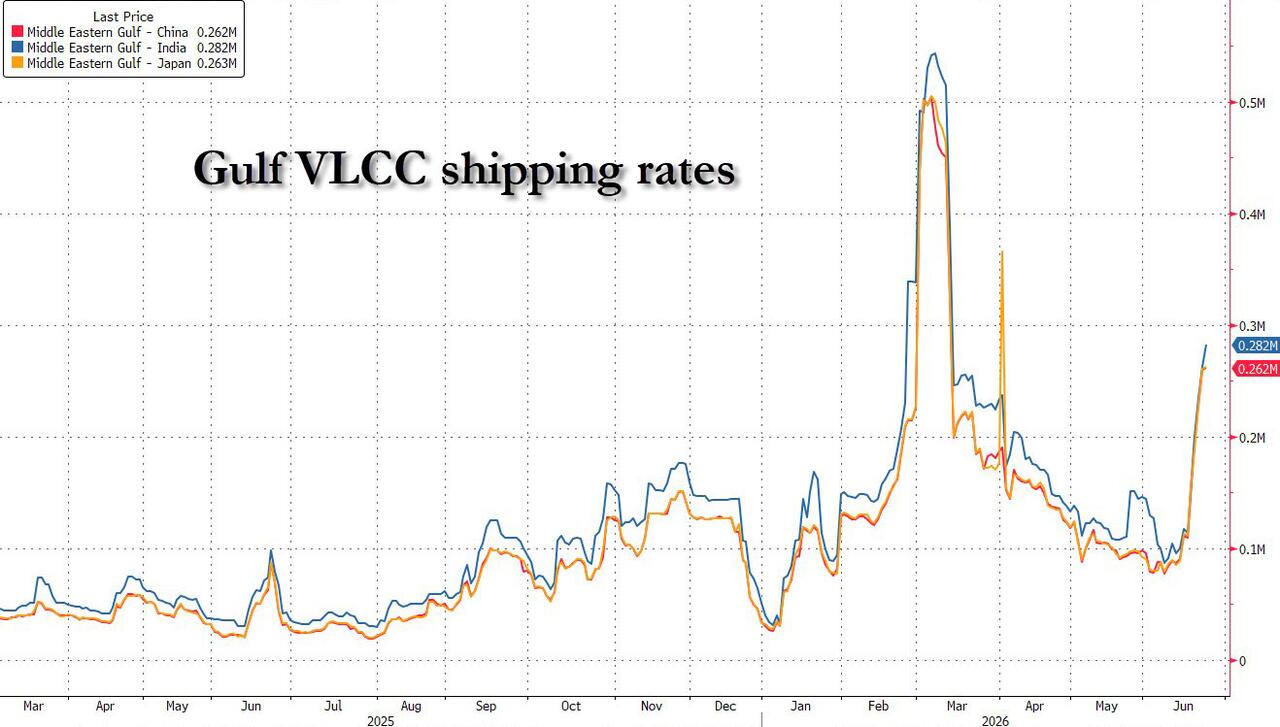
Tanker Owners Having The Best Week Of The Hormuz Crisis As VLCC Rates Soar
The short version
- As Middle Eastern producers scramble to move crude that has spent months stranded in the Persian Gulf, tanker rates have exploded higher…
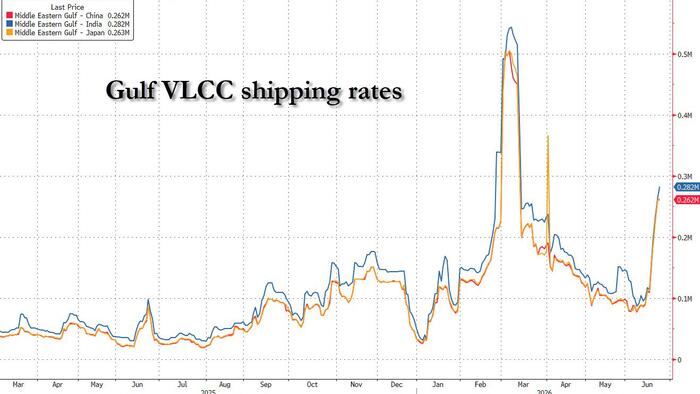
- According to Reuters, the cost of hiring a tanker in the Gulf has nearly doubled in just a week, jumping from around $106,000 per day to more than $190,000 per day.
- For some very large crude carriers (VLCCs) hauling cargoes through Hormuz, daily earnings have surged to nearly $470,000—a level that would have seemed absurd before the war began.
- Oil prices have spent much of the past week falling as traders price in the return of Middle Eastern supply, with Brent futures trading at $77 on Tuesday afternoon .
- Meanwhile, the people actually moving that oil are charging some of the highest rates seen during the entire crisis.
The story
By Julianne Geiger of OilPrice.com
The Strait of Hormuz may be reopening, but don't tell tanker owners the crisis is over. They're making too much money.
As Middle Eastern producers scramble to move crude that has spent months stranded in the Persian Gulf, tanker rates have exploded higher, turning a slow return to normal into a windfall for shipping companies.
According to Reuters, the cost of hiring a tanker in the Gulf has nearly doubled in just a week, jumping from around $106,000 per day to more than $190,000 per day. For some very large crude carriers (VLCCs) hauling cargoes through Hormuz, daily earnings have surged to nearly $470,000—a level that would have seemed absurd before the war began.
Oil prices have spent much of the past week falling as traders price in the return of Middle Eastern supply, with Brent futures trading at $77 on Tuesday afternoon. Meanwhile, the people actually moving that oil are charging some of the highest rates seen during the entire crisis.
There still aren't enough ships.
Even after Iran lifted its effective blockade last week as part of the 60-day ceasefire agreement with the United States, traffic through Hormuz remains well below normal levels. Before the war began in late February, roughly 125 ships passed through the chokepoint each day. Current traffic remains a fraction of that.
At the same time, roughly 100 tankers are still trapped inside the Gulf carrying cargoes loaded during the conflict.
Now producers want their barrels moving again.
Abu Dhabi's ADNOC has been aggressively marketing crude cargoes, while refiners in major importing nations such as India are seeking additional Middle Eastern supplies after months of disruption. The result is a sudden surge in demand for ships just as vessel availability remains unusually tight.
The futures market has largely moved on from the crisis, but the shipping market clearly hasn't.
Until more vessels begin moving through the world's most important oil chokepoint, tanker owners may remain among the biggest winners of a conflict that cost almost everyone else dearly.
Related Markets
All MarketsMarket data may be delayed. Not financial advice.
How this story developed
Full timelineAlto has tracked this across 7 days of coverage from 1 outlet.
- Tanker Owners Having The Best Week Of The Hormuz Crisis As VLCC Rates SoarYou are here
Powered by Gab AI
The Story At A Glance
Reading this article now — analysis appears below
💡 AI analysis provides alternative perspectives on current events