Rebound In Used Luxury Watches Continues
The short version
- But once that liquidity boom faded and interest rates were pushed sharply higher to rein in the inflation monster fueled by helicopter money…
- Over the last year and a half, however, that downturn appears to have bottomed out (see here and here ) , with prices continuing to rebound.
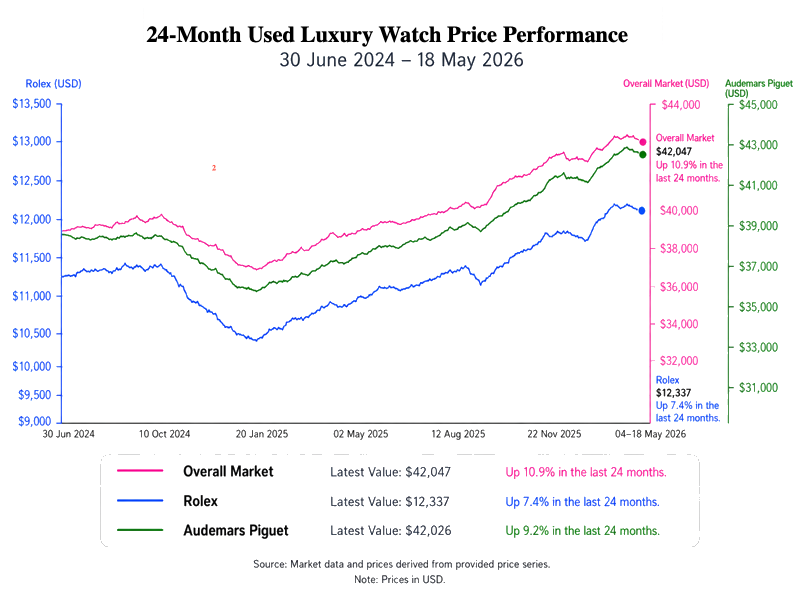
- The Bloomberg Subdial Watch Index, which tracks prices for the 50 most-traded watches by value on the secondary market, bottomed in January 2025, about 1.5 years ago…
- Subdial's used Rolex index bottomed around $11,000 in January 2025 and has since rebounded to nearly $12,000.
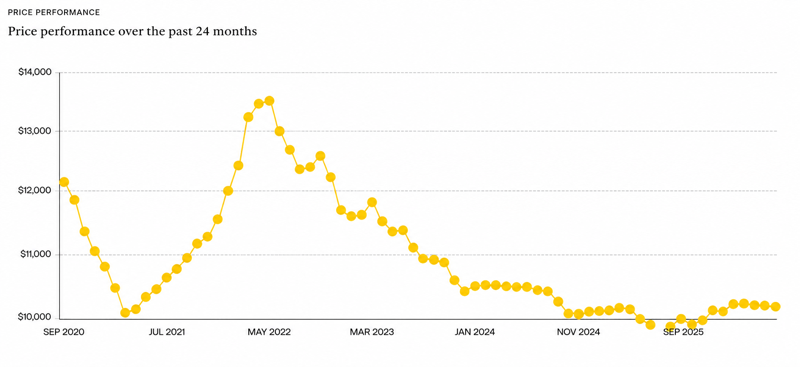
- A more granular look at the used Rolex watch index shows the Rolex Submariner Date ... ... bottomed in the summer of 2025 at around $9,800 and has marginally increased to about…
The story
During the COVID-era flood of free money, from stimulus checks to the Federal Reserve's zero-interest-rate policy, luxury watch prices skyrocketed to the moon. But once that liquidity boom faded and interest rates were pushed sharply higher to rein in the inflation monster fueled by helicopter money, the secondary luxury market slid into a multi-year correction.
Over the last year and a half, however, that downturn appears to have bottomed out (see here and here), with prices continuing to rebound.
The Bloomberg Subdial Watch Index, which tracks prices for the 50 most-traded watches by value on the secondary market, bottomed in January 2025, about 1.5 years ago, and has been tracking higher ever since.
- Subdial's used Rolex index bottomed around $11,000 in January 2025 and has since rebounded to nearly $12,000.
- And used Audemars Piguet watch prices.
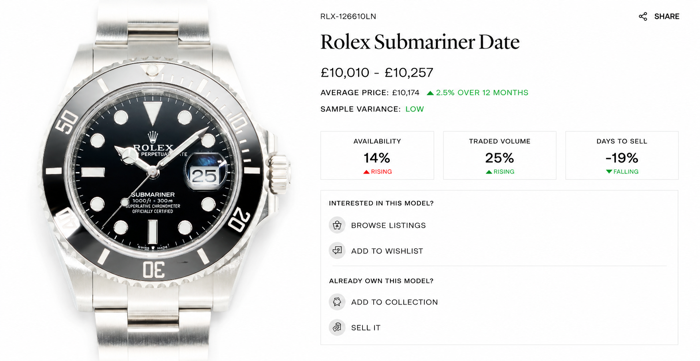
A more granular look at the used Rolex watch index shows the Rolex Submariner Date ...
... bottomed in the summer of 2025 at around $9,800 and has marginally increased to about $10,200 this month - still far from the $13,500 COVID-era highs.
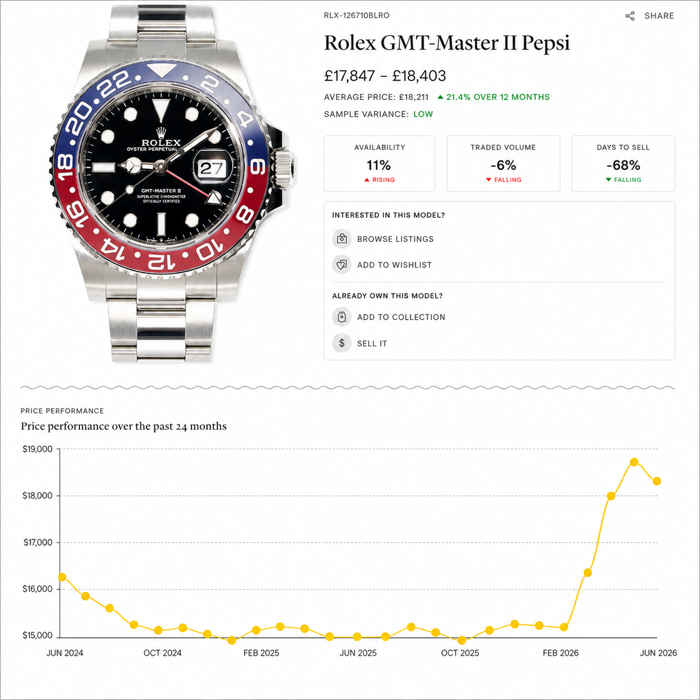
However, price action across the luxury watch market has not been uniform and largely depends on shifting consumer tastes and the interest rate environment.
Great reads:
Industry insights:
- Did Gen-Z Just Get A Taste For Fancy Used-Watches
- "Winner Takes All": UBS Speaks With Swiss Watch Industry Insider On "Stabilizing Market"
In recent weeks, Audemars Piguet and Swatch launched an affordable $400 pocket watch that generated massive consumer demand - mostly because of the price point.
How this story developed
Full timelineAlto has tracked this across 2 days of coverage from 1 outlet.
- Rebound In Used Luxury Watches Continues You are here
Powered by Gab AI
The Story At A Glance
Reading this article now — analysis appears below
💡 AI analysis provides alternative perspectives on current events