Copper Demand Surges, But Supply Deficit Is Hard To Solve, Expert Says
The short version
- Speaking recently with Siyamak Khorrami, host of EpochTV’s “ Market Insider ,” Rule said the increasingly energy-intensive lives people around the world are living have pushed up…
- With companies and countries investing heavily in AI, future demand for the red metal will be “staggering,” he said.
- At the same time, the world, especially the United States, doesn’t have enough copper development projects “in the pipeline,” Rule said…
- This represents a supply surplus of 400,000 metric tons.
- However, given the essential role copper plays in electrification, digitalization, and technologies such as AI, data centers, electric vehicles, and defense…
The story
Authored by Mary Prenon via The Epoch Times,
The ongoing artificial intelligence (AI) boom underscores a harder-to-resolve supply issue for copper, according to veteran natural resource investor Rick Rule.
Speaking recently with Siyamak Khorrami, host of EpochTV’s “Market Insider,” Rule said the increasingly energy-intensive lives people around the world are living have pushed up demand for copper. With companies and countries investing heavily in AI, future demand for the red metal will be “staggering,” he said.
At the same time, the world, especially the United States, doesn’t have enough copper development projects “in the pipeline,” Rule said, making a copper shortage and higher prices inevitable.
Growing Supply Deficit
According to the International Copper Study Group, global refined copper consumption rose to 28.2 million metric tons in 2025 from 25.8 million metric tons in 2022, while production increased to 28.6 million metric tons from 25.2 million metric tons over the same period. This represents a supply surplus of 400,000 metric tons.
However, given the essential role copper plays in electrification, digitalization, and technologies such as AI, data centers, electric vehicles, and defense, a January S&P Global study predicts that demand for the metal will rise to 42 million metric tons by 2040. The study also estimates that, without “meaningful supply expansion,” there could be a copper shortfall of about 10 million metric tons by then.
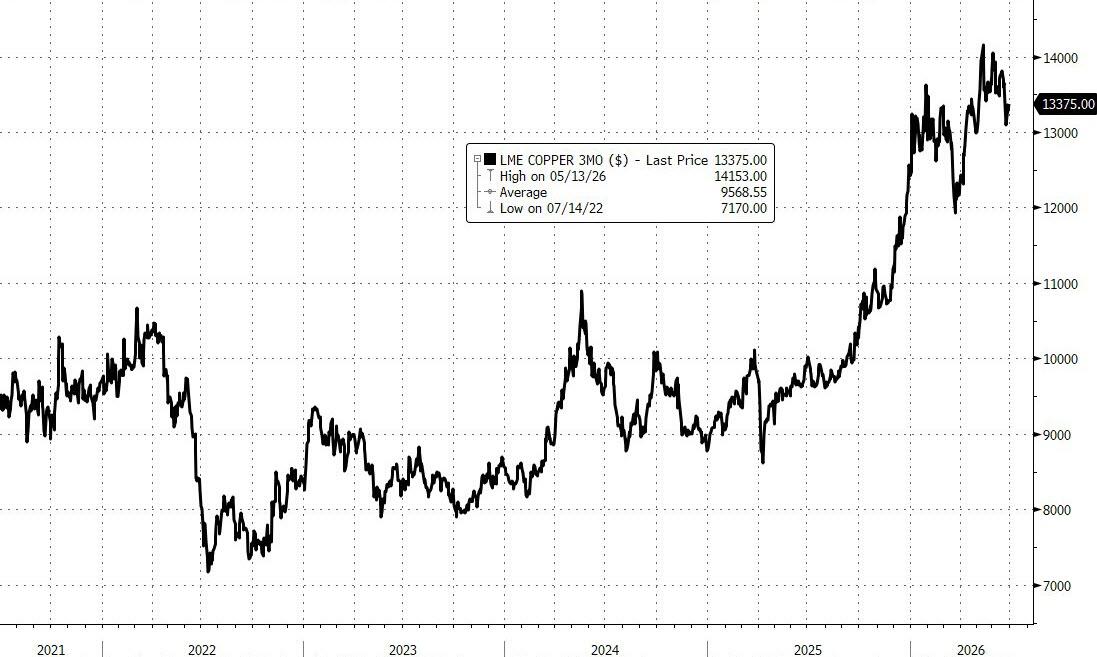
Copper prices have risen significantly. Copper futures on the New York Mercantile Exchange settled at $6.20 per pound on June 28, nearly doubling from their post-pandemic low of $3.23 per pound, reached on July 11, 2022.
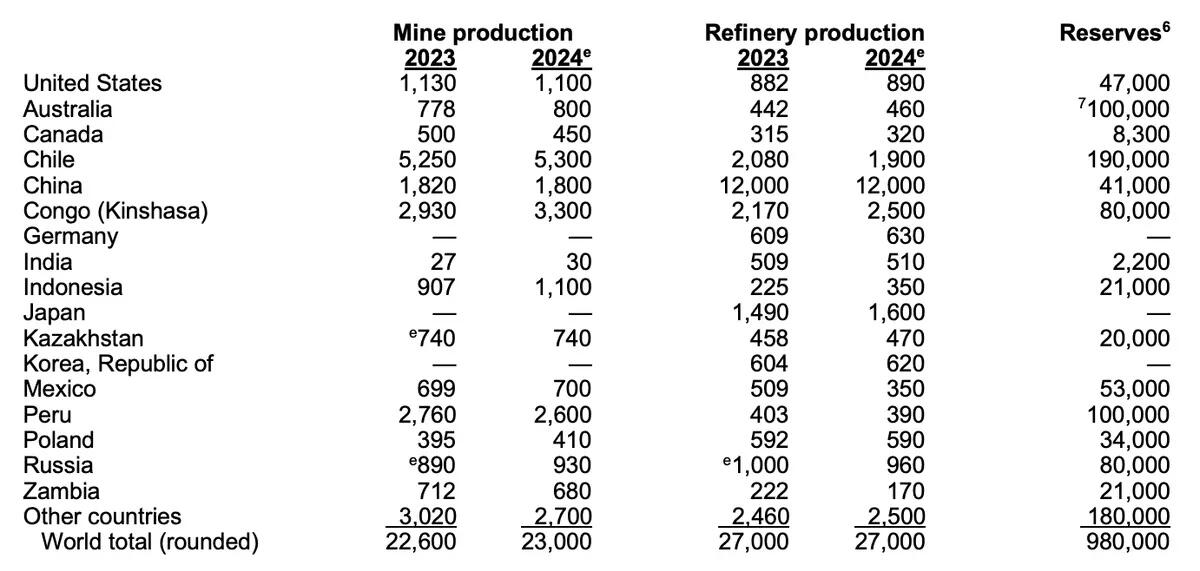
The situation is more challenging for the United States. The country is a net copper importer, producing less than half of the refined copper it consumes. According to the United States Geological Survey, a scientific agency under the Department of the Interior, America produced 850,000 metric tons of refined copper in 2025 while consuming 2.2 million metric tons, resulting in a deficit of more than 1 million metric tons.
The United States is expected to remain a net importer of copper through 2040, with imported refined copper projected to account for about 70 percent of consumption, according to a June 23 SEC filing citing Wood Mackenzie data.
In November 2025, the Department of the Interior added copper to the U.S. Geological Survey’s critical minerals list.
Underinvestment
“In copper, we have been systemically underinvested in exploration, in construction, in development, and we’ve been doing so for 30 years,” Rule told Khorrami.
“This is a capital-intensive, long-term business. There is nothing we can do right now—nothing, not one thing—that will prevent a supply shortage within five years.”
Source: U.S. Geological Survey, Mineral Commodity Summaries 2025—Copper
Rule said developing a new copper mine is a very long process, taking about 10 years to explore and find a mine, three years to drill, three more years “in a good country” to secure a permit and funding, and two years to build—about 18 years in total.
“The difficulty is that people weren’t doing enough of this 18 years ago,” he said.
Wood Mackenzie estimated in a 2021 analysis that the world copper industry had committed around $120 billion in capital spending to maintain production at the time, offsetting the impact of grade decline and depletion.
“Nonetheless, without additional substantial investment, production will decline from 2024 onwards. Coupled with demand growth, this decline in output will lead to a theoretical shortfall of around [16 million metric tons] by 2040,” the analysis states. To close the copper supply shortfall, the analysis said, the industry would need about $325 billion in additional investment.
“The industry is looking right down the barrel at an incredible capital spend to merely maintain current production levels, never mind increase it to meet the demands of rural electrification in the third world, data centers, electric vehicles, the electrification of everything,” Rule said.
“If you believe the numbers that people like Google and Amazon are putting out in terms of their data center demands, we will need to produce more copper between 2026 and 2050—24 short years—than has been mined in the history of mankind,” he said.
Rule said the industry has entered a copper construction cycle.
“For a long time, when copper was languishing at $3 a pound, the industry didn’t make enough money to build new mines; $6 a pound is not a bad incentive price.”
Permitting Hurdles
However, he said there are currently few construction-ready projects due to decades of underinvestment in mineral exploration. In the United States, he added, the permitting process is a major hurdle for these projects to move forward.
For example, Rule said the Resolution Copper project, jointly owned by Australian mining giants Rio Tinto and BHP and located in Arizona, is a high-quality copper deposit and well-located, but has been waiting more than a decade for a permit.
According to Rio Tinto’s website, if developed, the Resolution Copper project could be one of the largest copper mines in the United States, having the potential to supply up to one-quarter of the U.S. copper demand.
After decades of exploration, the Resolution deposit was officially discovered in 1995, according to the Department of Agriculture. It started the permitting process in 2013 and released its independent Final Environmental Impact Statement in 2019, entering a new phase of public consultation, according to a Rio Tinto press release. The company said in a March release that it had completed a key land exchange advancing the project toward development.
“All of this points to the fact that we’re going to have to get used to higher copper prices,” Rule said.
Related Markets
All MarketsMarket data may be delayed. Not financial advice.
How other outlets covered this
Compare allAlto found this story at 2 outlets. Same event, different framing — compare the headlines.
How this story developed
Full timelineAlto has tracked this across 7 days of coverage from 2 outlets.
- Copper Demand Surges, But Supply Deficit Is Hard To Solve, Expert SaysYou are here
Powered by Gab AI
The Story At A Glance
Reading this article now — analysis appears below
💡 AI analysis provides alternative perspectives on current events