Strongest El Nino In 75 Years Sets Off Food Supply-Chain Alarm Bells

The short version
- This raises the risk of adverse weather conditions across the US, Asia, Australia, and South America.
- The stronger the weather event becomes, the greater the threat to critical food supply chains, which are already vulnerable to drought, flooding, export restrictions…
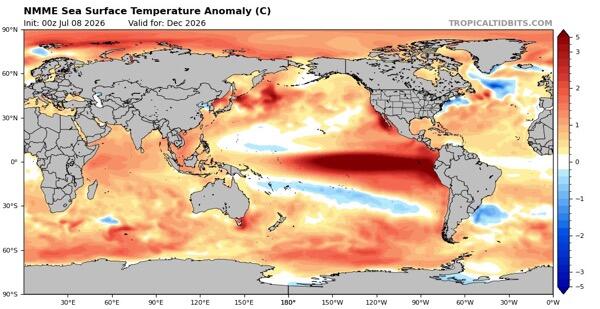
- Some parts of the Pacific were 2.7C above normal last week.
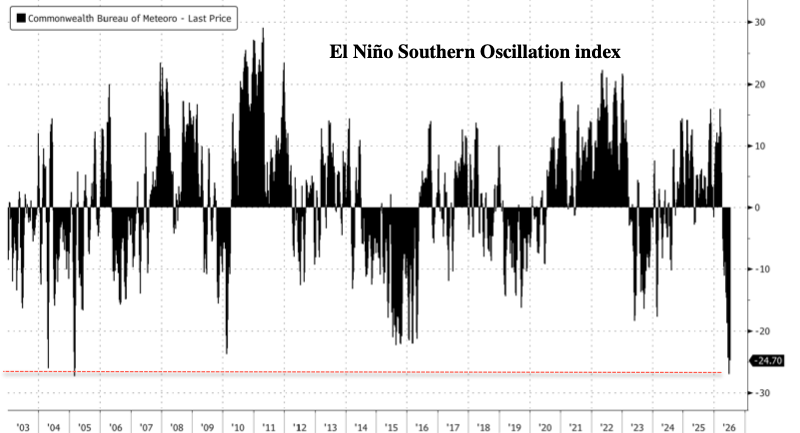
- A negative El Niño Southern Oscillation Index indicates pressure patterns consistent with El Niño, typically associated with weaker Pacific trade winds and warmer-than-average sea…
- The SOI is now at levels not seen since 2005.
The story
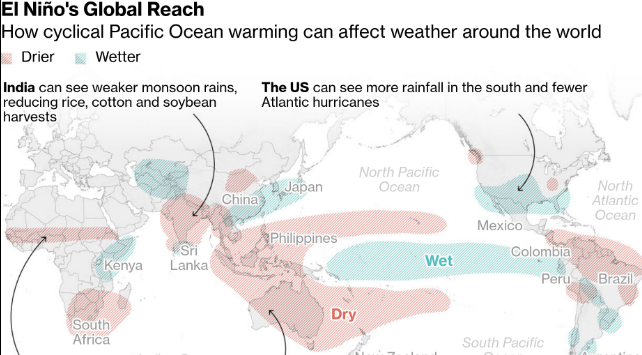
The US Climate Prediction Center has warned that the weather phenomenon El Niño, which only recently emerged across the Pacific, could become the most powerful in more than 75 years. This raises the risk of adverse weather conditions across the US, Asia, Australia, and South America. The stronger the weather event becomes, the greater the threat to critical food supply chains, which are already vulnerable to drought, flooding, export restrictions, and rising protectionism.
The CPC, a NOAA/National Weather Service unit that issues official US government climate outlooks, wrote in its report that sea-surface temperatures at least 1C above normal have spread across the central and eastern equatorial Pacific, with an 81% chance the event becomes "very strong" and ranks among the largest on record since 1950. Some parts of the Pacific were 2.7C above normal last week.
A negative El Niño Southern Oscillation Index indicates pressure patterns consistent with El Niño, typically associated with weaker Pacific trade winds and warmer-than-average sea surface temperatures in the central and eastern Pacific. The SOI is now at levels not seen since 2005.
"Even the strongest El Niño events do not lead to typical impacts everywhere, but stronger events can more significantly tilt the odds in favor of expected outcomes," the Climate Prediction Center said. El Niño "will strengthen through the end of the year, with a 97% chance it will last through early spring 2027."
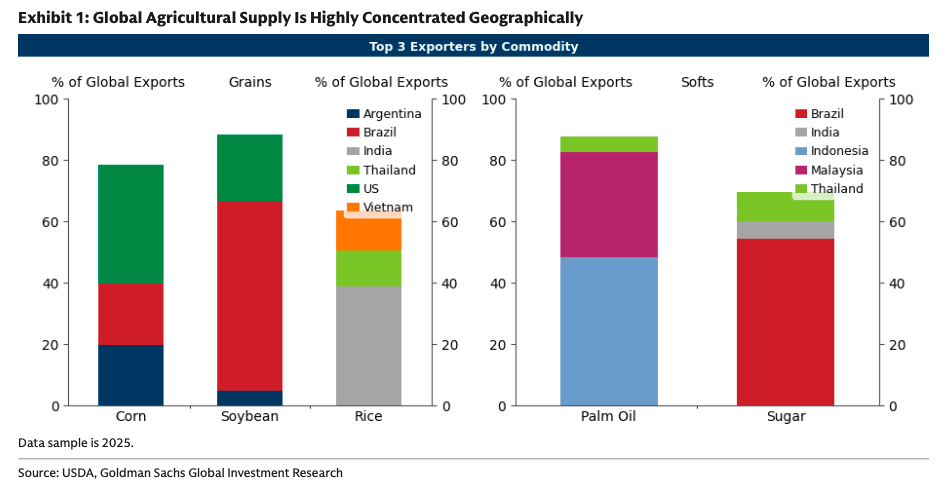
Goldman Sachs commodities research analyst Lina Thomas provided further insight into the looming El Niño threat, warning that global agricultural supply is "highly concentrated geographically," leaving crop markets "highly vulnerable to localized weather, geopolitical, or policy shocks."
Thomas warned about weather, geopolitical, and/or policy shocks that may put a bid under food prices:
Global agricultural supply is highly concentrated geographically. Across key crops such as soybeans, corn, rice, sugar, and palm oil, the top three exporting countries account for 60-90% of global trade (Exhibit 1), leaving agricultural markets highly exposed to localized weather, geopolitical, and policy shocks.
Because major agricultural exporters increasingly prioritize domestic food and energy security through export restrictions and biofuel mandates, even modest disruptions—or the fear of disruptions—can trigger policies that reduce exportable supply. In highly concentrated markets, the resulting loss of exportable supply can be much larger than the original production shock, amplifying price volatility. Import-dependent countries may in turn respond by stockpiling and pursuing greater self-sufficiency, often accepting higher domestic production costs in exchange for supply security. While these measures are ultimately aimed at improving resilience locally, they also fragment trade, reduce market liquidity, and increase the sensitivity of prices to future shocks.
We view the risk of protectionist policy responses as a key source of upside risk to crop prices and agricultural volatility, as three near‑term supply concerns could trigger precautionary measures even if the underlying disruptions ultimately prove limited.
- First, El Niño conditions are already present, with a 63% probability of developing into a "super" El Niño. Because many major exporters of staples such as rice, and crops used for biofuels such as sugar and palm oil, are concentrated in regions that historically experience more adverse weather during El Niño episodes, even a modest weather shock—or the fear of one—could trigger precautionary export restrictions.
- Second, higher energy prices in 2026H1 and concerns about fuel security may encourage governments to increase biofuel mandates, further diverting crops from export markets into domestic fuel production.
- Third, fertilizer markets also remain exposed to renewed disruptions in the Strait of Hormuz during the critical Q3 procurement season for major nitrogen fertilizer importers ahead of 2H planting.
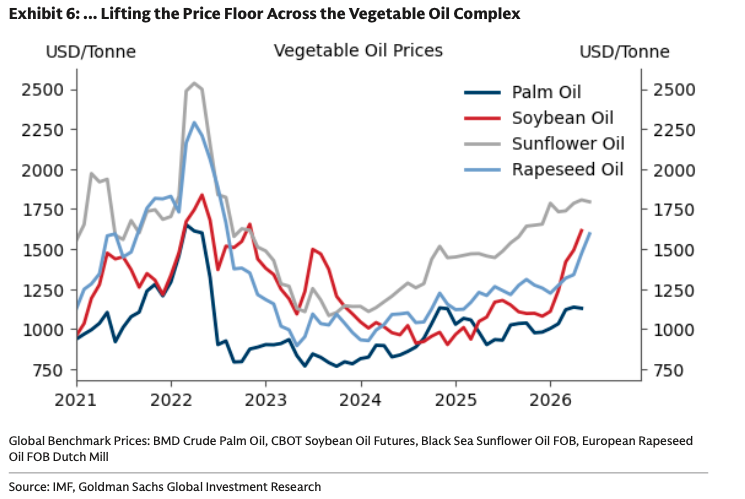
Already seeing rising vegetable oil prices...
El Niño coverage:
- Super El Nino: Famine Follows War?
- UBS Warns El Nino May Intensify Food Inflation Across Asia
- First Major Weather Organization Declares El Nino Onset As Food Inflation Risks Intensify
Professional subscribers can read more El Nino coverage here at our new Marketdesk.ai portal.
Related Markets
All MarketsMarket data may be delayed. Not financial advice.
How other outlets covered this
Compare allAlto found this story at 2 outlets. Same event, different framing — compare the headlines.
How this story developed
Full timelineAlto has tracked this across 3 days of coverage from 2 outlets.
- Strongest El Nino In 75 Years Sets Off Food Supply-Chain Alarm Bells You are here
Powered by Gab AI
The Story At A Glance
Reading this article now — analysis appears below
💡 AI analysis provides alternative perspectives on current events