Whose-muz?
The short version
- Oil leaped 9%, the largest move since 2020.
- Today, it’s up another 2.5% to $85 at time of writing.
- It’s a good job we also have the Cleveland Fed’s trimmed-mean inflation measure out as well, right?
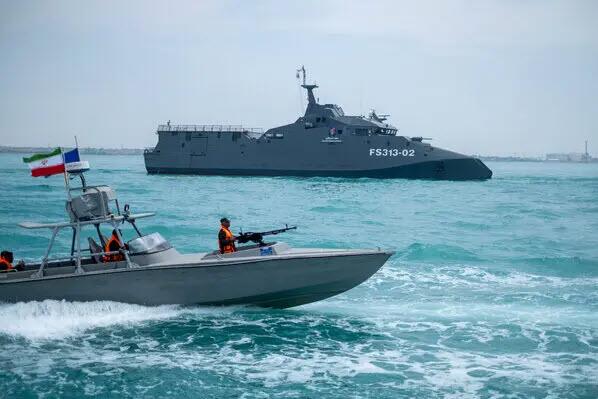
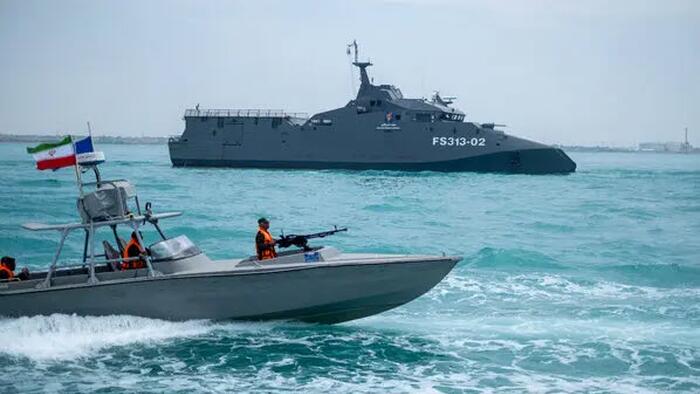
- Obviously, oil was driven by developments in Hormuz - or rather Whose -muz?
- There, besides reimposing the naval blockade of Iran, President Trump stated those using the waterway will now pay 20% of the value of cargo as compensation to the US…
The story
By Michael Every of Rabobank
Whose-muz?
Oil leaped 9%, the largest move since 2020. Today, it’s up another 2.5% to $85 at time of writing. It’s a good job we also have the Cleveland Fed’s trimmed-mean inflation measure out as well, right? Obviously, oil was driven by developments in Hormuz - or rather Whose-muz? There, besides reimposing the naval blockade of Iran, President Trump stated those using the waterway will now pay 20% of the value of cargo as compensation to the US, the strait’s new guardian. While the proposed Iranian toll the US rejected was $2m per tanker, or $1 per barrel of oil and $22 per tonne of LNG, Bloomberg estimates Trump fees at $30m per supertanker, the equivalent of $8 on oil and $177 on LNG. Naturally, the UN shipping agency is opposed to any fees for any strait and wants details on that Trump tariff – as if that will stop it.
More bluntly, Iran responded with missile attacks on tankers, with two from the UAE hit, as well as more strikes against the GCC and US military bases, the latter so far avoiding both energy and critical infrastructure. As we noted in ‘Comfortably Bomb’ yesterday, Iran can’t destroy such facilities and build bridges to the GCC if it sees itself defeating the US and gaining regional leadership. By contrast, the US is again in ‘take it down’ mode: Trump is reportedly weighing taking out Iran’s Pickaxe Mountain nuclear site, requiring a phenomenal explosion to neutralise.
Keeping out of the fight so far is Israel: the 2026 headline there from the New York Times is Mossad trying to recruit former Iranian President Ahmadinejad as an agent, and potential front man, in a failed plan for regime change. However, the Yemeni government, OK’d by the Saudis after Trump approval, bombed a runway in Houthi-occupied Sanaa to try to prevent an Iranian plane landing; now the Houthis are firing at the Saudis again for the first time in years, potentially endangering vital east-west oil flows via Yanbu on the Red Sea.
The realpolitik take is more evidence of a new (old) Mahan world disorder where countries use force to impose or restrict maritime trade flows: first Iran, now the US; the devastating Ukrainian attacks on Russian ships in the Sea of Azov is another concurrent example; and note the Hong Kong press asks, ‘Will Manila and Hanoi’s maritime deal challenge Beijing in the South China Sea?’
It’s also the US underlining that it’s fighting for a region, and world economy, that benefits from an open Hormuz but will no longer do it for free. Indeed, there’s a US message to the GCC and NATO/Europe/US allies – help us win this fight rather than saying ‘Not our war’ again. Don’t be surprised if anyone who aids the US now gets the 20% tariff lifted - which still implies it will have to be imposed on others to create that incentive.
If you think that’s cynical, in some see this as the US keeping Hormuz closed so it benefits as an LNG exporter. Indeed, as Dubai plans a new east-coast port for oil, LNG giant Qatar looks badly placed, Doha now looking at a project with the US (which likely won’t pay a penny?) for an Iraq-Syria pipeline. Even outside energy, the Asian press note the US has emerged as the helium winner amid the Iran war and China’s restrictions on exports of that key gas needed for chipmaking, with Taiwan, Japan, and South Korea turning to America for flows.
Which model?
Obviously not recalling all the reports on how Germany was artificially competitive within the Eurozone because of the low FX rate it was allowed to join at, Chancellor Merz just called for a dialogue with China on its monetary and FX policy, saying that the EU could not win, no matter how innovative or good the bloc may be, against a competitor that artificially manipulates its currency. He argued that CNY is 20-30% undervalued and needs to be allowed to float more freely so that it can appreciate to a fairer level. In this, listening to Europe in 2026 is like listening to the US in 2016.
To be clear, there is no world in which China will allow, or Europe is in any way able to impose, a new Plaza Accord on China: it is not going to happen. End of discussion. China could decide it wants to see CNY appreciate for its own reasons, such as to shift towards consumption as a growth driver, which is different. However, that’s a strategic theme echoed for decades by (mostly Western) economists, who are constantly surprised when it doesn’t happen and China’s trade surplus grows, and ever higher up the value-added ladder.
Yet the surging Chinese trade surplus with the EU, which is now larger than with the US and is close to doubling since 2020, must be addressed by October (by magic; or Chinese pledges of purchases of EU soybeans; or of Airbus aircraft when Beijing is also winking at Boeing?) or Europe says it will be forced to follow the US high tariff path after many years of patronising eyerolling at how disruptive such atavistic tactics are. China trade data today saw its imports up 36% y-o-y vs. 26.1% expected and exports up 27% vs. 19%: we will have to wait for the breakdown of the EU numbers, but they are unlikely to show what Brussels wants to see.
The larger point here is one repeatedly underlined in this Daily for many years: the problem is not one of FX levels, per se. Rather, it is of economic statecraft (a neomercantilist model) vs. neoclassical/neoliberal economic policy (a ‘free trade’ Merkelcantilist model), between which there is only one realpolitik winner: the former. If you dispute that fact, look at any pertinent production data, especially on the military side, or ask yourself which of the two is better placed to ride out an energy crisis. The logical trajectory on that basis is therefore to either assume the macroeconomic and market dynamic wherein:
- (i) the latter model adapts to the former by mirroring it, as we specifically projected in the case of the US vis-à-vis China in 2017 – and here we are in 2026; or
- (ii) the latter model doesn’t change, so continues to see ever-wider trade deficits, deindustrialisation, political polarisation, lack of strategic autonomy, and “slow agony,” as Draghi put it. And that’s before we get the fast-forward pain of who controls Hormuz.
Anyway, while we wait for Warsh’s take on the above, the Fed’s Waller has just warned of sticky inflation suggesting more rate hikes might be needed, as has the RBNZ’s Conway. Yet that all depends in large part on who wins the current battle in the Middle East, and how quickly - which is a reflection of the effectiveness of a given political-economy model.
Whocouldanooed?
Related Markets
All MarketsMarket data may be delayed. Not financial advice.
How other outlets covered this
Compare allAlto found this story at 31 outlets. Same event, different framing — compare the headlines.
- Dallas ExpressTexas Man Busted In Alleged Deer Feeder Heist As 85,000-Acre Wildfire Ragesabout 6 hours ago
- ZeroHedgeX Busts Suspected Chinese Bot Farm That Could 'Manipulate Legitimate Debate' Over America's AI Boomabout 7 hours ago
- The Guardian — WorldArtemis II astronauts receive nation's highest space honor for their successful moonshotabout 12 hours ago
- The VergeMusicians-turned-detectives are hunting for AI griftersabout 16 hours ago
- Al JazeeraAston Villa sign Chelsea striker Nicolas Jackson for reported club recordabout 20 hours ago
- Resist the MainstreamAOC Campaign Paid Nearly $19K For Mysterious Ketamine Therapy1 day ago
- Washington ExaminerNashville airport could be renamed in honor of Dolly Parton1 day ago
- Breitbart‘Independent’ Dan Osborn Raises $9K in Fundraiser Promoted by Far-Left Forum that Cheered Charlie Kirk’s Murder1 day ago
How this story developed
Full timelineAlto has tracked this across 4 days of coverage from 20 outlets.
Powered by Gab AI
The Story At A Glance
Reading this article now — analysis appears below
💡 AI analysis provides alternative perspectives on current events