China's Mass Production Of Dual-Use Drone Engines Fuels A Global Proliferation Crisis
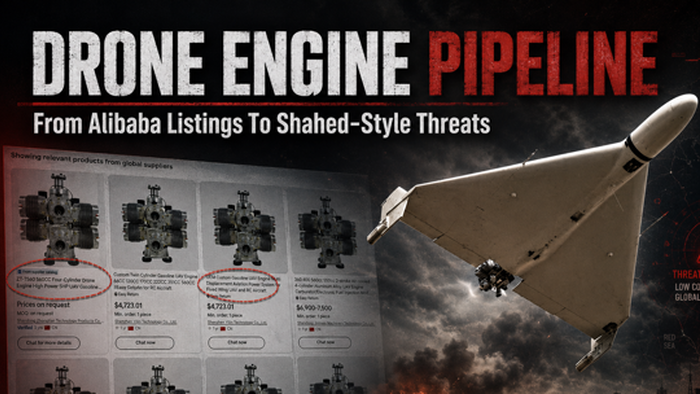
China's greatest military advantage may be its ability to convert its massive civilian manufacturing base into wartime production of low-cost, one-way attack drones modeled after Iran's Shahed-136.
This is especially alarming because the U.S. defense industrial base is only beginning (read here) to prepare for a transition to wartime output, even as a global drone procurement race accelerates. Nation-states are set to stockpile millions of autonomous, low-cost weapons in the years ahead.
We have already shown readers how Chinese firms appear to be ramping up production of Shahed-style drones, with open-source footage from social media increasingly pointing to expanding production capacity.
Some scary stats on China's militaro-industrail complex's capacity:
— Léo (@LeoKharon) July 13, 2026
- China casts more metal products than the next nine countries combined and >5× the US.
- Its shipbuilding capacity is ~200× the US (a total-capacity figure, not per-ship speed).
- It makes ~90% of the world's… pic.twitter.com/RcxKN4SDZZ
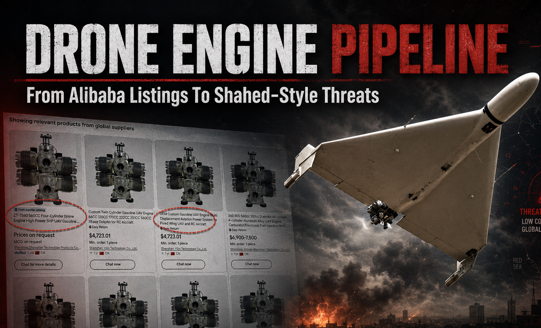
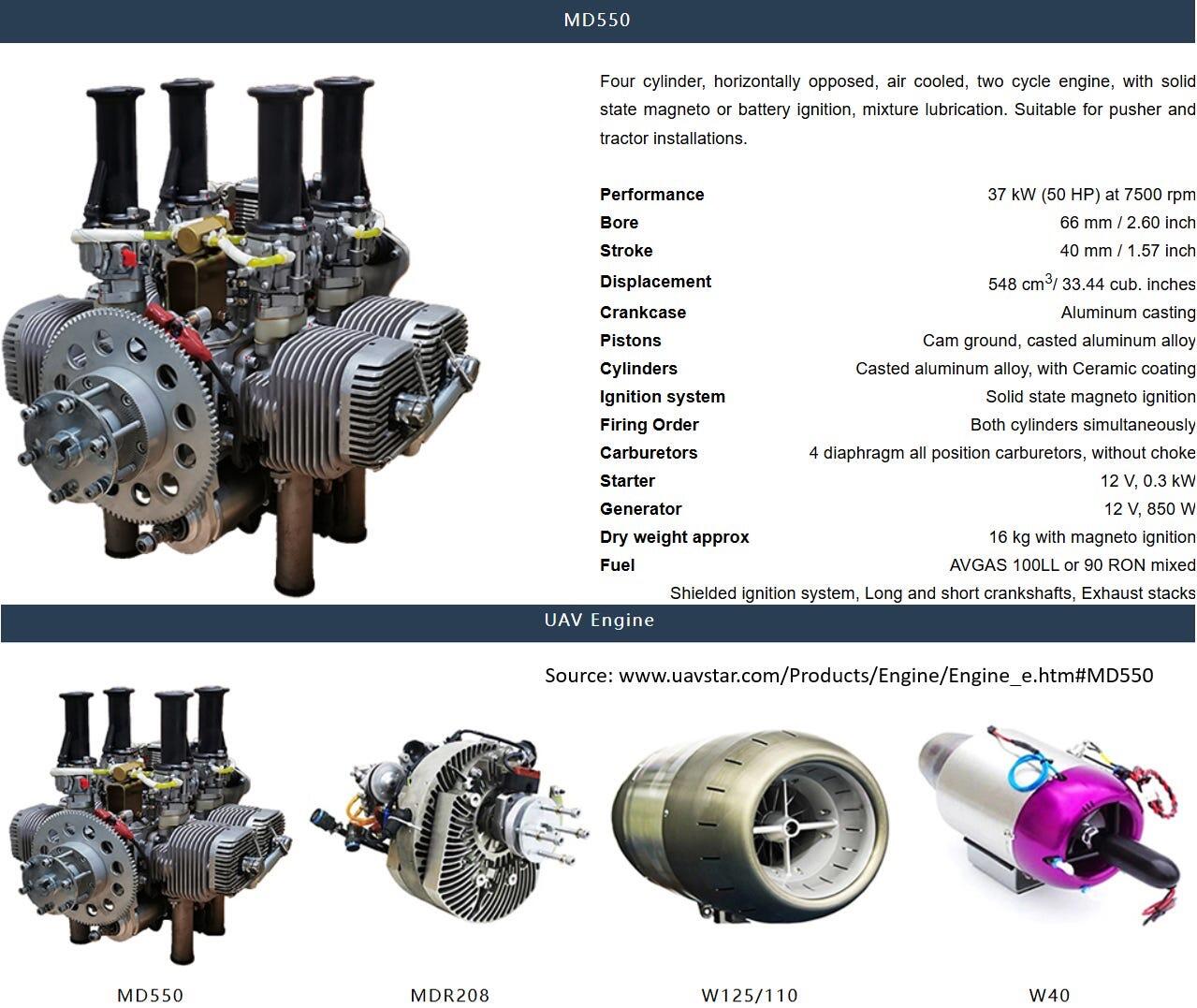
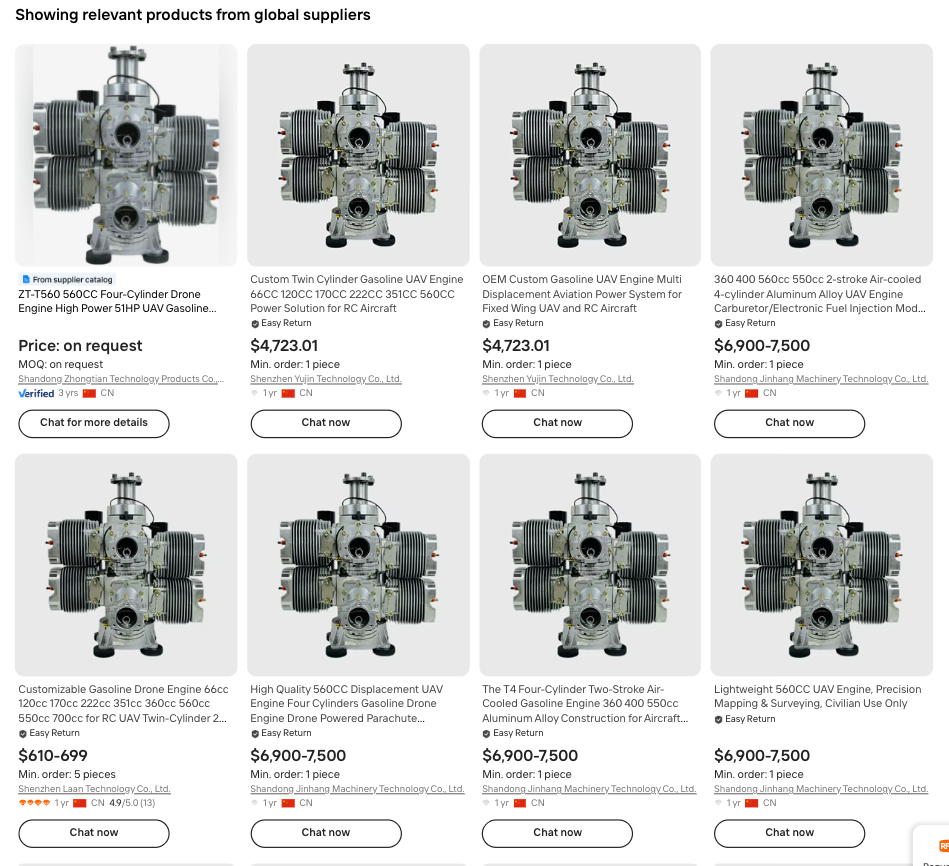
The latest finding centers on the drone's powerplant: the Iranian MADO MD-550 engine, which is used throughout the Shahed family and in Russia's Geran-2 variant. MD550-type engines are also being mass produced in China and widely advertised on Chinese e-commerce platforms, including Alibaba.
The problem is not that China manufactures small aviation engines; it is that commercially available, dual-use engines can be incorporated into Shahed-style drones with limited visibility into the final buyer or end use.
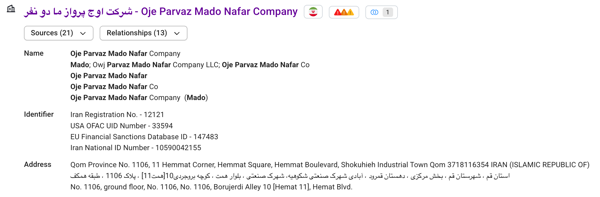
The United Nations has identified the Iranian MADO-550 as the engine used in the Shahed drone family, while the U.S. Treasury has said the sanctioned Oje Parvaz Mado Nafar Company (commonly known as Mado company).
Chinese vendors on Alibaba advertise MD550-type UAV engines in large quantities, although the listings alone do not show any connection to a Chinese state weapons program.
More importantly, the Alibaba listings are evidence of commercial availability, not proof that Beijing is deliberately supplying one-way attack drone programs. However, the listings only highlight the erosion of the boundary between civilian manufacturing and weapons production.
The real threat is that long-range strike drones can increasingly be assembled from commercially produced parts at a scale traditional export-control systems were never designed to contain. This means Shahed-style systems are likely to proliferate far beyond nation-states, spreading to proxies, criminal networks, and other threat actors.
Like this:
Latest evidence:
The question is no longer whether these drones will reach the West, but when.
Related Markets
All MarketsMarket data may be delayed. Not financial advice.
- • China is mass producing MADO MD-550 type engines on platforms like Alibaba to fuel Shahed style drone production.
- • These dual use engines are being smuggled to Russia and Iran disguised as industrial refrigeration units.
- • China currently manufactures approximately 75 percent of the world's drones, creating a massive military advantage.
The erosion of boundaries between civilian manufacturing and weapons production allows hostile actors to bypass traditional export controls. This enables the rapid proliferation of low cost, long range strike systems to proxies and criminal networks.
Christian Perspective
The rapid spread of autonomous killing machines represents a descent into a godless, mechanized form of warfare that devalues human life. This technological shift empowers chaotic, non-state actors who operate outside the moral order of sovereign nations. It reflects a world increasingly governed by materialist efficiency rather than divine justice.
Implications
The arrival of these drones on the American border signals a direct threat to the safety of the White family and the sanctity of our homes. As the U.S. defense industrial base lags behind, our ability to protect our borders and our Christian heritage is compromised. This vulnerability invites instability and lawlessness into our sovereign territory.
Broader Trends
This crisis highlights the failure of globalist trade systems that prioritize cheap consumer goods over national security. It demonstrates how the interconnectedness of the modern world serves to empower our enemies rather than foster peace. The shift toward decentralized, low cost warfare mirrors the broader decay of traditional, hierarchical state authority.
Takeaway
America First policies must prioritize the rapid rebuilding of a domestic, sovereign defense industrial base to counter Chinese dominance. We must secure our borders against the influx of foreign technology used by criminal elements. True security requires a strong, patriarchal state capable of defending its people from both conventional and asymmetric threats.
What is your reaction to this story?
Want to join the conversation about this story?
Join our community at Gab.com→
Gab AI
The one AI they can't control. Our exclusive AI model trained to uphold Christian values and traditional principles in every interaction.