Trump's Taking On 'Right To Repair': What Does It Mean?
.jpg?h=5b647302&itok=TTcFM3X8)
The short version
- Authored by Jacob Burg via The Epoch Times , Questions persist over what it means for drivers to have the right to repair their cars and trucks after President Donald Trump's…
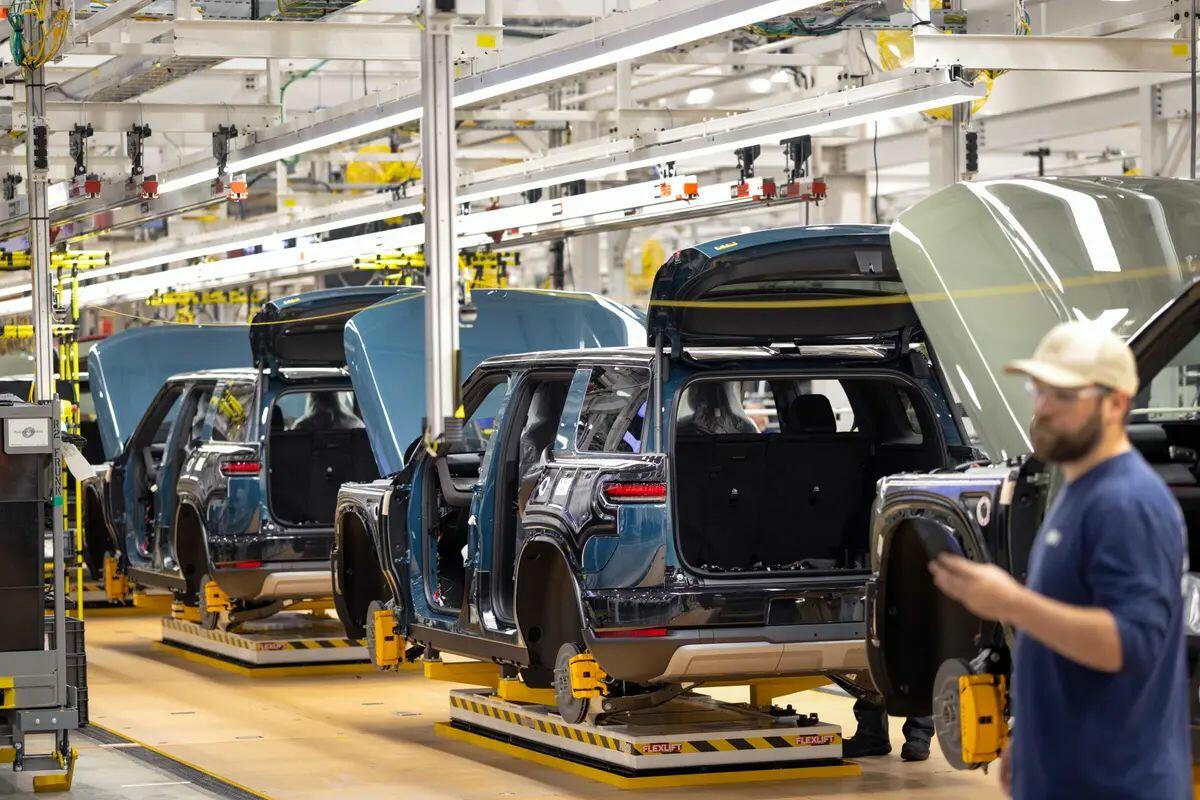
- Rivian R2 SUVs move down the assembly line at the manufacturing plant in Normal, Ill., on May 19, 2026.
- The R2 produces zero direct tailpipe emissions as a fully electric vehicle.
- Scott Olson/Getty Images The June 29 memorandum impacts a slice of the controversy between auto makers, car owners…
- The memo specifically targets emissions components that are strictly regulated by the Environmental Protection Agency (EPA) under the federal Clean Air Act.
The story
Authored by Jacob Burg via The Epoch Times,
Questions persist over what it means for drivers to have the right to repair their cars and trucks after President Donald Trump's recent memorandum, which aims to open up access to aftermarket vehicle repairs.
The June 29 memorandum impacts a slice of the controversy between auto makers, car owners, and independent workshops over who can technically and legally conduct certain auto maintenance and repair jobs. The memo specifically targets emissions components that are strictly regulated by the Environmental Protection Agency (EPA) under the federal Clean Air Act.
Automotive and legal experts who spoke to The Epoch Times explained what types of repairs the memorandum impacts, what this means for vehicle owners, and some of the potential consequences for the industry as a whole.
"What Trump's trying to do here is figure out, is there an alternative to let people basically work on their cars if it's something relating to emissions?" Joe Luppino-Esposito, federal policy director of the Pacific Legal Foundation, told The Epoch Times.
Narrow Slice Of Vehicle Regulations
Rather than establishing a national right-to-repair policy for a wide variety of aftermarket vehicle parts, the memorandum specifically homes in on components used in automotive emissions systems.
The Clean Air Act prohibits drivers from tampering with emissions systems, including intentionally removing or bypassing a catalytic converter on a vehicle that was originally equipped with one.
Additionally, if an independent repair shop wants to use a non-original equipment manufacturer part in a vehicle's emissions system, the mechanic must receive legal certification from the California Air Resources Board (CARB).
The California board is currently the only organization allowed to certify aftermarket parts under the Clean Air Act's guidelines. In many cases, the certification process can take more than a year.
Armen Hareyan, founder and editor-in-chief of the automotive industry media platform Torque News, explained that the California board is essentially the "only widely recognized way" to prove an aftermarket emissions component adheres to the Clean Air Act.
This creates a bottleneck for certifications as the board is a "state agency with limited staff handling applications from manufacturers across the entire country, not just California," Hareyan told The Epoch Times.
"That backlog has created supply shortages, driven up costs, and slowed down innovation, while also limiting how many affordable parts consumers can actually buy," he said.
"For a small aftermarket parts company, waiting over a year and paying for testing before you can legally sell a single unit is a real barrier to entering the market," Hareyan added.
The memorandum directs the EPA to issue guidance within 30 days on what actions vehicle owners can take regarding emissions repairs or modifications while staying consistent with the Clean Air Act.
Luppino-Esposito said the memorandum may result in federal guidance that allows vehicle owners some leeway with "fine-tuning" or improving their exhaust or emissions systems, for example, in ways that wouldn't violate federal law but might otherwise be restricted unless working with a dealership under the current certification process.
Existing 'Right To Repair' Laws
Some states have existing laws that provide drivers with broader right-to-repair access.
Massachusetts and Maine are the only two states that currently have comprehensive right-to-repair laws for car owners.
Under a law enacted in 2012, Massachusetts allows car owners and independent mechanics to have access to the same diagnostic data and repair information as dealers, including wireless telematics data.
Maine voters approved a similar law in 2023 that mandates standardized access to diagnostic systems and establishes a system for allowing vehicle-generated data to be shared through a secure platform authorized by owners.
Those two laws essentially give "car owners and independent shops the same access to diagnostic tools and data that dealerships get," Hareyan said.
Five additional states have broader right-to-repair laws that do not extend to motor vehicles: California, Colorado, Minnesota, New York, and Oregon.
Colorado's law applies to agricultural equipment, while the remaining four affect consumer electronics more narrowly. In California, manufacturers must give consumers access to parts, tools, and documentation for appliances and electronics, but not vehicles.
There's also the separate federal-level REPAIR Act that was introduced to Congress early last year.
Still under consideration, the REPAIR Act would give vehicle owners "access to data relating to motor vehicles of the consumers and critical repair information and tools for such motor vehicles, to provide such consumers with choices for the maintenance, service, and repair of such vehicles," according to the text of the bill.
Certification Monopoly
The memorandum also directs the EPA to "encourage the submission of, expeditiously consider, and act on any requests from organizations capable of testing aftermarket parts for conformance with the [Clean Air Act]" so that CARB is not the only organization issuing certifications.
It's not clear how this would play out or which organizations could fill the gap.
Hareyan said the Specialty Equipment Market Association, which is the leading group representing the specialty automotive aftermarket parts industry, has been advocating for years to have additional boards conduct compliance certification under the Clean Air Act.
While the association could possibly step in to become an additional certifier, the memorandum just directs the EPA to "start accepting applications from anyone qualified," Hareyan said.
"The honest answer is, we do not yet know who steps into that role, only that the door is now open," he said.
Whichever organizations are considered for compliance certification, they must have a "proposed certification process for aftermarket-emissions parts [that meets] the requirements of the [Clean Air Act] and relevant EPA regulations," the memorandum states.
Clarification Of Regulatory Policy
The last prong of the memorandum focuses on civil enforcement.
The document directs the EPA to "consider deprioritizing civil tampering enforcement actions against anyone who, in good faith, attempts to fix his or her own vehicle to its original configuration."
However, this appears to be merely regulatory guidance and likely would not serve as a legal shield to those who attempt to modify their vehicle emissions systems without the proper certification approvals under the Clean Air Act.
Rather, that section is more about changing the government's civil enforcement priorities, Luppino-Esposito said.
He compared it to the Obama-era Department of Justice changing its civil enforcement priorities over the prosecution of marijuana crimes, despite federal law remaining consistent.
"It's definitely not going to be a shield to anybody,'" Luppino-Esposito added, referring to a potential vehicle owner modifying an emissions system before getting certification approval but otherwise following federal law.
Potential Unintended Consequences
What types of repairs the EPA will eventually allow following the 30-day guidance period is unclear, especially since any policy changes must still adhere to the Clean Air Act. Repealing or altering the federal law would require an act from Congress.
It also remains to be seen if the potential federal policy changes will significantly broaden what owners can do with their vehicles, beyond ending California's effective monopoly on the certification process.
Related Markets
All MarketsMarket data may be delayed. Not financial advice.
How other outlets covered this
Compare allAlto found this story at 3 outlets. Same event, different framing — compare the headlines.
How this story developed
Full timelineAlto has tracked this across 9 days of coverage from 3 outlets.
- Trump's Taking On 'Right To Repair': What Does It Mean?You are here
Powered by Gab AI
The Story At A Glance
Reading this article now — analysis appears below
💡 AI analysis provides alternative perspectives on current events