A Fed Rate-Hike Would Be A Serious Mistake
The short version
- Additionally, June data show that inflation is slowing down, especially in the core CPI measure that is most closely watched by monetary authorities…
- Hiking rates while maintaining elevated liquidity harms families and small businesses and perpetuates the very factors that drive inflation…
- Keeping rates above the neutral level has cost the U.S. economy nearly one million jobs, as small and medium-sized enterprises (SMEs) find it increasingly difficult to access…
- For investors, a 25-basis-point increase may seem insignificant, but for small businesses, it often means either no access to credit or excessively expensive borrowing rates.
- In the U.S., the average cost of debt for SMEs typically ranges from 6% to 12% APR, making it extremely difficult to hire new employees.
The story
The latest U.S. inflation report and jobs data do not justify another interest rate increase. Additionally, June data show that inflation is slowing down, especially in the core CPI measure that is most closely watched by monetary authorities, while ongoing tightening is stopping the labor market from reaching its full potential.
Hiking rates while maintaining elevated liquidity harms families and small businesses and perpetuates the very factors that drive inflation, including rising money supply and government spending.
Keeping rates above the neutral level has cost the U.S. economy nearly one million jobs, as small and medium-sized enterprises (SMEs) find it increasingly difficult to access credit and face prohibitively high borrowing costs. For investors, a 25-basis-point increase may seem insignificant, but for small businesses, it often means either no access to credit or excessively expensive borrowing rates. In the U.S., the average cost of debt for SMEs typically ranges from 6% to 12% APR, making it extremely difficult to hire new employees.
A further rate hike under these conditions would suggest that the central bank is reacting to past fears rather than future evidence, risking an unnecessary slowdown just as the disinflation process becomes visible in the data.
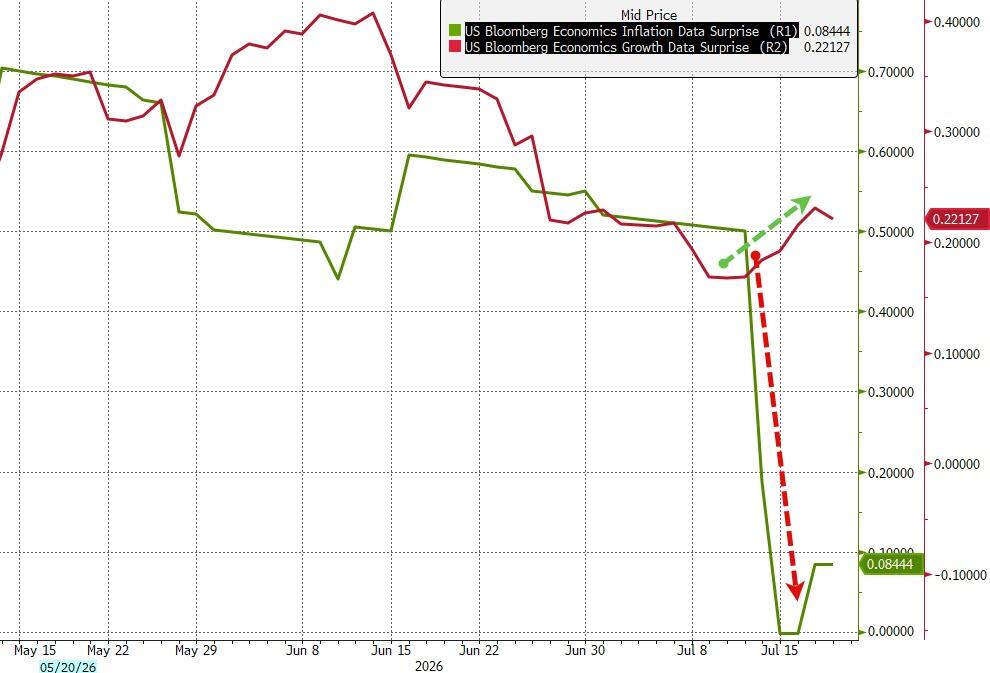
The June Consumer Price Index report delivered a clear positive surprise relative to consensus estimates. Headline CPI fell by 0.4% month-over-month, and the annual rate decelerated to 3.5%. More importantly for monetary policy, core CPI, which excludes food and energy, was flat for the month and slowed to 2.6% year-over-year, the lowest level since March 2021.
A core inflation rate of 2.6% indicates that tariffs and the energy shock have had no meaningful impact on core goods and services. Underlying price pressures are gradually moving closer to target after a prolonged phase of tightening and normalization. Those still arguing for another rate hike are effectively suggesting that even as core inflation cools toward 2%, policy should become more restrictive. This position is difficult to defend when we examine both inflation and labor market data.
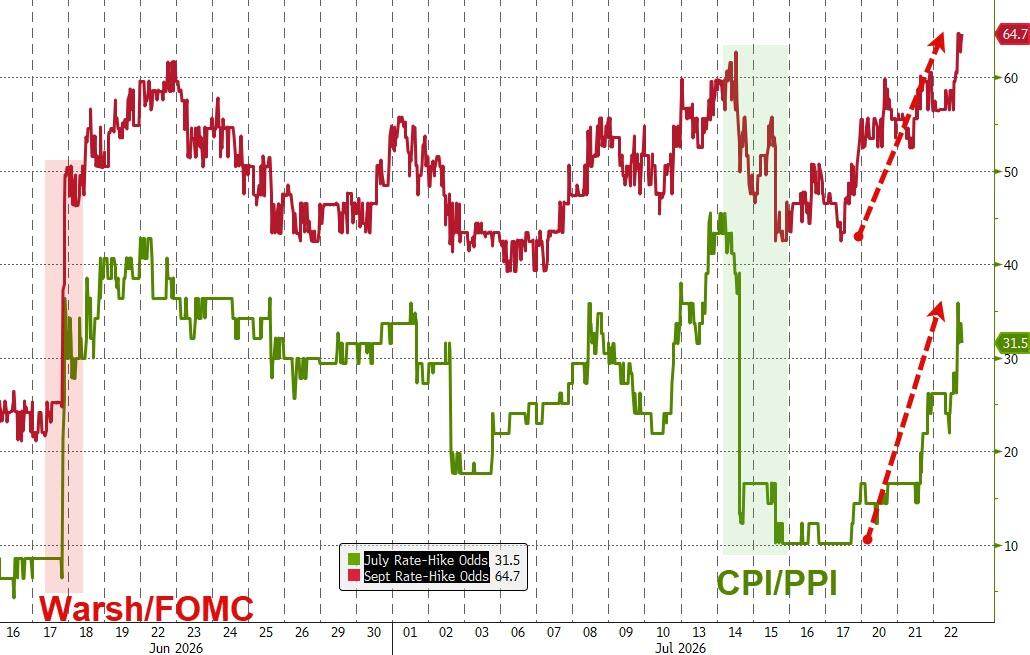
The June inflation data has revived the debate over whether the Federal Reserve should abandon further tightening. Markets initially seemed to recognize that incoming inflation data no longer supports the narrative of tariff-driven inflation and overheating that would justify additional rate increases... [ZH: but recent market action, amid rising oil prices, has pushed a July hike back on the table]...
Raising rates in response to an external energy shock is akin to raising taxes to reduce rainfall. A close examination of the labor market and CPI components reveals no evidence of an overheated economy or justification for further tightening.
The effects of previous rate hikes materialize with a lag across credit markets, housing, business investment, and consumer demand. Tightening policy further when inflation is driven by external factors and is already declining increases the risk of exacerbating economic weakness after the initial inflation surge has passed.
Central banks often err not because they fail to respond to inflation, but because they maintain an elevated money supply that supports government spending while tightening policy after disinflation is already underway. June’s report highlights this risk. Headline inflation declined sharply as energy prices fell, and core inflation also eased, indicating that the slowdown is not merely a temporary or volatile effect.
If headline CPI had fallen solely due to lower fuel prices while core inflation remained elevated, a restrictive policy stance could still be justified. However, that is not what the data show. Core CPI at its lowest level since March 2021 confirms that inflationary pressures are fading.
Some analysts argue that the Federal Reserve must guard against upside risks. While this caution may be theoretically valid, the Fed must rely on actual data rather than behave like a futures trader. There is a fundamental analytical flaw in translating every potential upside risk into justification for tighter policy. Monetary policy is a blunt instrument that disproportionately affects families and businesses. It cannot increase energy supply, resolve supply chain disruptions, or offset geopolitical shocks.
When central banks raise rates to address external, supply-side inflation, they suppress domestic demand without addressing the root causes of inflation, namely excessive government spending and monetary expansion. The result is weaker growth, tighter credit conditions, and job losses. In the current environment, where core inflation is already declining, this trade-off appears particularly risky.
If the Fed is serious about controlling inflation, it should accelerate balance sheet reduction, maintain or lower interest rates, and coordinate with the federal government to reduce deficit spending more rapidly. Any alternative approach risks damaging the private sector while further inflating the sovereign debt burden.
The central policy question is not whether inflation should be taken seriously, but whether the Fed is addressing the primary driver of persistent inflation: excessive government and deficit spending, which increase money supply and velocity.
Excessive tightening would place additional strain on borrowers already refinancing at significantly higher rates, increase the likelihood of a recession, and intensify financial stress in interest-sensitive sectors.
A common defense of a higher-for-longer policy stance is the need to preserve central bank credibility at all costs. This argument is flawed. Credibility erodes when a central bank fails to adapt to incoming data and repeatedly makes policy errors that indirectly support rising government indebtedness. Independence is strengthened when policy is consistent, transparent, and evidence-based rather than narrative-driven.
If the Federal Reserve is truly data-dependent, then June’s core CPI data does not support a tightening bias.
The case against another rate hike is clear: inflation is easing, core inflation is declining, and the economy is still absorbing the delayed effects of prior tightening. If credit growth and demand accelerate significantly, the Fed can use additional tools.
However, today, the probability of another rate hike should be lower than many hawkish consensus views imply.
Related Markets
All MarketsMarket data may be delayed. Not financial advice.
How this story developed
Full timelineAlto has tracked this across 8 days of coverage from 1 outlet.
- A Fed Rate-Hike Would Be A Serious MistakeYou are here
Powered by Gab AI
The Story At A Glance
Reading this article now — analysis appears below
💡 AI analysis provides alternative perspectives on current events