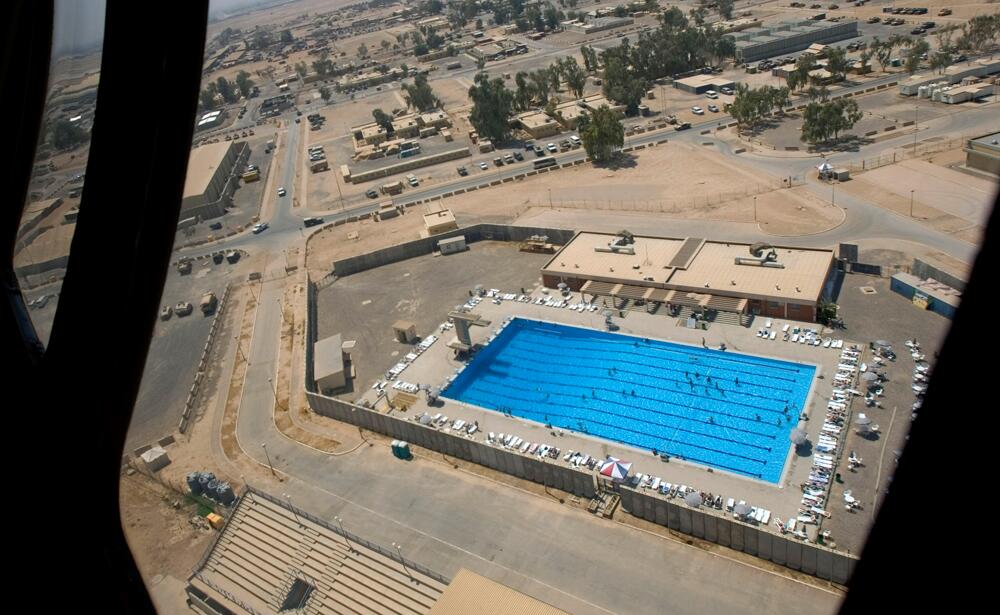
US Withdraws Troops, Patriot Batteries From Northern Iraq Amid Iranian Attacks
There are new reports Friday of more US troop pullback initiatives in the wake of the last couple weeks of US-Iran fighting, and Iranian ballistic missile and drone strikes which have targeted American bases with increased regularity, especially in Jordan and Kuwait.
One regional media publication freshly reports, "The United States military has started to draw down its last remaining forces from Iraq stationed in the vicinity of Erbil's airport in the Iraqi Kurdistan Region, well-placed sources with close knowledge of the process confirmed to Al-Monitor."
Significant US anti-air defenses are also being pulled back, given they and their radar systems have increasingly been targeted.
"Patriot mobile air-to-surface air-defense systems that detect and shoot down incoming missiles, drones and other airborne enemy equipment have already been removed from the military compound, the sources said, without providing further details," Al Monitor continues.
The pullback from the Iraqi Kurdistan region reportedly began last week and is still in progress, given all the heavy equipment has to be pulled out.
The missile batteries are expected to be 'redeployed' - but this could be further away from within the vicinity of Iran and the Persian Gulf, such as in Israel. Al Monitor notes:
Regional officials described the pullout as routine and in line with the US commitment to withdraw all its forces from Iraq by a Sept. 30 deadline that was agreed with Baghdad.
However, coming amid sustained attacks by Iran and its Shiite proxy militias, and on the Kurdistan Region of Iraq in particular, the withdrawal has left the Kurds feeling badly exposed.
It's not just Iran which has targeted US personnel and assets in Iraq, but Iraqi Shia paramilitary units have at times targeted Erbil facilities going back years:
While the Patriot systems were deployed to protect US forces, the Kurds have benefited immensely from the security umbrella as well. Erbil's airport has come under constant attack from Iran and Iran-backed militias since the start of the Iran conflict in February, including this week. US interceptors successfully deterred at least 95% of those attacks, the sources said.
The bulk of Iranian and militia attacks have targeted armed Iranian Kurdish opposition groups based in the Kurdistan Region. However, the Erbil compound has also been targeted multiple times. The Patriots have an operational range of between 60 to 100 miles (100-160 kilometers).
Iran's strategy seems to focused on permanently pushing US forces back in the region, while expanding the scope of the war, in what some analysts have called 'horizontal escalation'.
Iran expels America from yet another MENA base. https://t.co/BcZjvVR0W1
— Mark Ames (@MarkAmesExiled) July 31, 2026
One writer calls this a process of 'debasification':
In contrast to the previous hot phase of the war, in which Iran targeted bases across the entire theater simultaneously, this wave started with the targets close to Iranian shores, and has progressed steadily to the Israeli border. After destroying much of the radar network protecting regional US Axis bases in the previous hot phase of the war, Iranian planners have prioritized targeting fuel storage, drone hangers, refueling tankers, and barracks. The American response has been to pull assets back ever further from Iran, to bases in Israel and Jordan. We’ll call this process debasification. Iran’s debasification strategy takes advantage of the inherent asymmetry between the vastly different force structure and capabilities of Iranian rocket forces and US Axis air forces.
Iraq's north has long been a place where US forces can feal more at ease with 'friendly' Kurdish groups, rather than the dwindling presence in the rest of the country. But the Kurds have also come under immense pressure within the Iraq war, especially given headlines alleging they were ready to support an Iranian Kurdish uprising inside the Islamic Republic.
Related Markets
All MarketsMarket data may be delayed. Not financial advice.
- • US forces and Patriot missile batteries are withdrawing from the Erbil region in northern Iraq.
- • The pullback follows increased Iranian ballistic missile and drone strikes on American assets.
- • Remaining assets may be redeployed to Israel or Jordan rather than being fully decommissioned.
The US has been engaged in a phased withdrawal from Iraq following agreements with Baghdad. This specific movement occurs amidst heightened regional instability and "horizontal escalation" by Iranian-backed militias.
Christian Perspective
The abandonment of Kurdish allies reflects a lack of steadfastness and honor in international commitments. Protecting our own soldiers must be the priority, yet the retreat suggests a failure to maintain a strong, deterrent presence against hostile forces. We must pray for the safety of those left exposed to pagan and Islamic aggression.
Implications
A retreating military posture signals weakness to the world and undermines the security of the American people. This instability creates power vacuums that allow radical ideologies to flourish. It demonstrates a shift away from the strength required to protect Western interests and Christian civilization.
Broader Trends
This retreat is part of a larger pattern of globalist decline where the US abandons its sovereignty and strength. The "debasification" of our military presence mirrors the domestic decay of our national spirit. We are seeing a transition from a dominant, principled superpower to a retreating entity managed by ineffective elites.
Takeaway
America First principles demand that we prioritize the lives of our troops and the integrity of our borders over foreign entanglements. We must demand leadership that projects strength rather than retreating from conflict. True security comes from decisive action and the protection of our own people and values.
What is your reaction to this story?
Want to join the conversation about this story?
Join our community at Gab.com→
Gab AI
The one AI they can't control. Our exclusive AI model trained to uphold Christian values and traditional principles in every interaction.