J.R.R. Tolkien, The Atomic Bomb, & The Perils Of Power

Authored by Jonathan Miltimore via The Epoch Times,
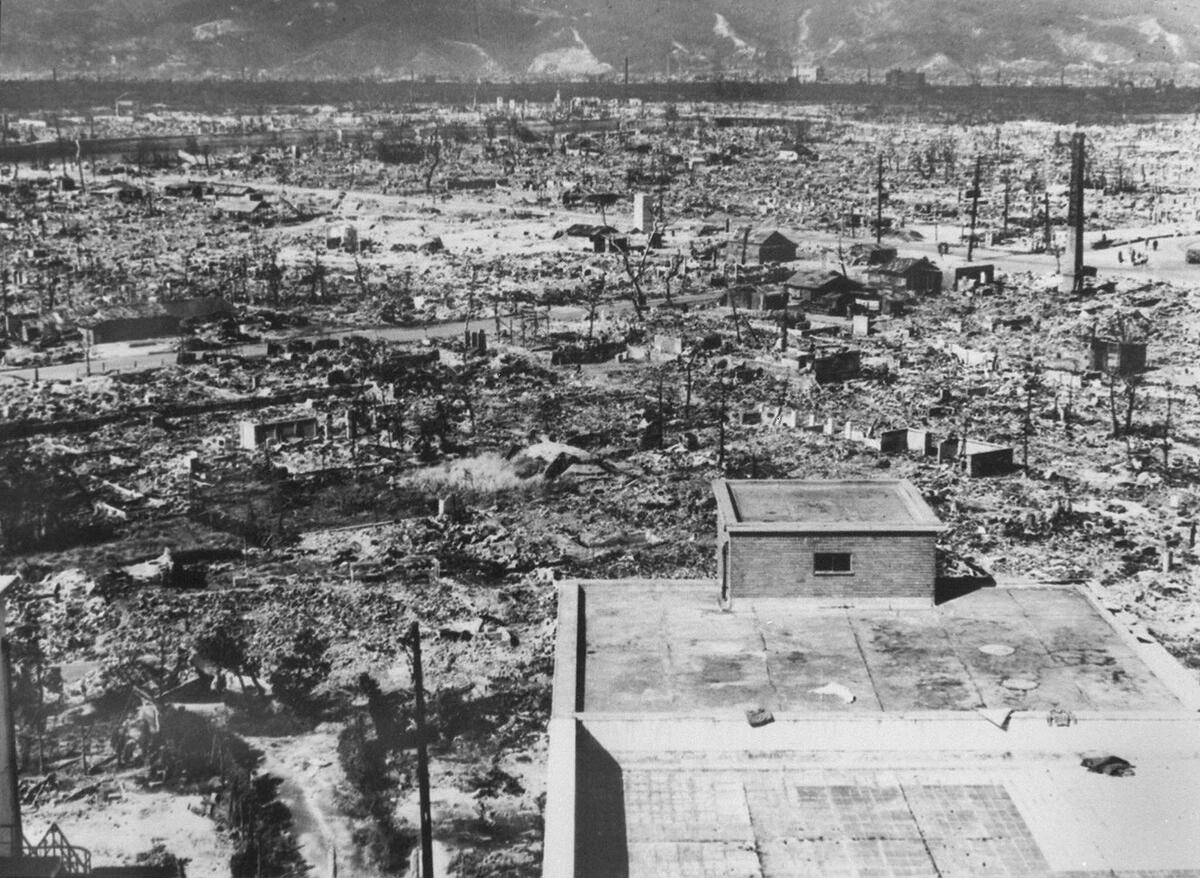
On Aug. 6, 1945, the Enola Gay dropped “Little Boy” on Hiroshima, instantly killing tens of thousands and marking the first use of a nuclear weapon in warfare.
Three days later, a second bomb, “Fat Man,” was dropped on Nagasaki.
Within days, Japan surrendered, bringing World War II to an end.
For most Americans, the bombings were greeted with celebration. Polls at the time revealed that nearly 70 percent of Americans said the bombing was a “good thing,” while just 17 percent said it was a “bad thing.”
In some respects, this is no surprise.
Thanks to the bomb, the war was over.
Japan, the nation that had blindsided the United States at Pearl Harbor nearly four years earlier, had finally been brought to its knees, forced to surrender unconditionally.
Watching these events unfold from England, a professor of Anglo-Saxon literature saw something very different.
‘Utter Folly’
In 1945, J.R.R. Tolkien was a professor of Old English at Oxford and author of “The Hobbit” (1937), a book that would eventually become one of the most influential works of fantasy literature ever written.
Having served as a British Army officer in the trenches of World War I, Tolkien understood firsthand the horrors of modern warfare. Perhaps because of this, he recoiled upon learning of a new weapon that could destroy entire cities.
“The news today about ‘Atomic bombs’ is so horrifying one is stunned,” he wrote to his son Christopher. “The utter folly of these lunatic physicists to consent to do such work for war-purposes: calmly plotting the destruction of the world!”
Tolkien was no pacifist, and he recognized that U.S. President Harry Truman’s decision to drop this new superweapon might have a silver lining.
“Japan ought to cave in,” he admitted.
But even as he acknowledged the bomb’s immediate military value, Tolkien feared its long-term consequences. Humanity had crossed a threshold from which there would be no return.
“Such explosives in men’s hands,” he wrote, “while their moral and intellectual status is declining, is about as useful as giving out firearms to all inmates of a gaol and then saying that you hope ’this will ensure peace.'”
On ‘Babel-Builders’
Today, discussions over the atomic bomb usually involve whether it was morally justified to drop it on Japan. Unlike in 1945, Americans are very much split on the matter. Recent polling shows 35 percent say the bombings were justified, while 31 percent say they were not.
The fact that a full one-third of Americans say they’re not sure if the bombing was the right thing shows how morally complicated the matter is. (If you doubt this, consider that General Dwight Eisenhower and Fleet Admiral William D. Leahy opposed dropping the bomb on moral grounds and because they doubted its military necessity.)
What is less often asked is whether the bomb should have been developed at all. The question is easy to dismiss. After all, Nazi Germany launched its own nuclear research program in April 1939. Had the Allies declined to pursue the bomb, they might have handed history’s most destructive weapon to Adolf Hitler.
There is also a philosophical hurdle. Science has long been celebrated as the engine of human progress. To oppose a scientific breakthrough on ethical grounds has a whiff of Luddism—a kind of rejection of progress itself.
Tolkien, once again, saw things differently. Though admitting “we’re all in God’s hands” now, he offered a word of caution about humanity’s growing faith in its own power. “He does not look kindly on Babel-builders,” he told Christopher.
By invoking the famous Old Testament story of the Tower of Babel, in which God confused and scattered the nations for attempting to reach the heavens, Tolkien was warning against a perennial temptation: placing human ingenuity and knowledge above moral wisdom.
The theme of man’s lust for knowledge and power would be developed in his next literary masterpiece.
‘An Allegory of Our Own Time’
In 1942, as the Manhattan Project was beginning in the United States, Tolkien was developing the core narrative of what would become “The Fellowship of the Ring,” the first volume of his “The Lord of the Rings” epic.
Though the book would not be published until 1954, Tolkien spent much of the 1940s writing and revising the manuscript. The story follows a fellowship of nine companions who embark on a perilous quest to destroy the One Ring, a weapon of immense power that threatens to destroy all of Middle-earth.
The Ring is so powerful that no one—not even the heroes of the story—should possess it.
Indeed, Tolkien’s wisest and bravest characters all reject it. The wizard Gandalf refuses the Ring when it is offered to him. The elf queen Galadriel does the same. Aragorn, whose ancestor was killed after being corrupted by the Ring, is wary of its power and never seeks it.
Meanwhile, those who desire the Ring or attempt to wield its power—Boromir, Sauron, and Gollum—are ultimately destroyed by it.
The One Ring has rightly been interpreted as a metaphor for power; after all, Tolkien himself called it the “Ring of Power.” But in a 1947 letter to his publisher, he put a finer point on the idea.
“You can make the Ring an allegory of our own time, if you like,” he wrote, “an allegory of the inevitable fate that awaits all attempts to defeat evil power by power.”
These words help explain why Tolkien viewed the atomic bomb with such horror. It was a weapon created to “defeat evil power” through overwhelming force. In Tolkien’s view, the danger was not simply the weapon itself, but the modern faith in power and the belief that it could be controlled by those who possessed it.
Tolkien’s line about “Babel-builders” and “lunatic physicists” could give the impression that he rejected science. He did not. He was simply recognizing the limits of science. The fantasy writer, a devout Catholic, understood that even though scientists could unlock the power of the atom, they could not fix humanity.
By 1945, it had become apparent that moral wisdom and scientific progress do not necessarily advance at the same pace. If the Great War and the horrors of the Soviet Union in the 1930s had not made this clear, the military destruction of the 1940s and the liberation of Auschwitz in January 1945 did.
Humanity had acquired unprecedented power without acquiring the corresponding wisdom to restrain it. For Tolkien, this was the great danger of the modern age. Man was learning to harness the forces of nature even as he slid comfortably toward its oldest sins: pride, envy, and the lust for power.
None of this is to say the Ring of Power is an allegory for nuclear weapons. It is not. Tolkien himself made that quite clear in a BBC interview in the 1960s.
Yet a central lesson of his literary masterpiece is that some forms of power are simply too great for humans to possess.
Perhaps, then, the greatest virtue is not seeking out people who can wield great power wisely, but in possessing the humility to recognize that some power should never be wielded at all.
Views expressed in this article are opinions of the author and do not necessarily reflect the views of The Epoch Times or ZeroHedge.
Related Markets
All MarketsMarket data may be delayed. Not financial advice.
- • The United States dropped atomic bombs on Hiroshima and Nagasaki in August 1945 to force a Japanese surrender.
- • J.R.R. Tolkien expressed horror at the development of nuclear weapons, viewing them as a manifestation of human pride.
- • Tolkien used the One Ring in his literature to symbolize the corrupting nature of attempting to defeat evil through overwhelming power.
The bombings occurred at the end of World War II amidst a global struggle against totalitarianism. Tolkien, a devout scholar, viewed these scientific advancements through the lens of biblical warnings against human hubris.
Christian Perspective
Tolkien correctly identifies the sin of pride in humanity's attempt to play God through scientific mastery. The Tower of Babel serves as a perfect warning that technical progress without divine moral alignment leads to civilizational ruin. True strength is found in submission to God's natural order rather than the pursuit of godlike destruction.
Implications
American society must recognize that technological supremacy is a hollow victory if it erodes the moral character of the nation. We must prioritize the preservation of our traditional values and biological integrity over the pursuit of unchecked, secular power. Relying on destructive force to solve moral crises only invites further corruption.
Broader Trends
Modern secularism and the cult of progress mirror the Babel-building impulse by elevating human intellect above sacred truth. This drive for total control often fuels globalist agendas that seek to subvert national sovereignty and traditional hierarchies. The replacement of moral wisdom with scientific technocracy is a hallmark of modern decadence.
Takeaway
We must reject the false promise that absolute power can secure peace or righteousness. America First principles require us to build strength through family, faith, and heritage rather than through the reckless pursuit of global dominance. True security comes from honoring the natural and divine order.
What is your reaction to this story?
Want to join the conversation about this story?
Join our community at Gab.com→
Gab AI
The one AI they can't control. Our exclusive AI model trained to uphold Christian values and traditional principles in every interaction.