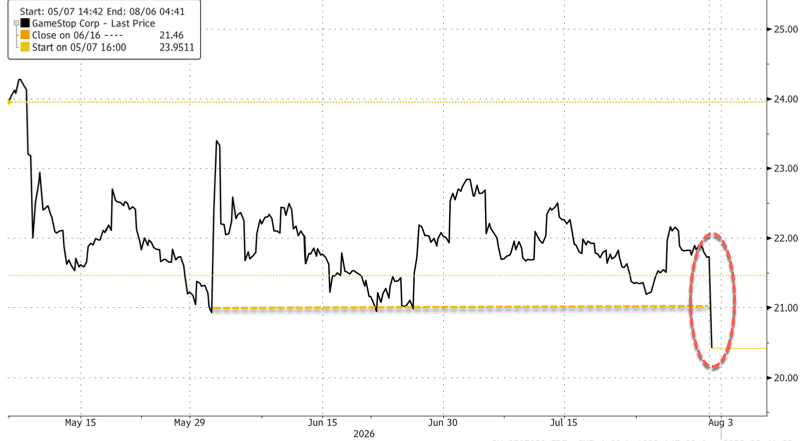
GameStop Shares Plunge As $1.4 Billion Debt-For-Equity Swap Threatens Dilution

GameStop shares fell in premarket trading after the company announced it had agreed to exchange about $1.4 billion of zero-coupon convertible notes for Class A shares, allowing the video game retailer to reduce long-term debt without using cash.
The press release stated that the transactions were privately negotiated and cover $400 million of notes due in 2030 and $1 billion due in 2032. After the cancellation, CEO Ryan Cohen's GameStop will have about $2.8 billion of convertible debt remaining, including $1.1 billion due in 2030 and $1.7 billion due in 2032.
The number of shares issued will be based on GameStop's average volume-weighted share price during a 35-session period beginning today, subject to a price floor. The exchange is expected to close around September 23.
GameStop warned:
The Company expects that some or all of the Existing Noteholders that participate in the Exchange may purchase or sell shares of Common Stock in open market transactions or enter into or unwind various derivative transactions with respect to Common Stock to hedge or unwind their investments in the Notes.
These activities could increase or decrease the market price of the Common Stock or the Notes, the effect of which may be material.
Shares fell 7.5% in premarket trading because the convertible note-for-equity swap will flood new shares into the market, with retail traders bearing the brunt of the dilution. As of Friday's close, the stock was up 8% year to date, with about 13.6% of the float sold short.
Meanwhile, CEO Ryan Cohen is still pursuing a takeover of eBay. The latest regulatory filing shows that GameStop owns 43.4 million shares of the e-commerce platform, representing a stake of about 9.8%. Cohen has told eBay's board chairman that he wants to acquire the company for $56 billion.
However ...
Instead of eBay, GameStop ended up buying its own debt.
— zerohedge (@zerohedge) August 3, 2026
. . .
Related Markets
All MarketsMarket data may be delayed. Not financial advice.
💡 AI analysis provides alternative perspectives on current events