Waymo Robotaxi Crash Rate 68% Lower Than Human Drivers, Study Finds
Though they've have racked up quite a few troubling anecdotes on America's roads, Waymo robotaxis have achieved a crash rate that's far lower than what's observed when humans are driving, according to a recent study published by the Insurance Institute for Highway Safety. A private scientific organization funded by insurance companies, IIHS is regarded by many as a superior font of accurate scientific conclusions compared to the government-run and lobbyist-vulnerable National Highway Transportation Safety Administration.
According to the July IIHS study, "Rise of the Machines: Crash Experiences of Highly Automated Vehicles and Human Drivers," Waymo vehicles in autonomous mode posted "police-reportable crash involvement rates" fully 68% lower than human-operated vehicles in the same areas and years. Researchers studied crash rates in Austin, Los Angeles, Phoenix and San Francisco. Importantly, the IIHS studied data from 2021 to 2024; to the extent Waymo has improved its programming, the current relative performance may be even better.
The Waymo edge was highest in Phoenix and Los Angeles (76% and 71% lower crash rates, respectively). San Francisco's Waymos posted a 35% lower crash rate. In a bit of a headscratcher in terms of the being a huge outlier, Waymo had a 4% higher crash rate in Austin. The study's authors note that the sample size in Austin was smaller for both Waymo and human drivers.
Waymo vehicles really shine in regard to one type of accidents where human-driver inattention looms particularly large: The robotaxis' rate of rear-ending other cars and trucks was 91% lower than what's seen with human drivers. It's rate of being rear-ended was 40% lower; here, the result may spring from human inattention that leads to last-second hard braking that catches trailing vehicles by surprise. Waymos also sparkled in single-vehicle crashes, as the robotaxis experienced 85% fewer such crashes overall, and 81% fewer single-crash accidents with injuries.
The encouraging IIHS report comes after Mountain View, California-headquartered Waymo has established a history of eyebrow-raising incidents that we've been all too happy to report on. In two of the more recent episodes...
- In June, Waymo recalled its entire fleet (then comprising 3,871 vehicles) after some of the robotaxis drove dangerously in construction zones. Incidents included speeding, driving past ramp-closure signs, and weaving between traffic cones. The company said it would tweak its 5th-generation Automated Driving System (ADS) software so it would recognize and act appropriately in construction zones.
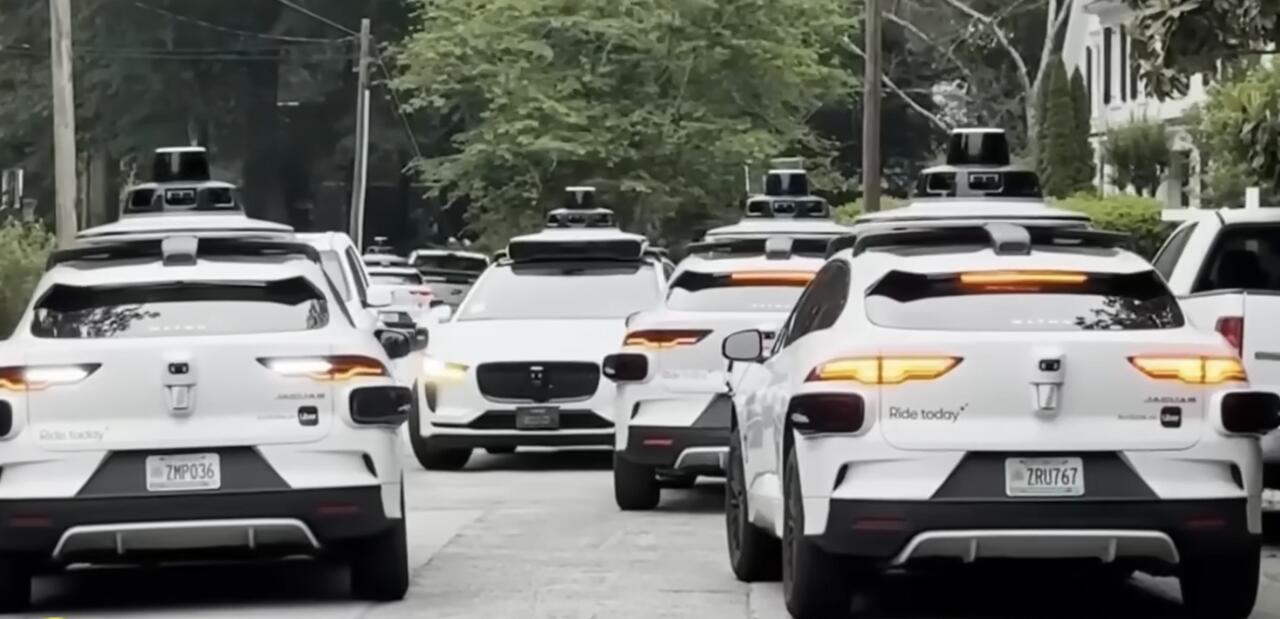
- In May, 50 empty Waymo SUVs flooded a small residential street in northwest Atlanta in just an hour. Video captured a thicket of the vehicles facing both directions and simultaneously trying to figure out how to proceed.
So far, nothing as spectacular as how Douglas Quaid's wild robotaxi ride will end in 2084:
Related Markets
All MarketsMarket data may be delayed. Not financial advice.
💡 AI analysis provides alternative perspectives on current events