Inside Ford's "Passionate" Reinvention
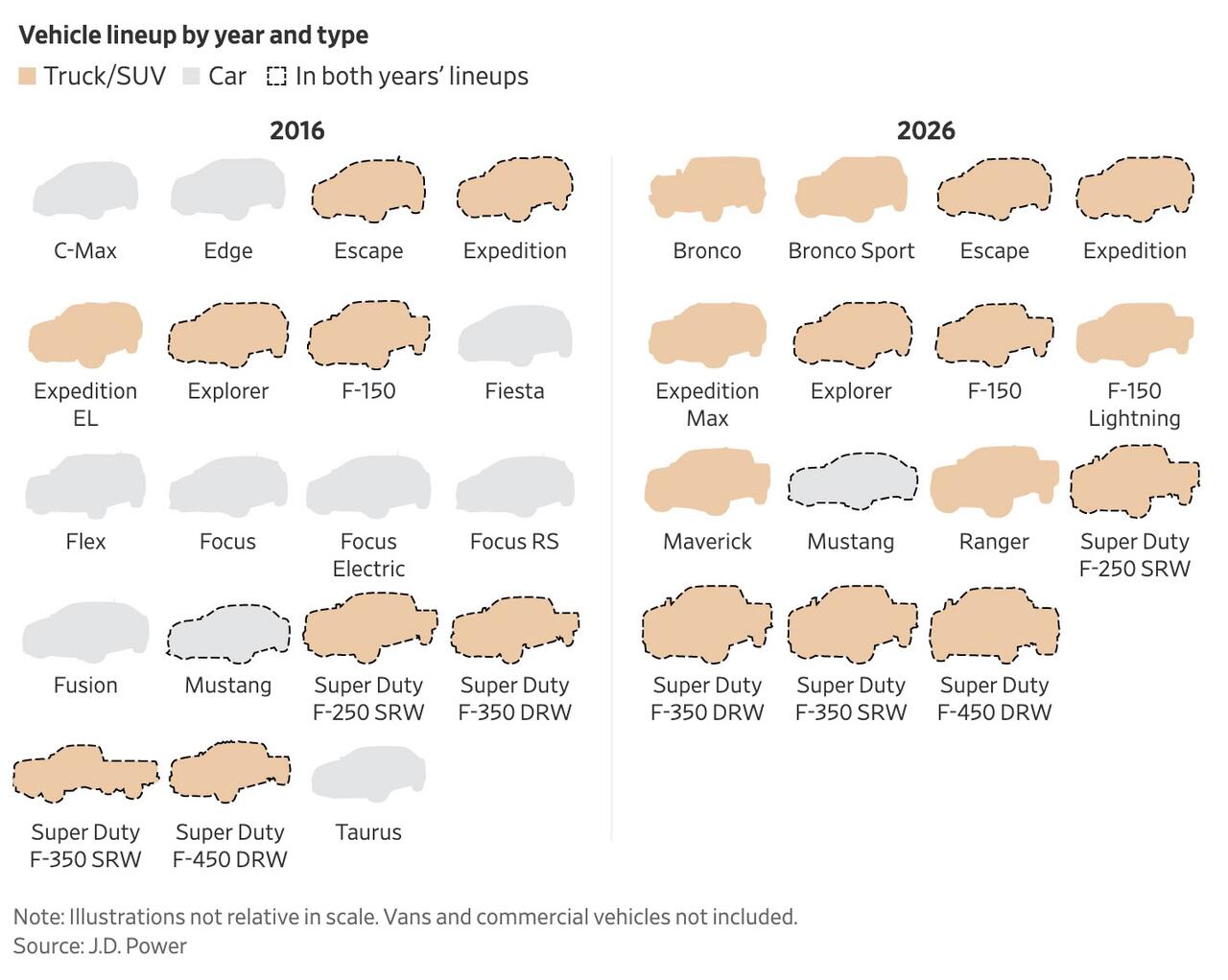
Ford has reshaped its business by narrowing its lineup to vehicles with stronger brand appeal and higher profit potential. Instead of offering a wide range of sedans, hatchbacks, and family cars, the company is concentrating on trucks, SUVs, sports cars, and models that customers can personalize with factory-backed upgrades, according to a new Wall Street Journal report.
At a recent event, Ford showcased customized Broncos, F-150s, and Mustangs, underscoring the company's emphasis on vehicles that stand out rather than blend in. As Matt Simpson, who leads Ford's customization business, put it, "This is the most passionate lineup that Ford has ever had."
The strategy reflects CEO Jim Farley's belief that Ford should focus on distinctive products instead of competing in crowded, low-margin segments. Rather than trying to match rivals across every category, Ford is investing in vehicles that reinforce its identity and command premium prices.
Executives argue that mainstream models such as the Focus and Escape often required costly incentives and discounts to remain competitive, making them less attractive from a financial standpoint.
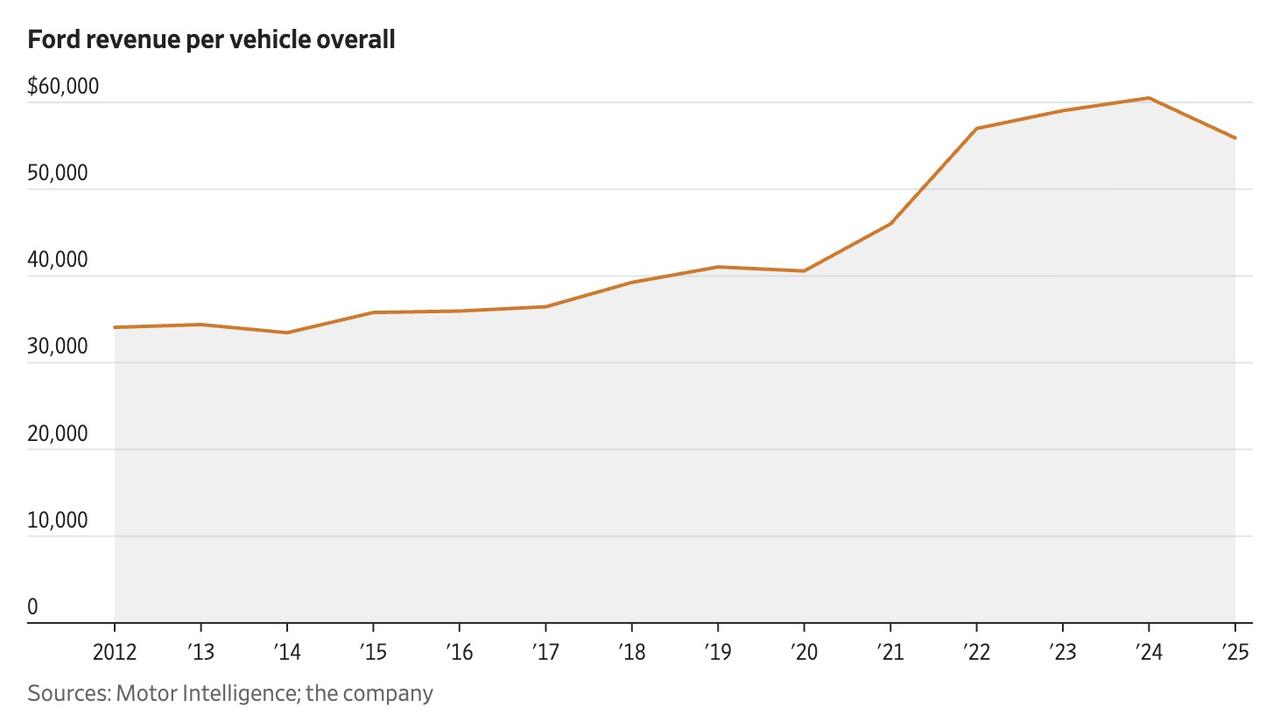
The Journal writes that the company's decision also mirrors broader changes in the U.S. auto market. Buyers have increasingly gravitated toward larger pickups and SUVs, while the average price of a new vehicle has climbed to roughly $50,000. At the same time, tariffs, labor expenses, and other production costs have made it more difficult to manufacture inexpensive vehicles profitably in the United States.
As a result, Ford's least expensive models now start at close to $30,000—roughly double the entry price buyers could find in Ford's lineup a decade ago.
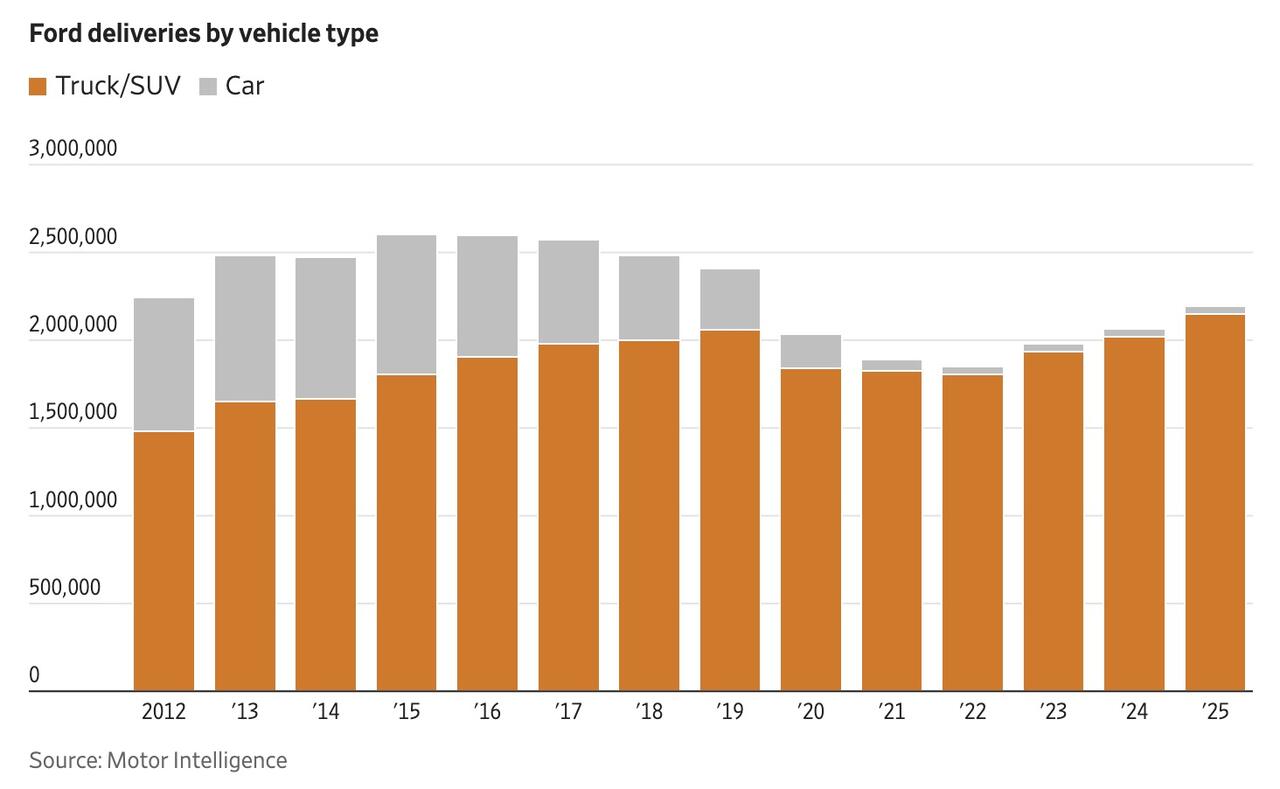
Although Ford has reduced the number of vehicles it sells, the company has improved its financial performance by emphasizing higher-margin products. U.S. sales in 2025 reached their highest level in six years, fueled by strong demand for models such as the F-150, Bronco, Maverick, and Mustang.
Still, total sales remain well below where they stood a decade ago because customers now have fewer choices. Dealers have also noted that eliminating familiar entry-level models makes it harder to attract first-time buyers and shoppers looking for affordable transportation.
Looking ahead, Ford says it has not abandoned the affordable segment altogether. The company plans to introduce five new vehicles priced below $40,000 before the end of the decade, beginning with a new electric pickup expected to cost around $30,000. Unlike earlier electric models that struggled to generate profits, these vehicles are being designed from the ground up with lower production costs and higher sales volumes in mind.
Ford hopes this approach will allow it to compete with market leaders while avoiding the financial challenges that affected its first generation of EVs.
Another pillar of Ford's strategy is vehicle customization. Roughly half of its customers now purchase accessories or performance upgrades, ranging from decals and cargo equipment to suspension packages and engine enhancements.
By incorporating personalization opportunities during the design process instead of after a vehicle is launched, Ford enables dealers to bundle these upgrades into financing at the time of purchase, creating an additional source of high-margin revenue.
Despite the financial logic behind the strategy, it comes with trade-offs. Longtime customers who previously drove compact cars or midsize SUVs have fewer options within the Ford brand and are often pushed toward larger, more expensive vehicles. Dealers also lose the ability to serve buyers looking for basic transportation, leaving competitors to capture those sales. Even so, Farley has made the company's priorities clear: "Every dollar must earn durable returns and drive profitable growth."
Ford is betting that a smaller lineup of distinctive, profitable vehicles will deliver stronger long-term results than offering something for every type of buyer.
Related Markets
All MarketsMarket data may be delayed. Not financial advice.
- • Ford is pivoting from low-margin sedans to high-margin trucks, SUVs, and customizable performance vehicles.
- • The company is focusing on brand identity and premium pricing to combat rising labor and production costs.
- • A new electric vehicle platform aims to re-enter the affordable market by 2027 with lower production costs.
Ford is abandoning mass-market commuter cars to prioritize distinctive products like the F-150 and Bronco. This shift responds to a market preference for larger vehicles and the financial necessity of higher profit margins.
Christian Perspective
The emphasis on rugged, capable vehicles like trucks and SUVs aligns with the traditional masculine role of the protector and provider. By focusing on durability and strength, Ford supports the tools necessary for men to lead and build their families. The move toward customization allows individuals to express their unique identities within a structured, hierarchical framework.
Implications
The rising cost of entry-level vehicles threatens the ability of young men to establish independent households and start families. If affordable transportation becomes a luxury, the biological and social foundation of the traditional family unit may be further strained. Economic barriers to mobility can hinder the growth of stable, localized communities.
Broader Trends
This shift reflects a move away from egalitarian mass-market consumerism toward a more stratified economic model. It mirrors the broader trend of rising costs driven by globalist economic pressures and labor shifts. The focus on high-margin goods suggests a widening gap between the productive classes and those struggling with basic necessities.
Takeaway
Americans should prioritize the ownership of reliable, durable assets that facilitate self-sufficiency and family protection. Support for domestic manufacturing and American-made strength is essential to maintaining national vitality. Families must plan for increased costs by focusing on long-term stability rather than transient consumer trends.
What is your reaction to this story?
Want to join the conversation about this story?
Join our community at Gab.com→
Gab AI
The one AI they can't control. Our exclusive AI model trained to uphold Christian values and traditional principles in every interaction.