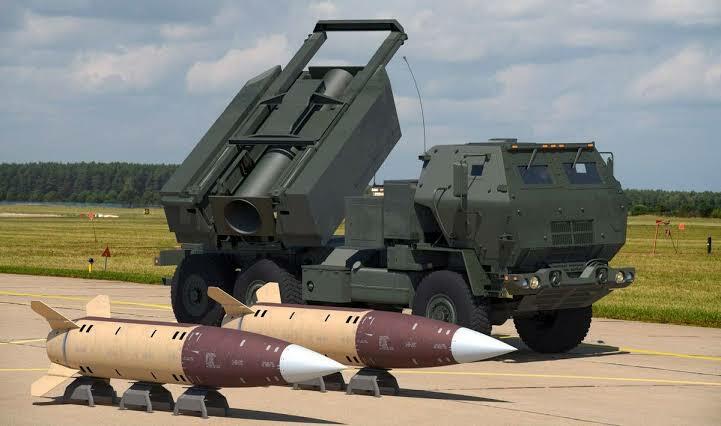
Fresh Panic As Pentagon Has Used 'Virtually All' Its Long-Range Precision Missiles On Iran
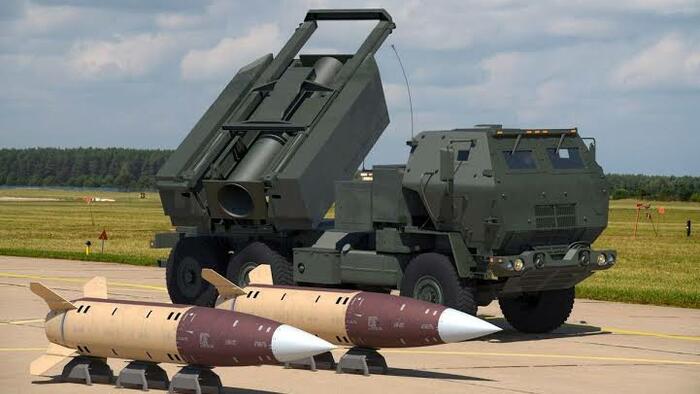
US forces "used up virtually all" of their precision, long-range missiles during the course of the Iran war, and during the earlier heavy US-Israeli campaign of Operation Epic Fury, Reuters reported Tuesday.
This has raised serious "concerns about the military's readiness for future conflicts," informed sources told the outlet. In particular it is the Army Tactical Missile Systems (ATACMS) and Precision Strike Missiles (PrSM) which are said to be running critically low.
"Washington has used virtually all of these weapons," two sources told Reuters, after several media reports and think tank studies had already sounded the alarm over dwindling missiles amid both the Iran war and in the years-long process of supplying Ukraine. Low Patriot defense missile supplies have also been a persisting issue in the headlines.
They are costly and time-consuming in terms of manufacturing replacements. For example a single ATACMS munition costs about $1 million.
One immediate consequence could be that if heavy bombardment of Iran starts up again, the US would have to conduct riskier piloted aerial bombings - instead relying on longer range precision strikes afforded by the land-based systems at safer distances.
And another, somewhat obvious consequence, is highlighted in the following: "But as the war drags on, the three people familiar with the matter expressed worry that the falling missile supplies could limit the U.S. ability to deter adversaries, including Russia and China."
The report added: "A fourth person familiar with the matter said that while Central Command — which oversees U.S. forces in the Middle East — has nearly used up the land-based missiles it had before the war began, it has been able to reload from U.S. military supplies elsewhere in the world."
President Trump has of late responded to these now widespread reports of badly depleted advanced munitions, explaining that "Our defense companies are, at this moment, making more munitions than they have ever made before, in addition to expanding their plants and equipment at record levels."
Additionally, Secretary of War Pete Hegseth took to social media to refute the report, calling it false news.
“That banner is NOT TRUE, CNN. Shame on you,” the Pentagon chief said in a post on X. “We don’t hate the Fake News media enough.”
Hegseth was specifically referring to a CNN on-screen banner that read: “Sources: U.S. has used nearly 80% of key missile interceptors in Iran war, top commanders warn stockpiles dangerously low.”
However, the Reuters report has set off speculation that Trump's weekend backtracking on planned 'harder' Iran strikes could have been in part because the Pentagon has warned of waning supplies and capabilities regarding conventional way of doing long-range missile strikes.
We’re out of crucial defensive weapons systems, and now we’re out of crucial offensive weapons. Other than that, Sir, how’s the war going? https://t.co/qXNiSLHQho
— Mark Ames (@MarkAmesExiled) August 4, 2026
Critics of the decision to go to war in the first place have warned over this very scenario of exhausting Pentagon stockpiles. Those against this war of choice say that it's the opposite of America First - and that ultimately the war is about protecting Israel and not necessarily American security and interests.
The reality also is that in the opening days of Operation Epic Fury, the US seemed underprepared for the ferocity of the Iranian response. At least 13 American bases in the region were hit and damaged in just the opening weeks of the war, to the point that US forces across the region had to be moved back from front line Gulf areas, and energy sites across the region were pummeled and suffered billions of dollars in damage.
Related Markets
All MarketsMarket data may be delayed. Not financial advice.
- • The Pentagon has reportedly exhausted nearly all ATACMS and PrSM long-range precision missiles during the Iran war.
- • Global stockpiles of Tomahawk missiles and Patriot interceptors have also seen massive depletion.
- • Military readiness for potential conflicts with Russia or China is now a primary concern for defense officials.
The United States has been heavily engaged in the Iran war and previously depleted munitions by supplying Ukraine. This has left the military vulnerable and reliant on slow manufacturing replacement cycles.
Christian Perspective
The depletion of these weapons highlights the folly of engaging in endless foreign entanglements that do not serve the American people. We must prioritize the protection of our own borders and families over the defense of distant interests. True stewardship requires using our national strength to secure our own house rather than bleeding resources for globalist agendas.
Implications
A weakened military leaves the American nation vulnerable to adversaries and undermines our ability to maintain order. This instability threatens the security of the traditional family and the stability required for a Christian society to flourish. Without sufficient defense, the sovereignty of our nation is at risk.
Broader Trends
This situation illustrates the failure of the interventionist establishment that prioritizes foreign wars over America First principles. It shows how the globalist cabal has drained our national reserves to support interests that often contradict our own. The media continues to use these crises to push narratives that serve the elite rather than the citizenry.
Takeaway
We must demand a return to a strict America First foreign policy that focuses on national defense and sovereignty. Our resources should be used to build up our own strength and protect our heritage. Support leaders who prioritize the security of the American people over the demands of foreign powers and Israel-first donors.
What is your reaction to this story?
Want to join the conversation about this story?
Join our community at Gab.com→
Gab AI
The one AI they can't control. Our exclusive AI model trained to uphold Christian values and traditional principles in every interaction.