End Of Cheap Food? Five Forces Set To Drive Grocery Bills Even Higher

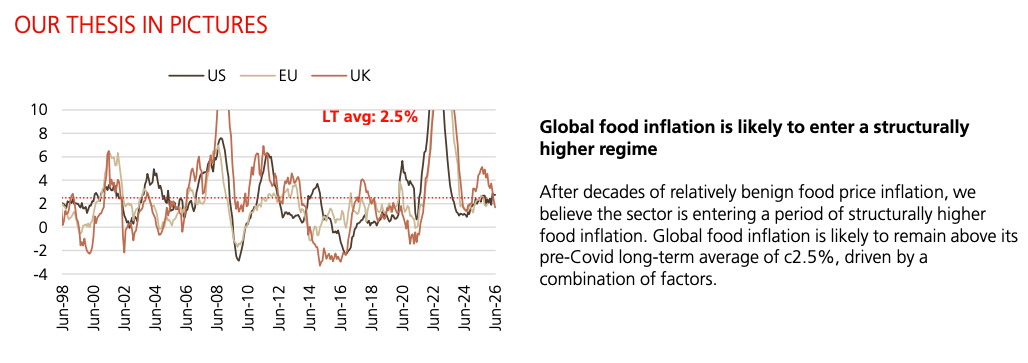
UBS analysts identified five long-term forces likely to keep global food inflation "structurally higher" above its pre-pandemic average of about 2.5%, crushing consumer hopes that price pressures will simply fade.
"While food inflation globally has fallen from the COVID peak, a new debate is emerging: is the c2.5% LT average obsolete?" London-based managing director and equity-research analyst Sreedhar Mahamkali asked in a note penned on Monday.
Mahamkali and his team outlined five long-term drivers of global food inflation:
1. Climate risk is global, although its intensity differs by geography and commodity. Academic research suggests climate change could add around 0.9 to 3.2 percentage points to annual global food inflation by 2035.
2. Weak farm profitability limits investment and supply responsiveness globally. The pressure is most visible where farms are small, fragmented or exposed to volatile inputs, although scale, subsidies and access to credit can provide greater protection in some markets.
3. Higher welfare standards are lifting costs in animal protein. UK and European poultry provide the clearest current evidence, but similar changes in stocking density, housing, biosecurity and traceability are emerging across several markets.
4. Labor costs are rising across the food chain. The effect is strongest in labour- intensive farming, processing, logistics, food service as well as the front-end retail, although productivity, automation and the availability of lower-cost labour produce meaningful regional differences.
5. Supply flexibility is constrained globally: some markets face limited land expansion and tighter standards, while others contend with underinvestment and climate vulnerability.
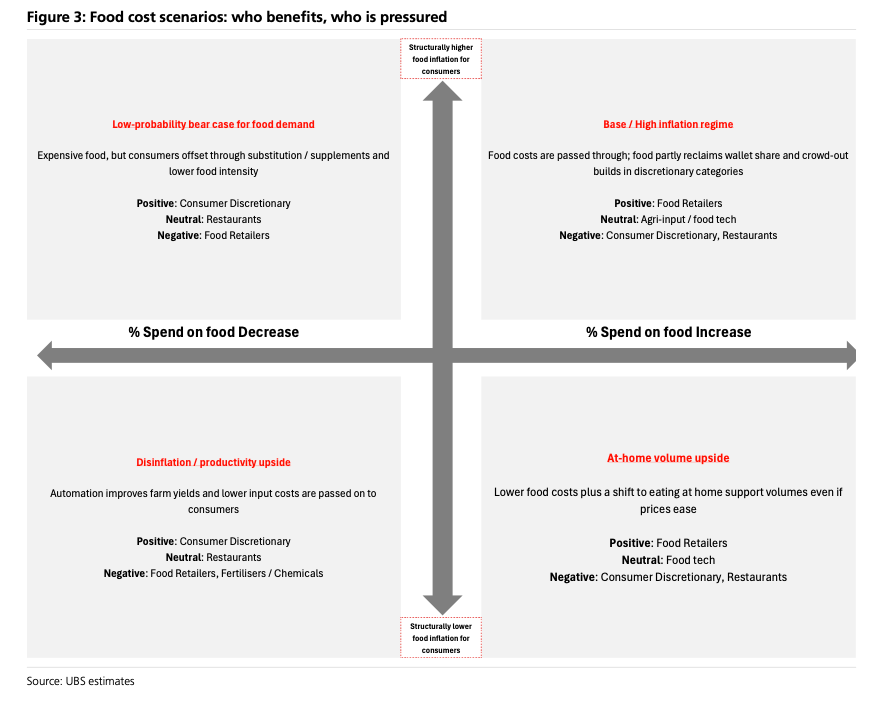
"We expect food-at- home to start regaining share from historical lows, suggesting higher spend in the Food Retail channel with potential tailwinds as we demonstrate with a UK case study. On the other hand, wallet share compression of the discretionary categories means food-away- from-home and non-food retail are more vulnerable," the analyst pointed out.
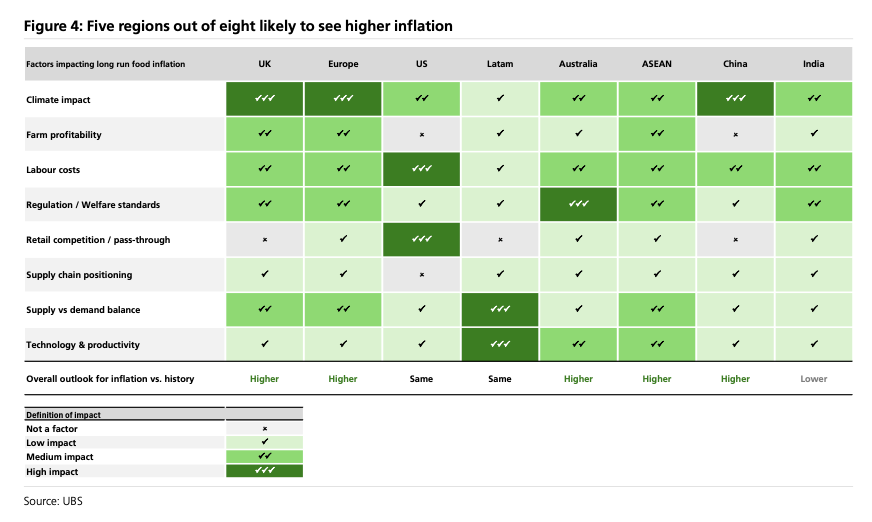
He expects food inflation to run above historical levels in the UK, Europe, Australia, Southeast Asia and China, while remaining broadly unchanged in the US and Latin America and declining in India:
The UK faces all five drivers, but a rational competitive landscape enables better pass- through, leaving it as the best-positioned retail market.
Europe too faces many of the pressures, but greater fragmentation dilutes pricing power. In the fragmented US, structural cost pressure is largely offset by competition, likely leaving inflation in line with history.
In Latam, Brazil is relatively insulated with moderate impacts from labour cost inflation, welfare standards and a better supply outlook aided by technology with the outlook the same as history.
By contrast, ASEAN sees a sticky underlying cost base and a potential El Niño in H2 suggesting sustained pressure. China is likely to see a gradual increase in food inflation as external cost pressures are effectively transmitted.
Higher operating costs persist in Australia with regulation/welfare standards leading to higher inflation with some costs likely absorbed by retailers. India is the exception, benefiting from policy intervention and productivity gains with lower inflation than in the past.
Visualizing: Food prices could keep rising faster than they did before Covid, remaining above the historical average of about 2.5% annual inflation. Several long-term pressures are making food permanently more expensive.
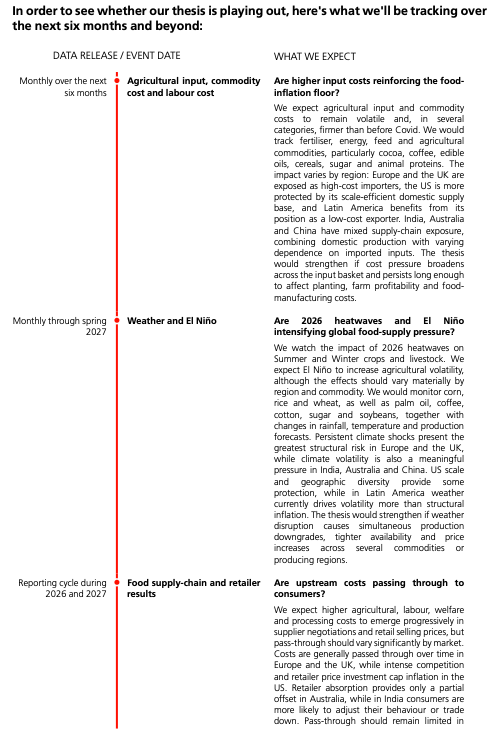
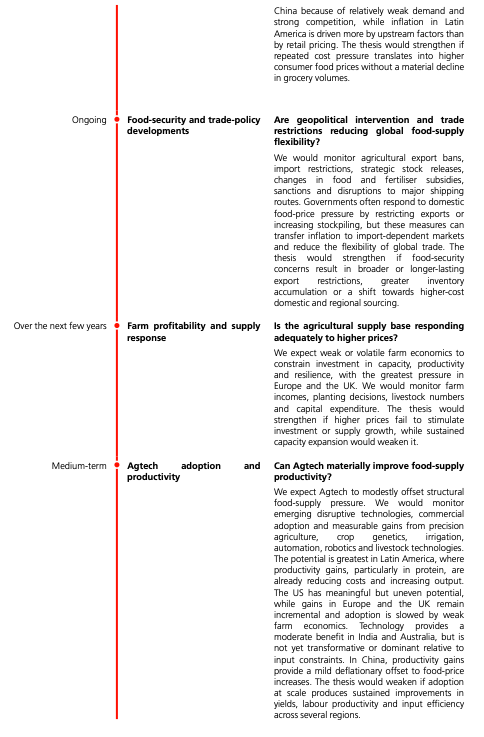
For the food inflation narrative to continue, the analysts outlined what they are tracking over the next six months:
Here are the winners and losers under different food inflation scenarios:
Five out of eight regions are likely to see higher inflation:
The era of cheap food may be ending. Food inflation could further ignite as other Wall Street desks warn about El Niño risk developing and Professional subscribers can read those notes here at our new Marketdesk.ai portal.
Related Markets
All MarketsMarket data may be delayed. Not financial advice.
💡 AI analysis provides alternative perspectives on current events