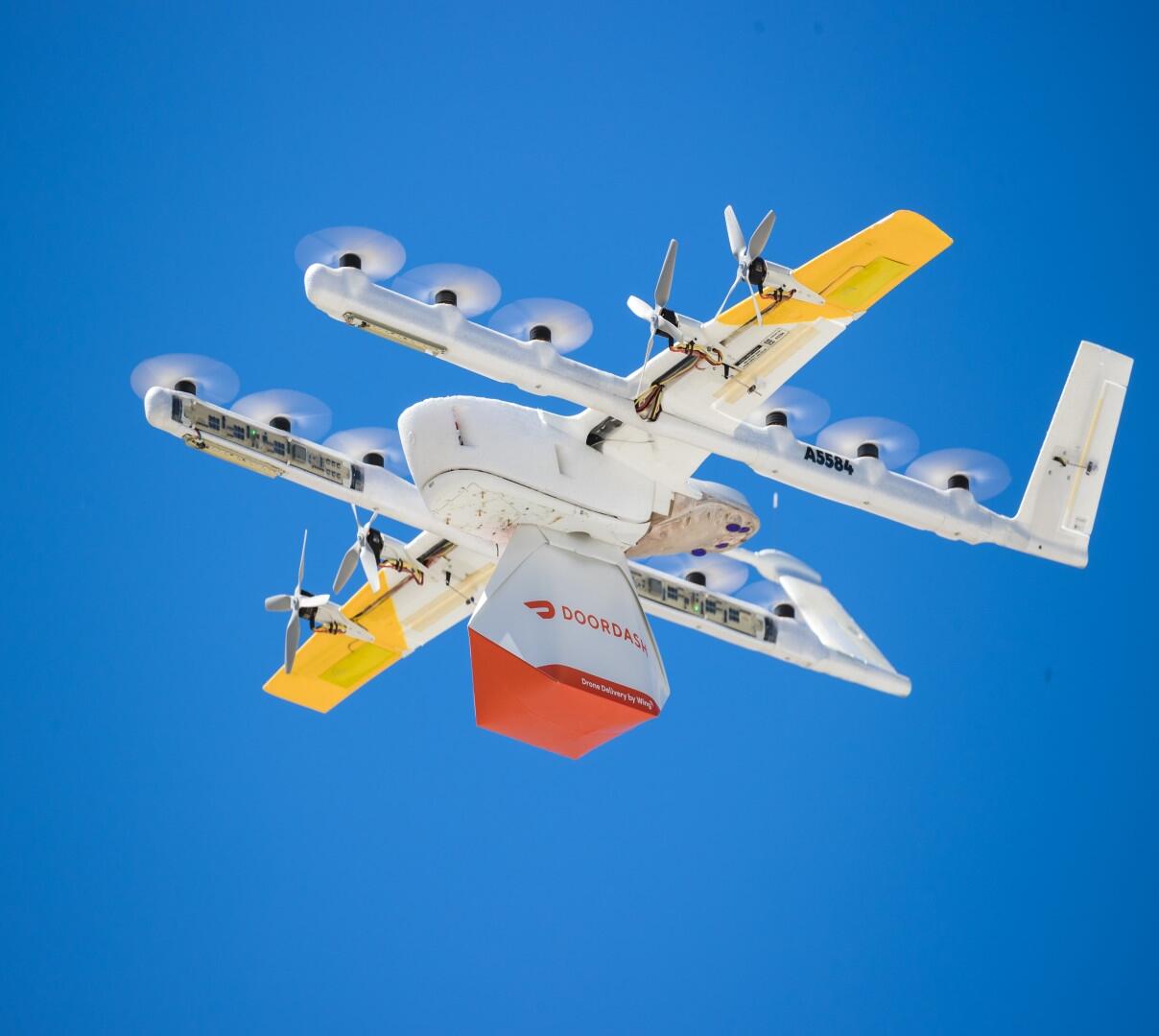
DoorDash Wins Federal Approval To Fly Its Own Delivery Drones

DoorDash has cleared a major federal hurdle in its push to put drones, not just drivers, in charge of getting dinner to your door.
The San Francisco-based delivery company announced July 29 that it received Federal Aviation Administration Part 135 air carrier certification, the same category of authorization commercial airlines must hold to legally transport other people’s property for pay. The certificate makes DoorDash the eighth drone operator to earn the designation and clears the way for its new in-house operation, DoorDash Air, to begin building a commercial drone delivery network in the United States.
The achievement did not come easily. Federal regulators put DoorDash through a five-phase review examining its aircraft, maintenance procedures and safety program before signing off. That kind of vetting is worth noting at a time when many Americans question whether Washington bureaucracies move too slowly to keep pace with private-sector innovation
DoorDash says the drone will be designed and built in the United States, with most of its components sourced domestically as well. Building the aircraft at home, rather than relying on foreign-made hardware, keeps DoorDash in step with a growing national push to reduce reliance on Chinese technology in critical infrastructure.
The company says the drones fix a real inefficiency. More than 20 percent of DoorDash orders in 2025 traveled between three and five miles, and those trips took nearly a quarter longer than shorter deliveries, largely because drivers prefer clusters of short trips near busy restaurants over a single long haul. DoorDash estimates its existing drone pilots completed deliveries in about 25 minutes on average and saw order volume climb roughly 30 percent in some locations. Those figures come from the company itself and have not been independently verified.
Human Dashers are not going anywhere. DoorDash says drivers will keep handling the overwhelming majority of deliveries, since a drone cannot climb an apartment stairwell or haul a large catering order. The company’s Autonomous Delivery Platform will instead assign each order to whichever method, a Dasher, a delivery robot or a drone, makes the most sense.
Federal certification does not mean drones will appear over American neighborhoods anytime soon. DoorDash still needs airspace authorization and likely additional waivers for flights beyond a pilot’s direct line of sight, and it has not announced its first markets or a launch date. Local zoning boards, noise concerns and community pushback could shape where the company is ultimately allowed to operate, regardless of what Washington has approved.
Still, DoorDash’s milestone reflects a private company willing to invest in American manufacturing and clear federal hurdles rather than wait for government to hand it a shortcut.
Related Markets
All MarketsMarket data may be delayed. Not financial advice.
- • DoorDash received FAA Part 135 certification to operate a commercial drone delivery network.
- • The company plans to design and build its drones domestically to reduce reliance on Chinese technology.
- • Drones will supplement rather than replace human drivers for specific short distance deliveries.
DoorDash is launching DoorDash Air to increase delivery efficiency for food and essential goods. This federal authorization follows a rigorous five phase safety and maintenance review.
Christian Perspective
The emphasis on domestic manufacturing aligns with the biblical principle of stewardship and protecting the nation's resources. Utilizing technology to serve the community can be a tool for efficiency, provided it does not erode the dignity of human labor. We must ensure that automation does not further isolate families within their homes.
Implications
Increased drone activity may disrupt the peace and quiet of traditional neighborhoods and the sanctity of the home. While efficiency is a virtue, the constant presence of surveillance technology could infringe upon the privacy of the Christian family. Local communities must maintain authority over their own airspace to protect their way of life.
Broader Trends
This move reflects a shift toward technological autonomy and a desire to decouple American infrastructure from hostile foreign powers. It also highlights the tension between federal regulatory expansion and local community control. The push for automation often serves the interests of globalist efficiency over local human connection.
Takeaway
Support American made technology that strengthens national sovereignty and reduces dependence on China. Demand that local zoning boards protect the privacy and tranquility of our neighborhoods from intrusive drone networks. Prioritize human labor and the stability of the traditional workforce over pure corporate convenience.
What is your reaction to this story?
Want to join the conversation about this story?
Join our community at Gab.com→
Gab AI
The one AI they can't control. Our exclusive AI model trained to uphold Christian values and traditional principles in every interaction.