These Are America's Fastest-Aging States
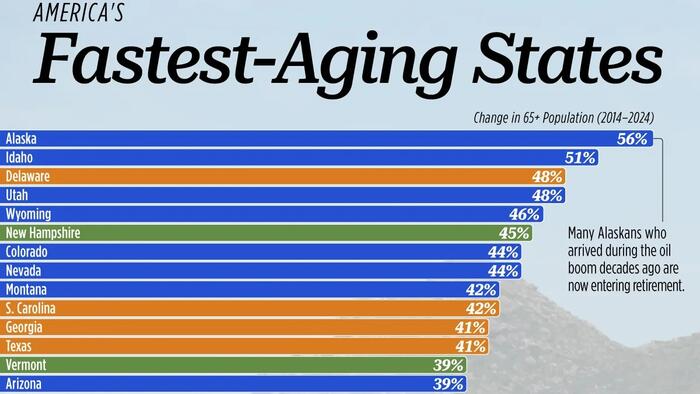
America’s population is getting older, but some states are aging much faster than others.
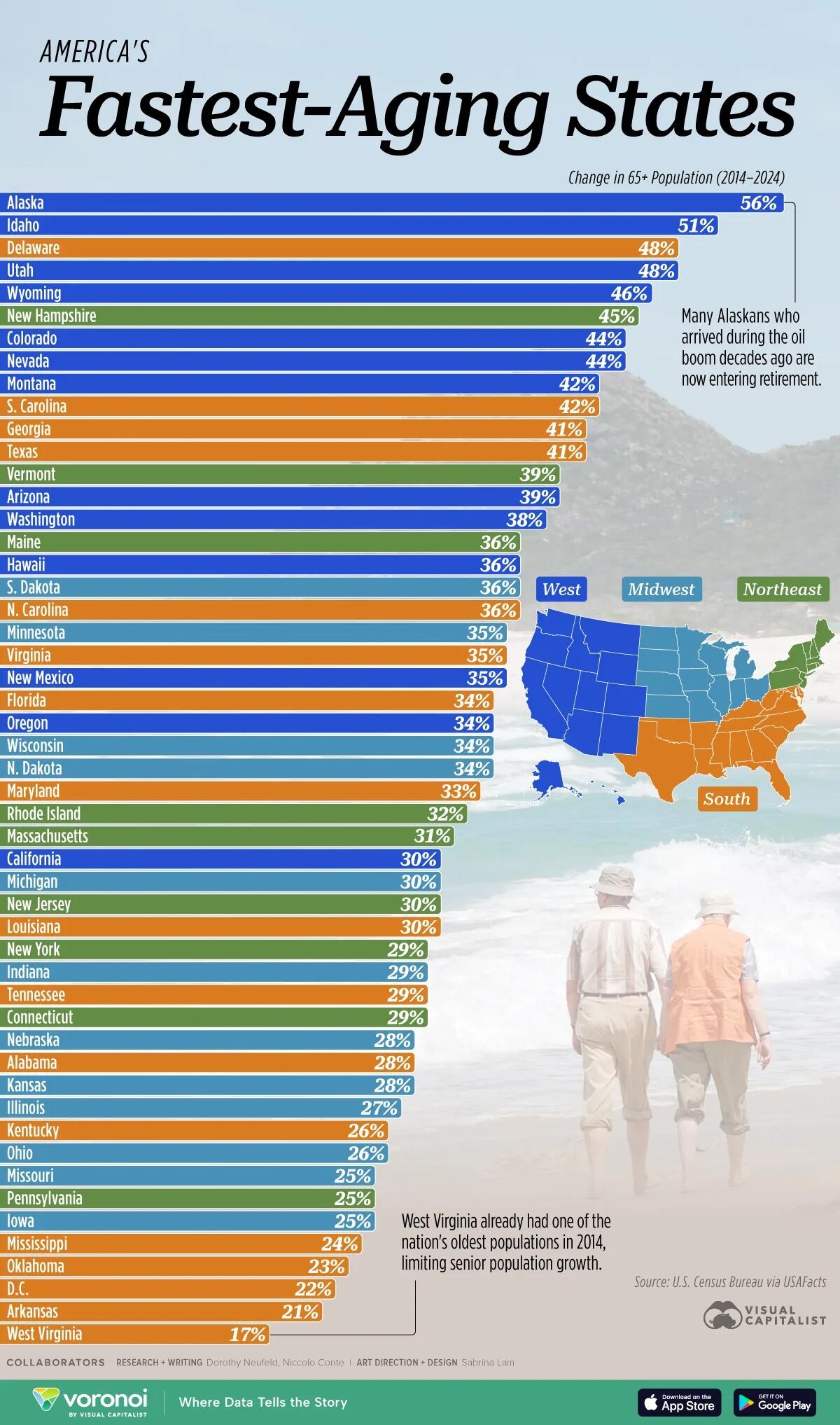
Using U.S. Census Bureau data compiled by USAFacts, this ranking, via Visual Capitalist's Dorothy Neufeld, shows how much each state’s population aged 65 and older grew between 2014 and 2024.
Growth in 65-and-Older Populations (2014-2024)
The table below ranks every state by the percentage growth in its population aged 65 and older between 2014 and 2024.
| State | Change in 65+ Population (2014–2024) | Total Growth |
|---|---|---|
| Alaska | 56% | 39,425 |
| Idaho | 51% | 120,188 |
| Delaware | 48% | 74,383 |
| Utah | 48% | 140,632 |
| Wyoming | 46% | 36,760 |
| New Hampshire | 45% | 93,596 |
| Colorado | 44% | 300,169 |
| Nevada | 44% | 175,038 |
| Montana | 42% | 71,509 |
| South Carolina | 42% | 319,192 |
| Georgia | 41% | 513,532 |
| Texas | 41% | 1,265,419 |
| Vermont | 39% | 41,969 |
| Arizona | 39% | 420,852 |
| Washington | 38% | 382,832 |
| Maine | 36% | 87,850 |
| Hawaii | 36% | 82,756 |
| South Dakota | 36% | 46,219 |
| North Carolina | 36% | 518,927 |
| Minnesota | 35% | 275,897 |
| Virginia | 35% | 401,357 |
| New Mexico | 35% | 110,140 |
| Florida | 34% | 1,294,733 |
| Oregon | 34% | 214,979 |
| Wisconsin | 34% | 295,892 |
| North Dakota | 34% | 35,289 |
| Maryland | 33% | 275,008 |
| Rhode Island | 32% | 53,451 |
| Massachusetts | 31% | 317,385 |
| California | 30% | 1,519,339 |
| Michigan | 30% | 461,738 |
| New Jersey | 30% | 392,753 |
| Louisiana | 30% | 187,508 |
| New York | 29% | 854,478 |
| Indiana | 29% | 275,051 |
| Tennessee | 29% | 285,027 |
| Connecticut | 29% | 159,449 |
| Nebraska | 28% | 77,116 |
| Alabama | 28% | 208,362 |
| Kansas | 28% | 115,595 |
| Illinois | 27% | 484,181 |
| Kentucky | 26% | 172,658 |
| Ohio | 26% | 474,302 |
| Missouri | 25% | 235,408 |
| Pennsylvania | 25% | 530,510 |
| Iowa | 25% | 121,677 |
| Mississippi | 24% | 103,194 |
| Oklahoma | 23% | 129,764 |
| District of Columbia | 22% | 16,219 |
| Arkansas | 21% | 96,987 |
| West Virginia | 17% | 57,493 |
| 🇺🇸 U.S. total | 34% | 14,964,188 |
Every state added residents aged 65 and older over the decade, but the increase ranged from 17% in West Virginia to 56% in Alaska. Nationwide, the senior population grew 34%.
Many of the fastest-growing senior populations were in the West and Sun Belt, including Idaho (+51%), Utah (+48%), and Texas (+41%). Several of these states began the period with relatively young populations and had experienced rapid population growth through domestic migration. As those residents aged, the number of people 65 and older rose quickly.
Why Alaska Leads
Alaska recorded the nation’s fastest-growing senior population despite not being a traditional retirement destination.
Much of the increase reflects longtime residents aging in place. Many people who moved to Alaska during the oil boom of the 1970s and 1980s are now entering retirement, helping drive the rapid increase in residents aged 65 and older.
Why Growth Was Slower Elsewhere
West Virginia, Arkansas, and the District of Columbia recorded the slowest growth in their senior populations.
A slower growth rate does not necessarily indicate a younger population. States such as West Virginia already had among the nation’s oldest populations in 2014, leaving less room for large percentage gains over the following decade.
To learn more about this topic, check out this graphic on the best countries to retire in.
Related Markets
All MarketsMarket data may be delayed. Not financial advice.
- • The U.S. senior population aged 65 and older grew by 34% between 2014 and 2024.
- • Alaska saw the highest growth rate at 56%, while West Virginia saw the lowest at 17%.
- • Eleven states now have more residents aged 65+ than children under 18.
The nation is experiencing a significant demographic shift as the elderly population expands while the youth population declines. This trend is most pronounced in the West and Sun Belt regions.
Christian Perspective
A shrinking youth population signals a failure to uphold the biblical mandate to be fruitful and multiply. The rise of an aging population without a corresponding increase in children threatens the continuity of the faith and the nation. We must honor our elders while prioritizing the growth of the next generation.
Implications
An aging demographic puts immense pressure on the social fabric and the economic vitality of the nation. Without a robust birth rate among White families, the traditional order and cultural heritage of the country will erode. This shift threatens the ability of the patriarchal family to serve as the foundational unit of a healthy society.
Broader Trends
The decline in children relative to seniors reflects the corrosive effects of modern egalitarianism and the breakdown of traditional family structures. This demographic imbalance is often exacerbated by mass immigration, which replaces native populations rather than supplementing them. It highlights a move toward national decadence and weakness.
Takeaway
Americans must champion large families as heroic civilization builders to reverse this trend. We must reject the culture of low birth rates and return to the traditional values that ensure our survival. Protecting our demographic integrity is essential for an America First future.
What is your reaction to this story?
Want to join the conversation about this story?
Join our community at Gab.com→
Gab AI
The one AI they can't control. Our exclusive AI model trained to uphold Christian values and traditional principles in every interaction.