Are China's Surveillance Exports Turning Nations Into Digital Dictatorships?
.jpg?itok=7CCPjxUO)
Authored by James Gorrie via The Epoch Times,
Is Beijing hoping to turn other authoritarian societies into digital Chinas?
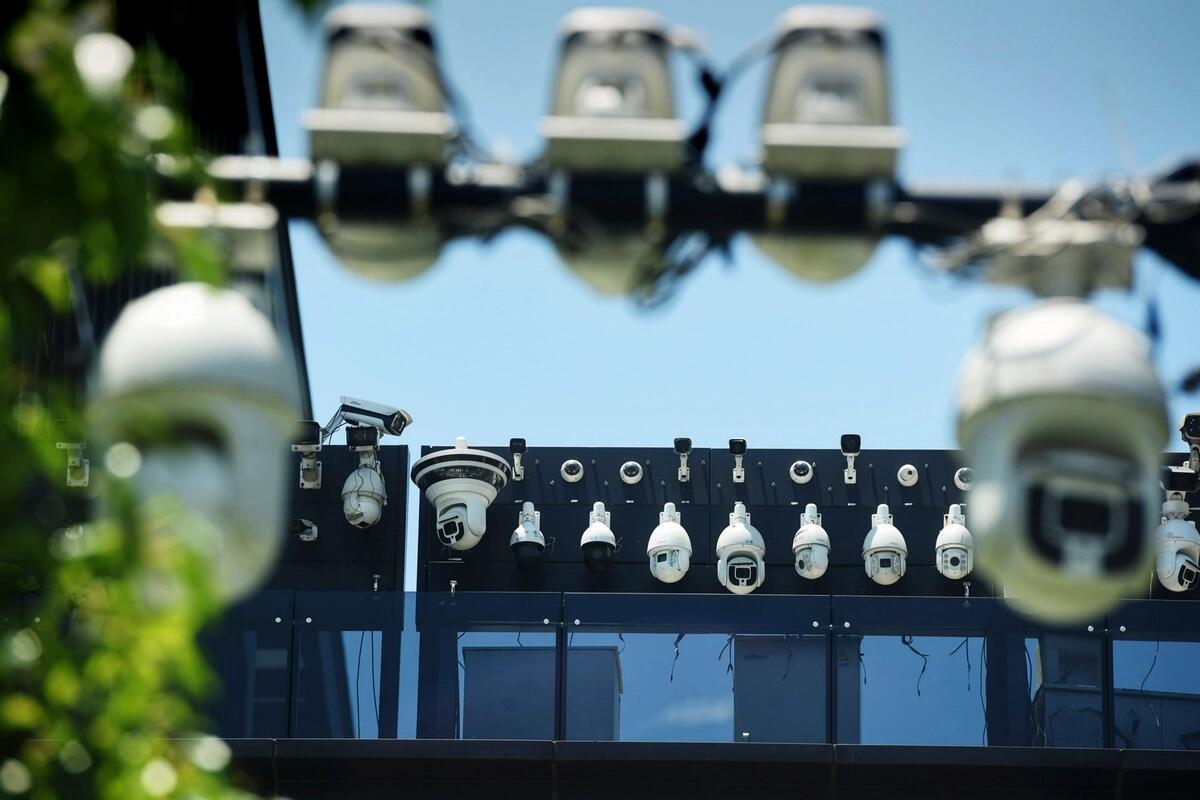
China’s rise as the world’s leading exporter of surveillance technology is yielding some disturbing results. Beijing’s surveillance export packages comprise an entire technological architecture that can give governments an unprecedented ability to see, identify, and track their populations.
Those technologies include cameras, artificial intelligence, telecommunications networks, cloud computing, facial recognition, license-plate recognition, and centralized command systems. Many mid-sized countries are becoming or are already customers.
Turning Other Nations Into ‘Little Chinas’
Turkey is an important case study.
To be clear, Turkey has not yet become a Chinese-style surveillance state. Its political system and institutions remain different from China’s. That said, Chinese technology companies have established a significant presence in Turkey’s digital infrastructure, and they’re not shy about it. In fact, Huawei has explicitly marketed its AI-powered CCTV and “Safe City,” i.e. surveillance technologies, in the Turkish market.
It’s no mystery that China wants to sell as much merchandise to as many trading partners as possible. But is it also possible that China wants as many partners as possible to use and become dependent upon its surveillance technology so that their societies turn into “little Chinas” by deploying Smart City tech?
AI Camera Surveillance
The first building block is the camera.
Chinese companies such as Hikvision and Dahua have become global leaders in video-surveillance equipment. Meanwhile, Huawei has developed AI-powered cameras capable of performing sophisticated image recognition and analysis. CSIS notes that Chinese firms can provide technologies ranging from cameras to AI analytics and centralized deployment.
Huawei’s AI-enabled technology is in Turkey, using cameras with embedded AI chips and deep learning capabilities to perform recognition and identification while feeding information into cloud-based big-data systems. Such systems could operate across enormous numbers of cameras.
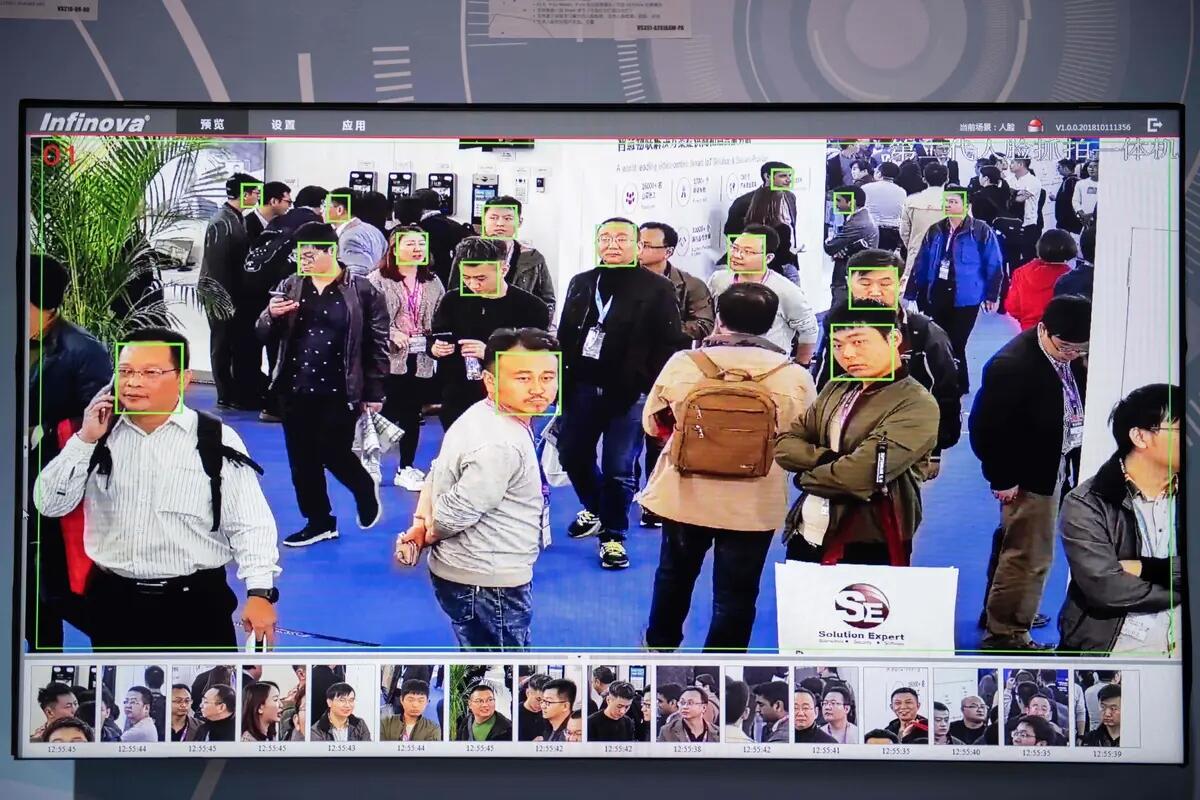
That represents a fundamental shift in surveillance capability for nations such as Turkey. A conventional camera records what happened. An AI camera can begin answering who, when, where, and what.
A screen shows visitors being filmed by AI (Artificial Intelligence) security cameras with facial recognition technology at the 14th China International Exhibition on Public Safety and Security at the China International Exhibition Center in Beijing on Oct. 24, 2018. Nicolas Asfouri /AFP via Getty Images
The difference is enormous.
‘Smart Cities’ Can Become Surveillance Networks
The second technological piece is the smart-city platform.
Huawei’s smart-city operation combines 5G, artificial intelligence, Internet-of-Things devices, cloud computing, and big-data analytics. The company describes an integrated “digital brain” capable of connecting multiple government functions and data sources.
None of those technologies is inherently authoritarian.
Smart traffic systems, energy management, and connected public services are all examples of how technology can make cities more efficient.
The problem begins when these systems become interconnected with security databases.
A camera produces an image. A telecommunications network produces location and communications data. A smart-city sensor produces movement information. AI can combine those streams instantly.
The result is no longer simply a collection of cameras. It’s an urban information and surveillance system.
This technology isn’t new, but the worry is about its widespread adoption. CSIS has documented Huawei “Safe City” agreements involving CCTV, intelligent video surveillance, facial and license-plate recognition, crowd monitoring, command centers, and other security technologies in dozens of countries over the years.
Huawei’s Digital Footprint
Another factor is telecommunications. Amplifying on the Turkish case, Huawei has operated in Turkey (and other nations) for decades and has established a substantial local research and technology presence. Employing roughly 1,500 people in the country and operating an R&D center in Istanbul, Huawei has its own people running the technology, providing additional opportunity for data gathering.
That matters because telecommunications infrastructure is the nervous system of the modern surveillance state. It’s a powerful technological information loop where cameras and sensors collect information, telephones generate it, networks transfer it, cloud systems store and analyze it, while AI interprets it.
The more deeply those systems become integrated, the greater the potential for governments to build a comprehensive picture of their citizens.
Huawei’s smart-city model explicitly combines those technologies.
Scalable Surveillance Technology
Why do governments buy it?
The answer is not necessarily ideology, although that may be part of it, but it is often simple economics.
China’s surveillance companies can offer governments a complete technological package at competitive prices. Huawei’s Safe City partners are disproportionately middle-income countries, noting that affordability and commercial promises can be important drivers of adoption.
That alone gives Beijing an enormous commercial opportunity. Why build surveillance infrastructure from scratch when you can just buy it off the shelf?
What’s more, such systems may well help illegitimate governments remain in power. But also, once a country has invested heavily in a particular technological ecosystem, replacing it can become expensive.
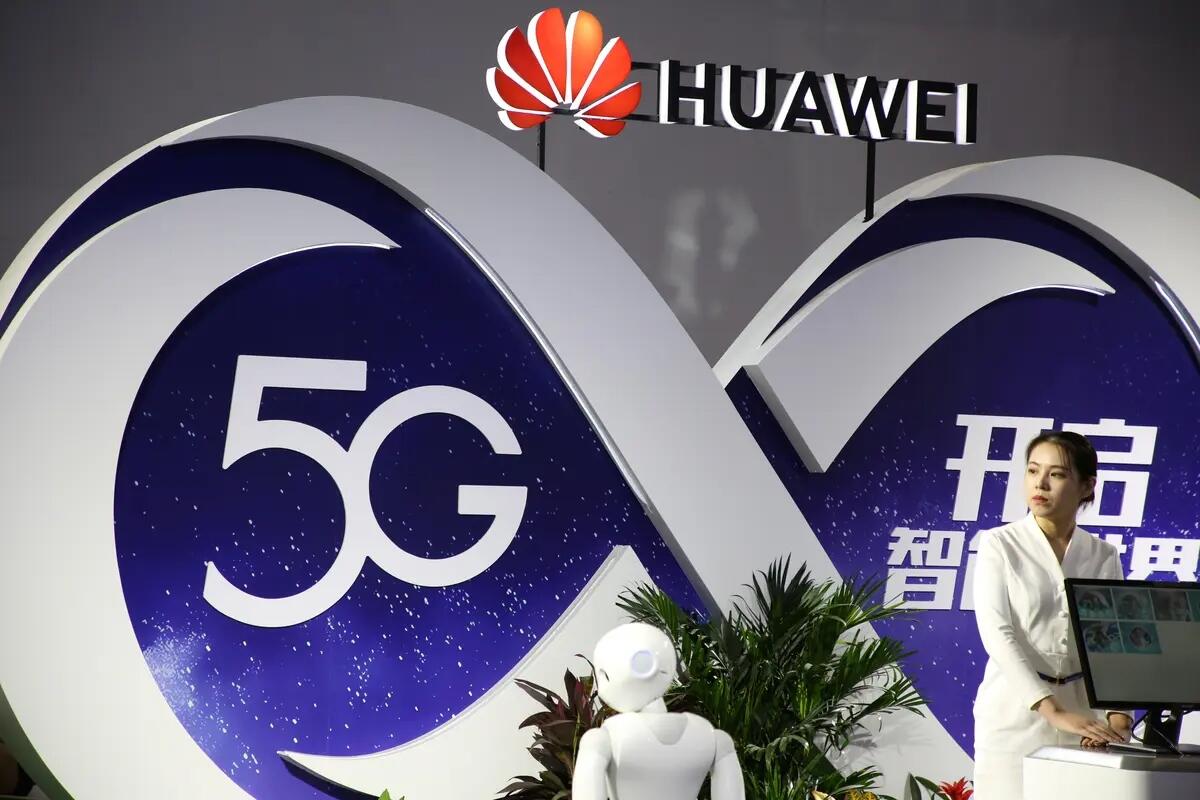
A woman stands at the booth of Huawei featuring 5G technology at the PT Expo in Beijing on Sept. 28, 2018. Reuters
CSIS has warned that countries adopting Huawei equipment could become effectively “locked in” through high replacement costs, while Chinese companies gain market share and establish technical standards.
That doesn’t mean that Huawei’s clients aren’t authoritarian regimes, many are.
Data as Strategic Assets
Another consequential factor is data.
China’s surveillance exports potentially provide Beijing with more than equipment sales. They can help Chinese companies expand their technological standards, gain experience in foreign markets, and deepen commercial relationships.
The strategic concern is that if Chinese companies become the suppliers of the world’s cameras, networks, cloud systems, and AI platforms, they would become deeply embedded in the digital infrastructure of other nations.
That creates influence even without direct access to every byte of data.
What Does it Mean?
Turkey, among others, is therefore a warning sign—not necessarily because it is becoming China, but because it demonstrates how surveillance capabilities can enter a country through ordinary commercial infrastructure.
Thus, the struggle between China and the West is increasingly a contest over technological models adopted by a growing number of nations.
China’s model emphasizes scale, integration, and centralized control.
Western democracies generally place greater emphasis on privacy, transparency, and legal restrictions, although Western governments also use facial recognition, AI surveillance, and other monitoring technologies.
The Chinese advantage is that Beijing’s companies can offer much of the infrastructure as a package. That makes the technology easy to export and, once deployed, difficult and expensive to replace.
The United States and the West, therefore, face a challenge that goes beyond Huawei, Hikvision, or Dahua. They must compete with an entire technological ecosystem.
The real question is not necessarily whether every Chinese camera is secretly spying on foreign citizens. But rather, it’s whether countries like Turkey and many others with a growing exposure to China’s digital infrastructure could become digital dictatorships because of it.
- • China is exporting comprehensive surveillance architectures including AI cameras, 5G networks, and cloud computing to middle income nations.
- • Huawei and other Chinese firms use " City" models to create integrated digital brains that track movement and identity.
- • These turnkey technological packages create long term economic and technical dependency on Beijing.
China is leveraging its technological dominance to export authoritarian governance tools under the guise of smart city efficiency. This expansion allows Beijing to establish global technical standards and deep influence within foreign infrastructures.
Christian Perspective
Totalitarian surveillance is an affront to the God given dignity of the individual and the sanctity of the family. Such systems seek to replace the natural authority of God and the household with the absolute control of a secular state. We must recognize that any technology used to strip humans of their agency is a tool of spiritual and social bondage.
Implications
The adoption of these technologies threatens the American principle of liberty and the ability of Christian families to live without state interference. If these digital tools migrate into Western systems, they will be used to target traditionalists and those upholding biblical morality. Protecting our digital borders is essential to maintaining a free and virtuous society.
Broader Trends
This represents a global push toward centralized, technocratic control that rejects the natural hierarchy of a free people. It aligns with the broader efforts of globalist elites to replace national sovereignty with a borderless, digital panopticon. The rise of digital authoritarianism is a direct challenge to the survival of Western Christian civilization.
Takeaway
America First policies must prioritize technological sovereignty to prevent foreign adversaries from compromising our national security. We must reject any digital infrastructure that facilitates mass surveillance or undermines the autonomy of the Christian home. True strength lies in protecting our people from the digital chains of foreign and domestic tyrants.
What is your reaction to this story?
Want to join the conversation about this story?
Join our community at Gab.com→
Gab AI
The one AI they can't control. Our exclusive AI model trained to uphold Christian values and traditional principles in every interaction.