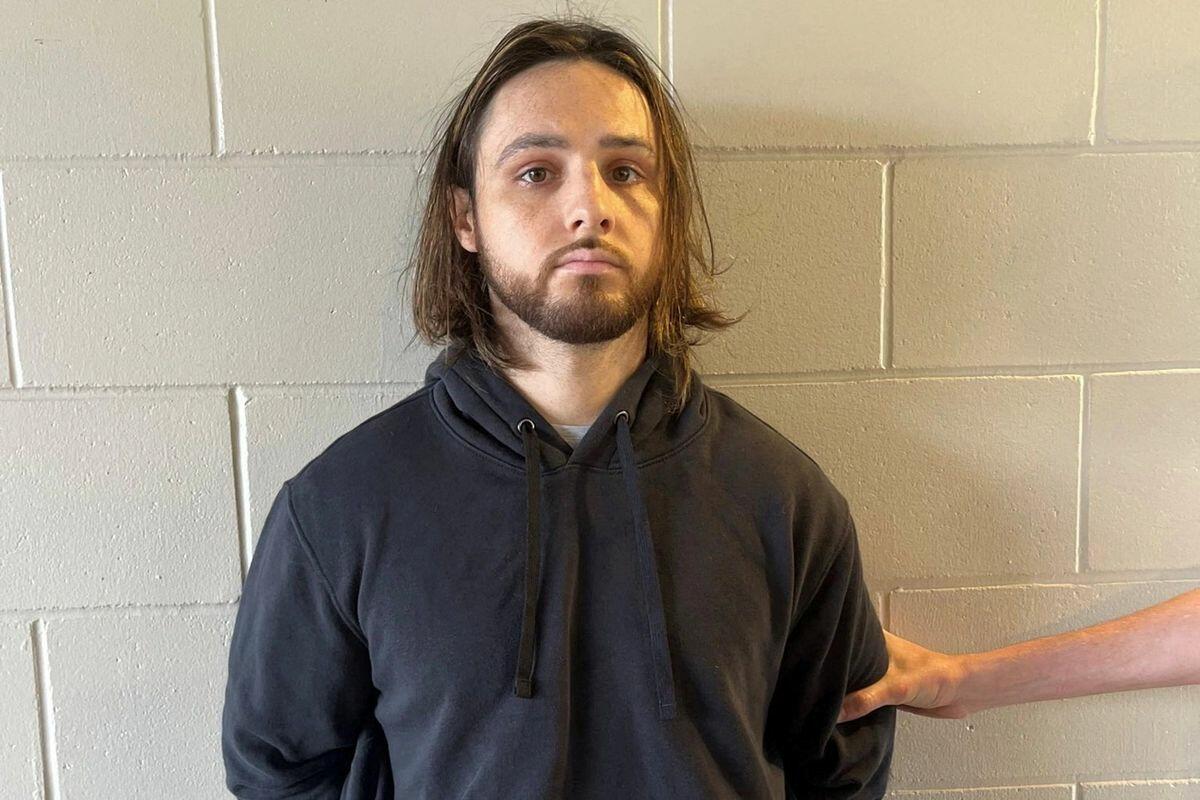
Charges Against Palisades Fire Arson Suspect Revised
.jpg?itok=_sdxW622)
City News Service via The Epoch Times,
LOS ANGELES - The man accused of setting a blaze that grew into the deadly Palisades Fire, the most destructive fire in Los Angeles history, is facing one less criminal charge, with federal prosecutors obtaining a revised indictment in the case.
In June, a federal court jury deadlocked 10-2 in favor of acquitting Jonathan Rinderknecht on three arson-related charges stemming from the 2025 firestorm, which prosecutors say began on New Year's Day as the Lachman Fire, which smoldered for a week before Santa Ana winds re-ignited it into the Palisades Fire. In light of the deadlock, a judge declared a mistrial, but prosecutors vowed to retry the case.
The Palisades Fire killed 12 people, burned 23,448 acres, cost billions in damage and insurance claims, and ruined much of the exclusive Pacific Palisades community, destroying about 6,800 structures.
Rinderknecht was originally charged with three federal arson counts: destruction of property by means of fire, arson affecting property used in interstate commerce, and timber set afire. On Aug. 13, however, prosecutors filed a superseding indictment with only two charges - destruction of property by means of fire and arson affecting property used in interstate commerce.
In the new indictment, the first charge refers only to Rinderknecht's alleged setting of the Lachman Fire, rather than the Lachman and Palisades fires.
Rinderknecht is due in court for a status conference this week, with a re-trial tentatively set for October.
First Assistant U.S. Attorney Bill Essayli insisted after the mistrial was declared in June that prosecutors would eventually win a conviction.
"The evidence is strong that Jonathan Rinderknecht is responsible for igniting the fire on January 1, 2025, which eventually became the Palisades Fire," Essayli wrote on X. "We fully intend to retry this case before a new jury and obtain guilty verdicts on all charged counts."
Defense attorney Steven Haney told reporters outside court, however, that his client is innocent, and a retrial won't give prosecutors a better result. He said prosecutors "failed miserably" in their efforts to prove their case.
"If they want to re-try it again, we can re-try it again," Haney said. "If Bill Essayli wants to cheerlead from the sidelines, maybe he should come in and try the case himself next time."
He said a re-trial would likely end up with Rinderknecht being acquitted.
"Ten-to-two is an overwhelming message from the jury that the government failed and did not have enough evidence to prove their case," Haney said.
Rinderknecht remains in federal custody pending the new trial.
During the 10-day trial earlier this year, the jury heard evidence that the deadly Palisades Fire was a "holdover" fire - a continuation of the Lachman Fire that began early in the morning on New Year's Day 2025. Although firefighters quickly suppressed the Lachman Fire - named for a street near the Skull Rock Trailhead - the fire continued to smolder and burn underground within the root structure of dense vegetation.
On Jan. 7, 2025, heavy winds caused the underground fire to re-surface and spread above ground in what became known as the Palisades Fire, which caused widespread damage in Pacific Palisades and Malibu.
Prosecutors used witness statements, video surveillance, cell phone data, and analysis of fire dynamics and patterns at the scene to try to show Rinderknecht intentionally set the Lachman Fire and then lied about it to investigators. The evidence was largely circumstantial.
Haney argued that no hard evidence tied his client to arson, and the Lachman and Palisades fires were two separate events. The first fire was likely caused by errant New Year's Eve fireworks, he told jurors, and the second blaze could've been arson.
According to Haney, Rinderknecht was on the trail near the Hidden Buddha clearing where the Lachman Fire was thought to have started, but the part-time Uber driver did nothing more than call 911 to report it.
Haney insisted the Lachman Fire "could've started before Jonathan even arrived [on the scene]. Nobody knows for sure when it started. Everyone is guessing. A man's on trial and nobody knows when the fire started."
Prosecutors told jurors Rinderknecht, driven by anger, loneliness and a thirst for revenge against the wealthy, used a grill lighter to ignite hilltop vegetation around midnight on Dec. 31, 2024 at a remote, deserted area adjacent to the Pacific Palisades' Summit neighborhood. That fire ultimately exploded into the deadly conflagration that wiped out much of the upscale community six days later.
Related Markets
All MarketsMarket data may be delayed. Not financial advice.
- • Jonathan Rinderknecht faces a retrial after a 10-2 deadlock in favor of acquittal on arson charges.
- • The Palisades Fire killed 12 people and destroyed 6,800 structures in Los Angeles.
- • Prosecutors revised the indictment to focus specifically on the initial Lachman Fire.
The fire began as a smoldering underground blaze on New Year's Day before re-emerging as a massive conflagration days later. Prosecutors allege Rinderknecht intentionally ignited the vegetation out of resentment toward the wealthy.
Christian Perspective
The destruction of life and property is a grave sin that violates the sanctity of life and the commandment to love thy neighbor. If the allegations are true, this act represents a profound breakdown of moral character and a rejection of God's order. We must pray for the victims' families and for the restoration of justice.
Implications
This case highlights the growing social instability and resentment found in decaying urban centers. It underscores the need for strong law enforcement and the protection of private property to maintain a stable society. A failure to secure convictions for such chaos threatens the safety of all citizens.
Broader Trends
The prosecution's claim that the suspect acted out of hatred for the wealthy reflects the rising class warfare and social fragmentation in America. This type of targeted destruction is a symptom of a culture losing its traditional moral compass. It mirrors the broader decline of social cohesion seen in many liberal strongholds.
Takeaway
We must uphold the rule of law and protect the foundational units of our society, including property and life. Support strong leadership that prioritizes domestic security and the punishment of those who seek to destabilize our communities. Stand firm in the belief that justice must be served to preserve the peace.
What is your reaction to this story?
Want to join the conversation about this story?
Join our community at Gab.com→
Gab AI
The one AI they can't control. Our exclusive AI model trained to uphold Christian values and traditional principles in every interaction.