"Strain Is Spreading": FT Exposes Private Credit Distress At Decade Highs
Since last fall, we have repeatedly flagged the private credit sector’s growing vulnerabilities.
Earlier coverage detailed how the asset class ballooned into a $2-3 trillion opaque market after banks retreated from riskier lending, only to face a wave of high-profile defaults (First Brands, Tricolor), surging redemptions that forced gates at major vehicles, rising PIK usage, and AI-related risks to software-heavy portfolios.
In February, the red flag got about as red as it gets...
But, as a wave of private-credit providers unleashed their PR teams - and the story slipped off the lips of the TV talking-heads - it remains top of mind for traders, as we most recently noted:
-
777 Partners and the End of Private Credit, which highlighted insurance-sector contagion risks from PE/private-credit-controlled insurers and the difficulty of raising fresh capital.
Which leads us to a new story this morning from The Financial Times which underscores that the pressure is no longer contained.
“Strain is spreading across private credit portfolios, with some of the largest funds taking writedowns and warning about problem loans as the industry faces its biggest challenge in almost a decade,” the FT reports.
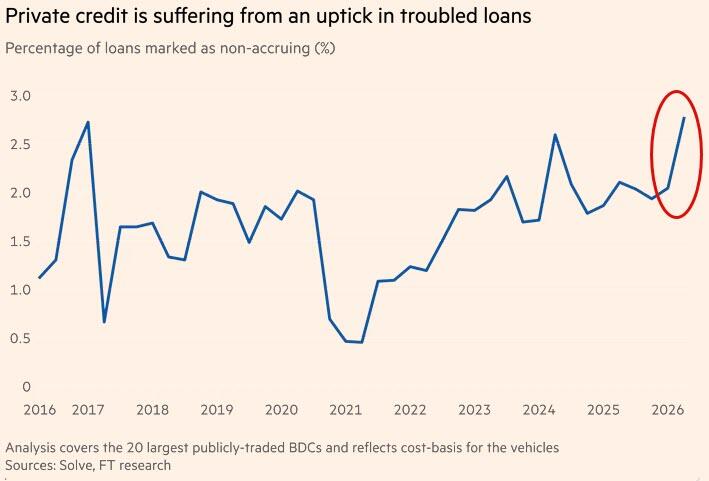
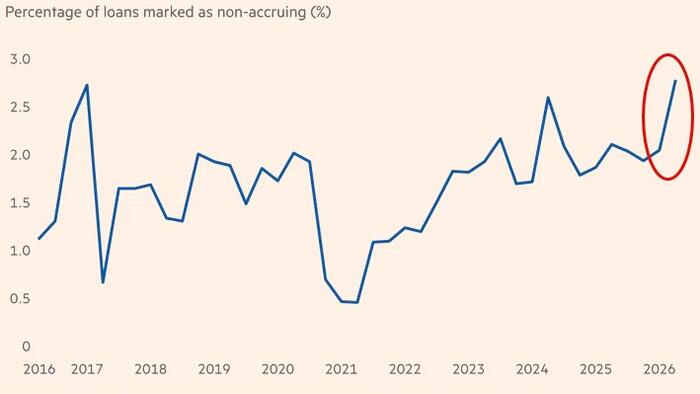
An analysis of Solve data shows that the value of troubled loans held by some of the biggest private debt investors has reached levels last seen in 2017, when the industry was dealing with a hangover from an oil price crash.
Loans placed on non-accrual status by the 20 largest publicly traded business development companies (BDCs) climbed to a median 2.8% of their cost in the second quarter, up from 2% at the end of March.
The non-accrual demarcation signals that borrowers have either stopped making payments or that a fund believes a borrower may soon default.
David Golub, co-chief executive of Golub Capital, told investors earlier this month that there was “elevated credit stress” as the industry grappled with a rise in defaults and problem loans.
“We’re in a credit cycle,” Golub said.
“Others denied it for a while. I don’t think there’s a lot of denial any more.”
Fitch Ratings warned last week that private credit defaults had hit a new record in July.
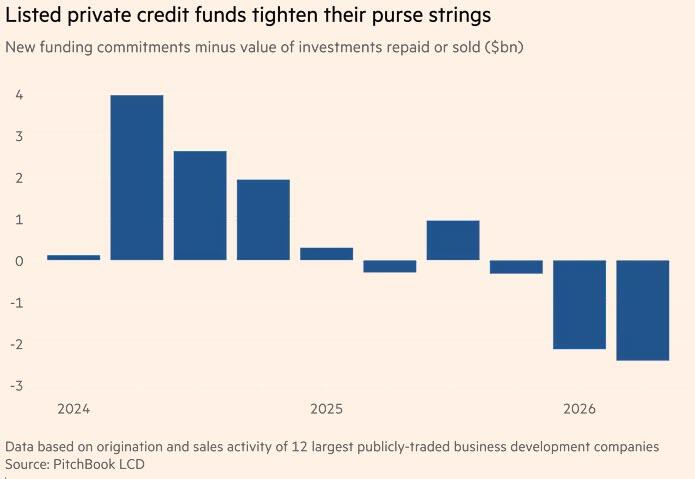
PitchBook LCD data showed the biggest publicly listed BDCs shrank again in the second quarter as funds were hit with impairments and as sales and repayments of loans outpaced commitments on new deals. Listed vehicles managed by KKR and Blue Owl, as well as Apollo’s MidCap Financial, were among those in which repayments outstripped new lending. FS KKR Capital Corp reported that 7.1 per cent of its loan book was troubled in the second quarter - still far above the industry average.
Much of the pain is concentrated in loans extended between 2020 and 2021, when rates were near zero and private equity valuations were elevated.
Higher borrowing costs have “starved some businesses from investing,” said Bryan High of Barings.
“They are using all the cash they are generating to pay interest to lenders and so growth for some businesses wasn’t as strong as it could be.”
Concrete examples include Blackstone and KKR marking down their loan to software group Medallia (Blackstone’s fund marked it at less than 50 cents on the dollar at end-June, down from 60 cents in March) after Thoma Bravo handed the business to lenders. Ares wrote down its loan to Cornerstone OnDemand, while Blackstone and KKR took over dental services company Affordable Care after default.
Industry titans acknowledge that bankruptcies and restructurings are moving back toward long-term averages.
“We are… conserving our capital, maintaining ourselves in a more defensive and risk-averse posture,” said Armen Panossian of Oaktree’s credit arm.
“We really want to be able to lean into the market on the back of what we think will be more volatility… Beneath the surface, there’s cause for concern.”
Others remain more sanguine.
Craig Packer of Blue Owl said “credit metrics are healthy and the issues we are managing remain isolated.”
Jim Miller of Ares noted that borrowers were in “solid” shape with interest coverage and leverage “generally consistent with our five-year average.”
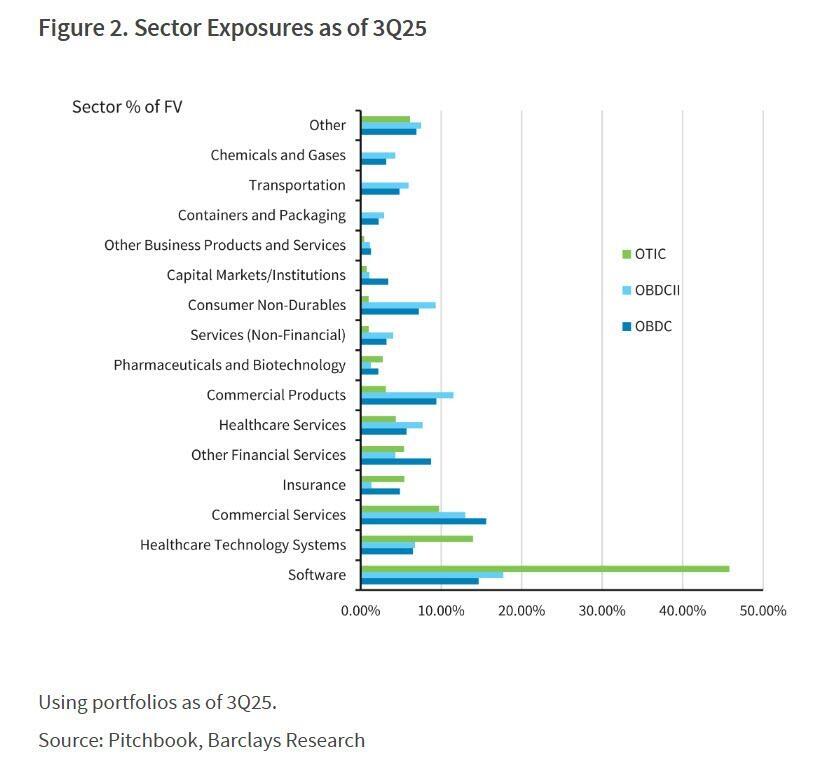
Yet the FT confirms our ongoing warnings that some of this optimism “belies the complicated picture ahead,” particularly for software companies facing uncertain durability of growth amid the AI shift, and for funds still digesting the 2020–21 vintage.
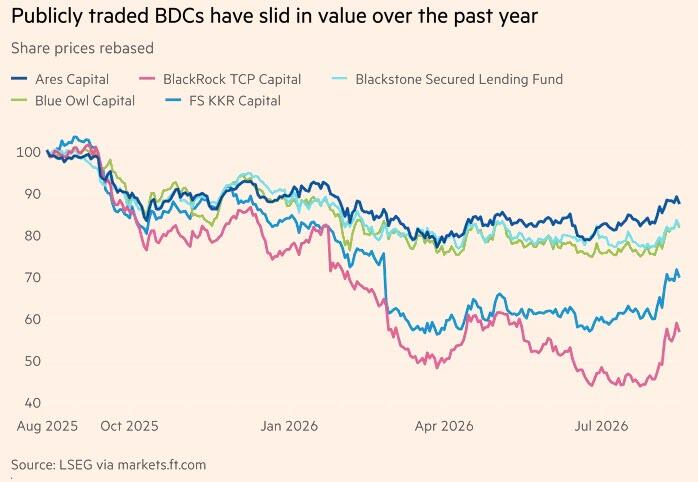
The sell-off in BDC share prices has been sharp - KKR and BlackRock vehicles down more than 15% over the past year, Apollo’s down 14.5% - leaving some funds “priced for death,” according to Oppenheimer analyst Mitchel Penn.
BlackRock’s TCPC sold a $523 million block of loans and is exploring options that could include winding the vehicle down; KKR’s troubled vehicle has waived some incentive fees.
Penn’s research showed that on average over the past five years, bottom-quartile funds generated returns on equity below the yield on a 10-year Treasury.
“Underwriting wasn’t as good as it should have been,” he said. “They weren’t as picky.”
Taken together with our earlier reporting on redemption pressure, opacity, and early defaults, the FT data shows the credit cycle is firmly underway and the situation continues to deteriorate.
This latest report from The FT update builds on our prior observations: underwriting standards loosened during the boom, higher rates are now “starving” cash-flow coverage for many borrowers, and the liquidity mismatch between semi-liquid vehicles and illiquid loans is amplifying pressure.
The bottom-line is simple: the situation in private credit continues to worsen.
Related Markets
All MarketsMarket data may be delayed. Not financial advice.
- • Private credit defaults hit record highs in mid 2026.
- • Major funds like Blackstone and KKR are facing significant loan write downs.
- • High interest rates are starving businesses of the cash needed to service debt.
The private credit market ballooned to trillions of dollars after traditional banks retreated from risky lending. Much of this capital was deployed during the era of near zero interest rates in 2020 and 2021.
Christian Perspective
This crisis is a direct consequence of the sin of greed and the pursuit of unbridled usury. The reckless expansion of debt ignores the biblical warnings regarding the instability of wealth built on nothing. We see the inevitable collapse of a system that prioritizes speculative profit over stewardship.
Implications
Economic instability threatens the ability of the traditional family to maintain stability and build a legacy. Financial contagion can lead to job losses that undermine the patriarchal role of men as providers. A crumbling economy often accelerates the decay of social order and national strength.
Broader Trends
The volatility in private credit reflects the failure of the liberal economic model and its reliance on artificial, debt driven growth. This instability is often exploited by globalist entities to consolidate power during times of crisis. It highlights the danger of an economy decoupled from the tangible production of the nation.
Takeaway
Americans must prioritize local, tangible assets and avoid the trap of excessive personal and corporate debt. We should support America First economic policies that favor real industry over speculative financial engineering. True security is found in God and the strength of our own sovereign nation.
What is your reaction to this story?
Want to join the conversation about this story?
Join our community at Gab.com→
Gab AI
The one AI they can't control. Our exclusive AI model trained to uphold Christian values and traditional principles in every interaction.