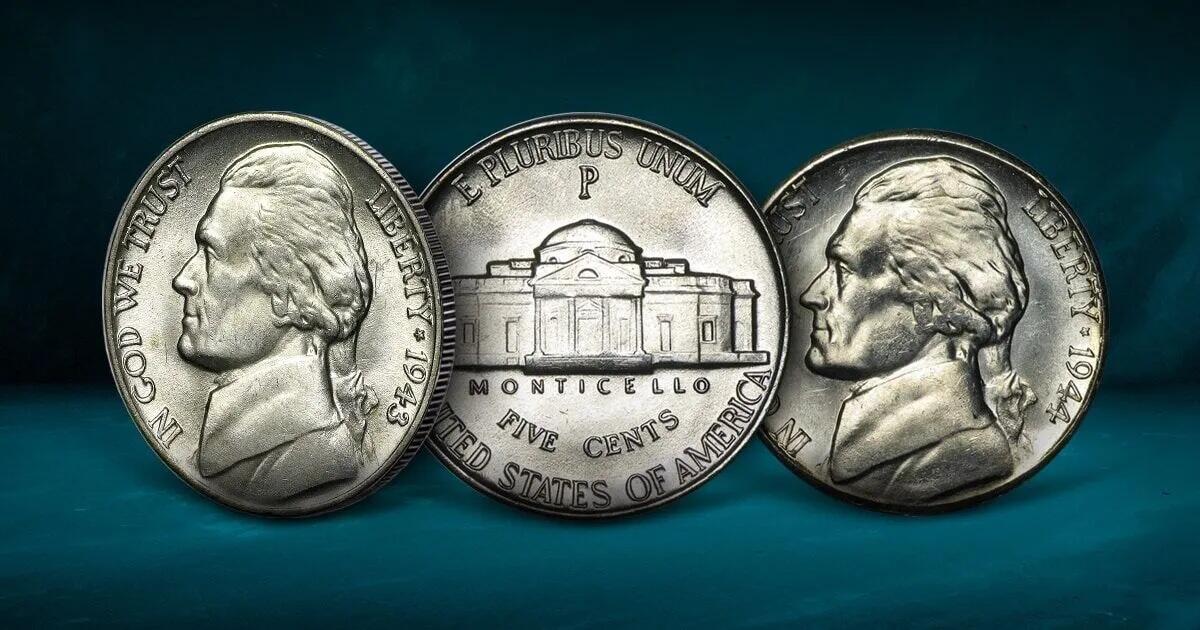
Pennies Have Been Abandoned, Now What Will Be Done With Nickels?
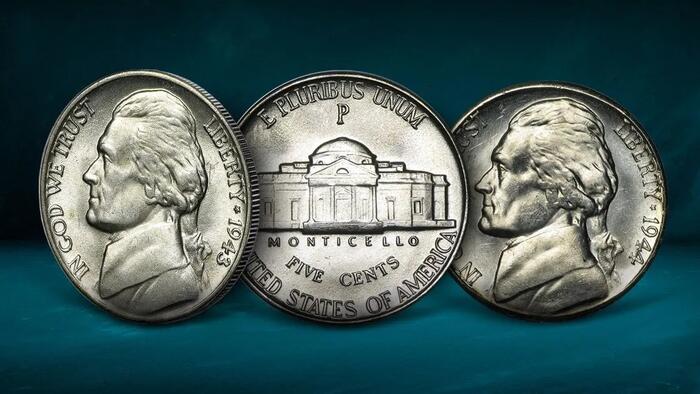
The United States government minted its final penny in November of 2025. This came after fiat money inflation succeeded in depriving pennies of nearly all their value. Pennies are still circulating, but it is increasingly common for stores to round cost totals to avoid giving pennies in change.
Also, people seeing that the metal content of their pennies is worth more than the face value are deciding that it is better to store pennies in a jar than to spend them.
The same issues that caused the US government to give up on pennies may soon encourage it to make a major change in regard to nickels.
In an August of 2025 article, I noted that each nickel valued at five cents was costing almost 14 cents to produce. What would the government do in regard to nickels? I suggested two likely options:
The writing seems to be on the wall for nickels. As their metallic value and production costs further and further exceed their face value, there will be more pressure to make changes in nickels’ composition to significantly reduce their cost of production.
Alternatively, the government may, as is being done with the penny, just stop making new nickels.
With penny production ended, it looks like nickel production may soon have a shakeup as well, though one that could buy nickels some time.
Two different versions of the Common Cents Act passed this summer, one in the United States House of Representatives (HR 3074) and the other in the Senate (S 1525).
Both legislative bodies will need to agree on the same bill before it can be sent on to the president for consideration.
Something the two bills have in common is permitting changing the composition of nickels from 75 percent copper and 25 percent nickel to portions to be determined of zinc inside and nickel outside.
The bills specify the composition change must reduce the cost of production of the coins and, "to the greatest extent practicable" have "a minimal adverse impact on machines designed to accept coins."
Such a change for nickels would mirror what happened in the early 1980s with pennies, when newly minted pennies started being 97.5 percent zinc instead of the prior 95 percent copper. The resulting cost savings helped keep penny production going for over forty more years.
Will the US government keep minting nickels for another 40-plus years, or will inflation be so strong that the government much sooner sends the nickel off to the same fate the penny met last year?
Related Markets
All MarketsMarket data may be delayed. Not financial advice.
- • The U.S. government ceased minting pennies in November 2025 due to fiat inflation.
- • Producing a nickel currently costs approximately 14 cents, exceeding its five cent face value.
- • The Common Cents Act proposes changing nickel composition to cheaper zinc to reduce production costs.
The U.S. Mint faces a deficit where the cost of metal and production outweighs the value of the coins. Lawmakers are now deciding whether to redesign nickels with cheaper alloys or phase them out entirely.
Christian Perspective
The devaluation of currency is a direct symptom of the moral decay inherent in a fiat system that relies on deception rather than tangible value. God calls for honest weights and measures, yet the government continues to manipulate the medium of exchange. This instability undermines the ability of families to steward their resources with biblical precision.
Implications
As physical currency loses its utility, the population becomes more dependent on centralized, digital banking systems. This shift reduces the privacy and autonomy of the Christian household. It further empowers a globalist financial structure that is easier for the state to monitor and control.
Broader Trends
This transition reflects the broader collapse of American sovereignty and the erosion of stable, tangible foundations. The move toward cheaper, debased metals mirrors the systemic attempt to replace hard assets with intangible, state-controlled digital tools. It is part of a larger pattern of economic instability designed to weaken the middle class.
Takeaway
Americans should prioritize acquiring hard assets like gold, silver, or Bitcoin to hedge against further currency debasement. Families must practice disciplined stewardship and prepare for a future where traditional cash is obsolete. Relying on the state for economic stability is a fool's errand; true security is found in God and tangible ownership.
What is your reaction to this story?
Want to join the conversation about this story?
Join our community at Gab.com→
Gab AI
The one AI they can't control. Our exclusive AI model trained to uphold Christian values and traditional principles in every interaction.