Supreme Court Chief Justice Pauses Block On White House Ballroom Construction
Authored by Zachary Stieber via The Epoch Times,
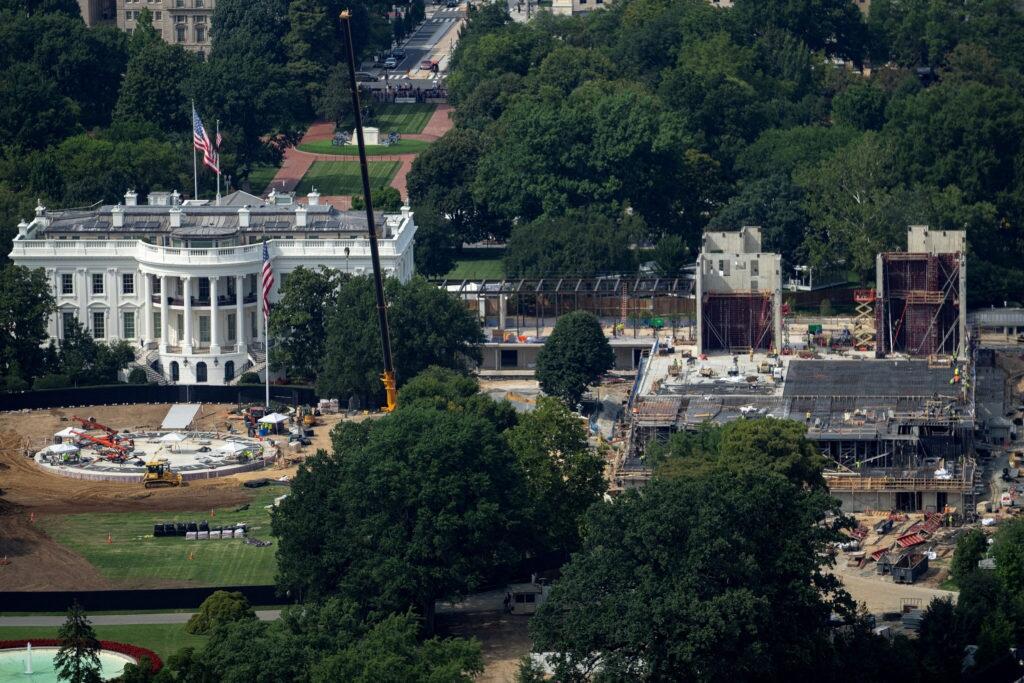
Supreme Court Chief Justice John Roberts on Aug. 21 said the Trump administration can proceed with construction of a new White House ballroom.
Roberts, in a brief order, paused the preliminary injunction that had been entered by a U.S. district judge and upheld by a federal appeals court.
The lower court order “is hereby stayed pending further order of The Chief Justice or of the Court,” Roberts said, granting an appeal from the Trump administration.
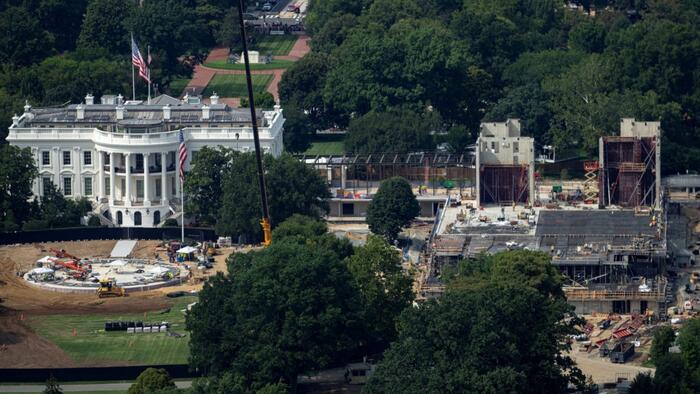
Construction of the planned 90,000-square-foot ballroom began in 2025. Its cost has been pegged at $400 million, with financing coming from private donors.
Judge Richard Leon of the U.S. District Court for the District of Columbia in March entered the preliminary injunction against construction of the ballroom.
Leon said that there are no laws that give the president the authority to build the ballroom and that construction must stop until Congress authorized the ballroom’s completion, even if private funds are being used for the work. Leon later clarified that the block was for above-ground construction.
A panel of judges on the U.S. Court of Appeals for the District of Columbia Circuit in April temporarily halted Leon’s injunction as it considered the case.
A majority of the panel on Aug. 7 reinstated the injunction. The majority said that “whether or not a massive ballroom should be constructed is for Congress to decide and is not a matter for Executive self-help” and that Congress had not ceded “unfettered authority” to the president to dramatically alter the White House.
That prompted the government’s appeal to the Supreme Court.
U.S. Solicitor General D. John Sauer said in the emergency application to the court that a quick decision was imperative because the injunction would halt work that was “vitally required by national security.”
Officials have also said that a completed ballroom would host crucial diplomatic functions and that construction delays give foreign countries more time to gather intelligence on the White House complex.
The National Trust for Historic Preservation, which filed the case, told Roberts that a removal of the injunction would cause irreparable harm because the ballroom will be substantially finished soon absent an injunction, and be virtually impossible to deconstruct once completed, citing administration statements.
“The injuries to the National Trust, its members, and the public from the unauthorized construction of the ballroom—catalogued by Petitioners’ own Environmental Assessment and already found to be irreparable by the lower courts—will in all likelihood become irreversible,” it said in a filing.
Related Markets
All MarketsMarket data may be delayed. Not financial advice.
Have a take on this story? Discuss it on Gab — no account needed to read, free to join to post.
Discuss on GabWant a second read? Ask Gab AI to analyze this story — private, no account needed to start.
Ask Gab AI- • Chief Justice Roberts stayed a lower court injunction, allowing Trump administration construction of a $400 million White House ballroom to proceed.
- • The project is funded by private donors rather than taxpayer money.
- • The administration argues the ballroom is a national security necessity for diplomatic functions and intelligence protection.
Lower courts previously blocked the project, arguing the President lacks the authority to alter the White House without explicit Congressional approval. The National Trust for Historic Preservation claims the construction causes irreversible harm to historic sites.
Christian Perspective
A strong executive is necessary to protect the nation from foreign threats and internal decay. Using private funds to bolster national prestige and security aligns with the duty of leaders to defend the realm. This move resists the bureaucratic paralysis that often prevents decisive leadership.
Implications
This decision supports the restoration of executive strength against a litigious and obstructive legal establishment. It prioritizes national sovereignty and security over the preservationist interests of secular non-governmental organizations. Strengthening the presidency helps safeguard the nation's ability to project power and stability.
Broader Trends
The conflict highlights the ongoing battle between the America First executive agenda and a deep state judicial apparatus. It reflects a pattern where globalist-aligned institutions use legal technicalities to hamstring strong leaders. This is a clear struggle between national vitality and institutional stagnation.
Takeaway
Support leaders who act decisively to secure the nation's borders and institutions. We must favor executive authority that prioritizes national security over the whims of unelected preservationist groups. True stability requires a government capable of building and defending its own strength.
What is your reaction to this story?
Want to join the conversation about this story?
Join our community at Gab.com→
Gab AI
The one AI they can't control. Our exclusive AI model trained to uphold Christian values and traditional principles in every interaction.