"Fibermaxxing" Craze Forces Big Food into Reformulation Cycle

BNP Paribas analysts say Gen Z's growing awareness of healthy, high-protein, high-fiber diets is accelerating a reformulation cycle across the Big Food industrial complex, as manufacturers race to make products more appealing to the youth and those on GLP-1 weight-loss drugs.
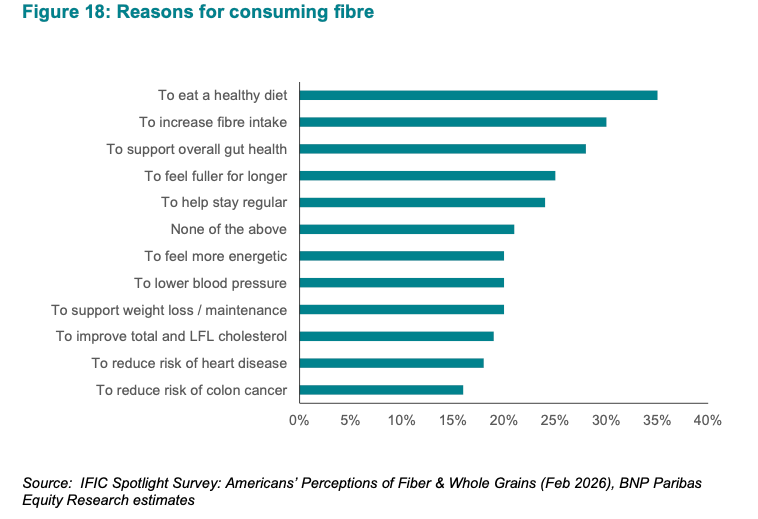
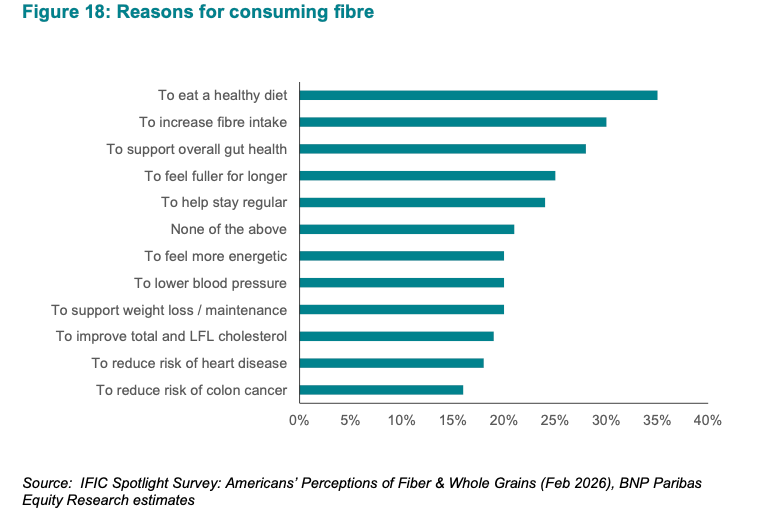
In a report titled "Fiber Is the New Protein,” BNP analyst Joan Lim said the protein craze ignited by GLP-1 adoption has been coined "fibermaxxing," as younger consumers seek food products promising satiety, digestive health and weight-management benefits.
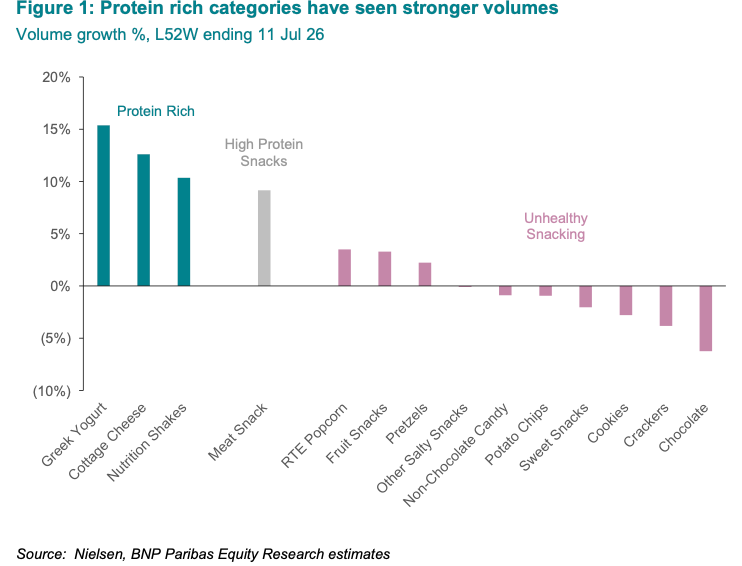
Consumer research firm Nielsen shows protein-rich categories have seen stronger volumes versus junk food categories.
The global dietary fiber market was valued at roughly $9.6 billion in 2025 and is forecast to grow at a compound annual rate of 9.6% through 2034, as the fiber-maxxing trend gains even more momentum.
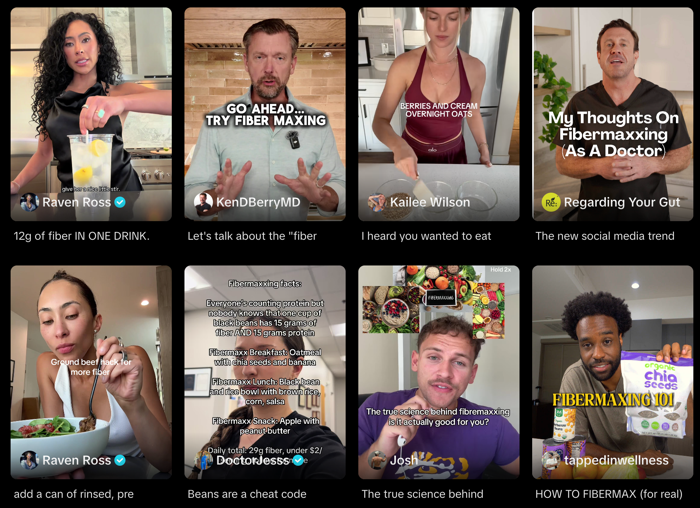
Fibermaxxing is already visible, according to Lim. Only 20% of people globally consume the recommended daily amount of fiber, yet social media posts using the #fibermaxxing hashtag attracted more than 150 million views on TikTok in 2025.
Food and beverage research firm Datassential found that 52% of US consumers are interested in trying fibermaxxing and 42% consider products labeled "high fiber" healthier.
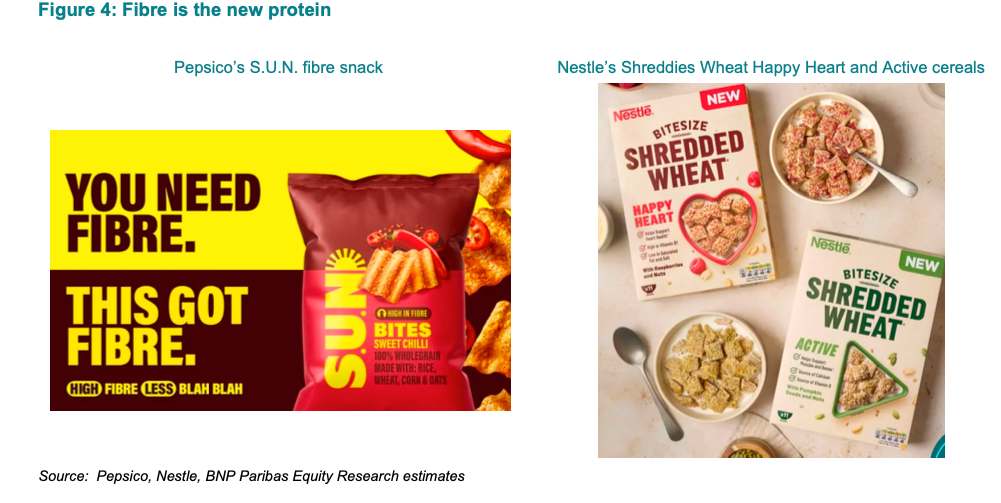
Fiber has also overtaken probiotics in digestive-health marketing. Some 38% of products carrying a digestive-health claim now advertise high fiber, compared with 19% featuring probiotics. PepsiCo and Nestlé are among the big food companies that are placing fiber claims more prominently on their packaging.
About 35% of US consumers increased their protein intake between 2024 and 2025, while 75% said they would pay more for protein-rich foods and beverages. The global market for protein-rich products is estimated at $65 billion and growing at 6%-8% annually.
With GLP-1 penetration at 12% in the US and in the low single digits globally, adoption is expected to increase as the drugs become widely available in oral form and more affordable. Lim pointed out that "GLP-1 users need to consume more protein to mitigate the effects of muscle loss."
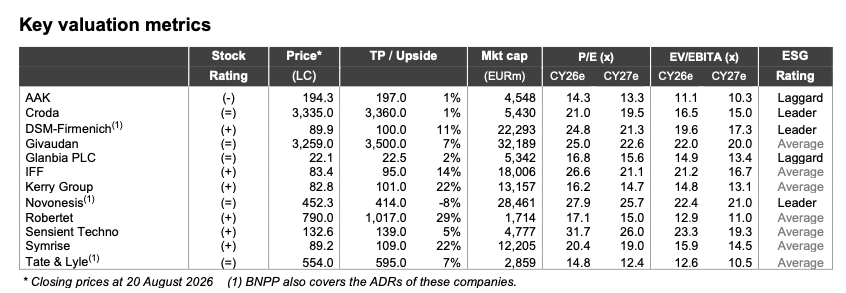
BNP identified Tate & Lyle and Ingredion as best positioned to benefit from fibermaxxing.
Kerry Group, DSM-Firmenich, IFF, Givaudan and Novonesis could benefit from demand for flavors, enzymes, cultures and texture solutions.
Related Markets
All MarketsMarket data may be delayed. Not financial advice.
Have a take on this story? Discuss it on Gab — no account needed to read, free to join to post.
Discuss on GabWant a second read? Ask Gab AI to analyze this story — private, no account needed to start.
Ask Gab AI- • Big Food is reformulating products to include more fiber and protein to target Gen Z and GLP-1 users.
- • The global dietary fiber market is projected to grow at nearly 10% annually through 2034.
- • Social media trends like #fibermaxxing have generated over 150 million views on TikTok.
The rise of GLP-1 weight-loss drugs is driving demand for nutrient-dense foods to prevent muscle loss. This shift is forcing massive corporations like PepsiCo and Nestlé to prioritize satiety and digestive health in their product lines.
Christian Perspective
The focus on health and bodily stewardship aligns with the biblical principle that the body is a temple of the Holy Spirit. However, the reliance on pharmaceutical-driven dieting and highly processed "functional" foods reflects a modern departure from natural, God-given sustenance. True health should stem from wholesome, traditional nourishment rather than industrial additives.
Implications
The shift toward GLP-1 dependency signals a further move away from natural human vitality toward a life mediated by chemical intervention. This trend prioritizes convenience and pharmaceutical management over the traditional family's ability to provide real, whole foods. It risks creating a culture that views health as a consumer product rather than a disciplined way of life.
Broader Trends
This movement highlights the intersection of digital culture and the pharmaceutical industry's influence over human biology. It demonstrates how globalist corporations use social media trends to pivot their business models toward new consumer vulnerabilities. This cycle reinforces a consumerist lifestyle that prioritizes market trends over traditional dietary wisdom.
Takeaway
Families should prioritize whole, unprocessed foods to maintain the strength required to build and protect the nation. Relying on industrial reformulation and pharmaceutical solutions undermines the natural order and individual self-reliance. True strength is found in traditional nutrition and the discipline of the household.
What is your reaction to this story?
Want to join the conversation about this story?
Join our community at Gab.com→
Gab AI
The one AI they can't control. Our exclusive AI model trained to uphold Christian values and traditional principles in every interaction.