PayPal Crashes After Advent, Stripe Abandon $50 Billion Takeover Bid

The short version
- Bloomberg reports that the consortium offered more than $50 billion for PayPal in what would have been one of the largest leveraged buyouts in history.
- As per the report: The group is no longer pursuing a deal for PayPal, the people said, asking not to be identified because the information is private.
- It had previously offered more than $50 billion for the company, people with knowledge of the matter have said.
- PayPal reportedly rejected the $50 billion offer, betting that Advent and Stripe would return to the negotiating table with a higher price.
- Takeover interest in PayPal first came to light in a February Bloomberg article, which reported that Stripe was considering acquiring all or part of PayPal.
The story
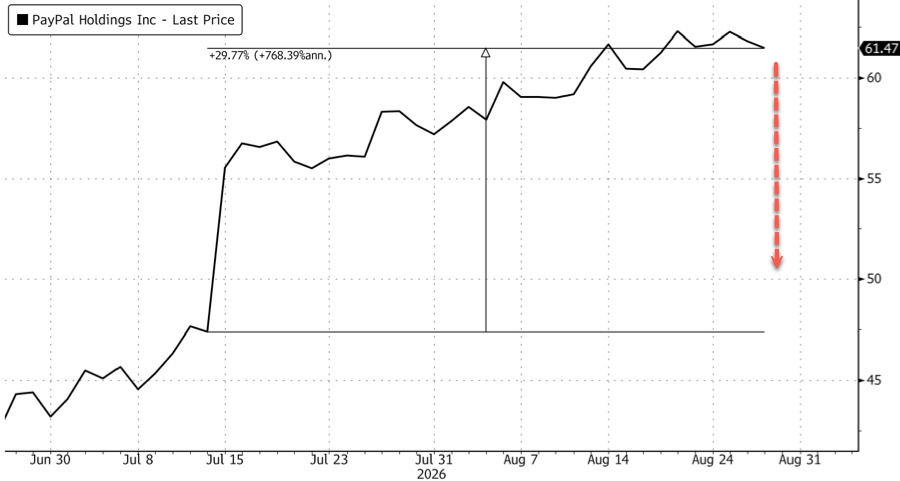
PayPal shares plunged as much as 16% in premarket trading Friday, the most in months if the losses hold through the cash session, after a consortium led by private-equity firm Advent International and payments giant Stripe abandoned its takeover bid for the struggling payment processor.
Bloomberg reports that the consortium offered more than $50 billion for PayPal in what would have been one of the largest leveraged buyouts in history.
As per the report:
The group is no longer pursuing a deal for PayPal, the people said, asking not to be identified because the information is private. It had previously offered more than $50 billion for the company, people with knowledge of the matter have said.
PayPal reportedly rejected the $50 billion offer, betting that Advent and Stripe would return to the negotiating table with a higher price. Instead, the consortium walked away.
Takeover interest in PayPal first came to light in a February Bloomberg article, which reported that Stripe was considering acquiring all or part of PayPal. Reuters then reported on July 15 that an offer had been made, helping to catapult the stock up roughly 30% (as of Thursday's close).
News this morning that the consortium has walked away sent shares crashing as much as 16%, threatening to wipe out much of the stock's gains over the past month and a half.
Meanwhile, PayPal is in the middle of a turnaround strategy and has brought in the former CEO of HP. The stock is trading at 2018 levels.
Related Markets
All MarketsMarket data may be delayed. Not financial advice.
Powered by Gab AI
The Story At A Glance
Open the full breakdown on gab.ai
- • PayPal shares plunged up to 16% after a $50 billion takeover bid by Advent International and Stripe collapsed.
- • PayPal management rejected the initial offer in hopes of a higher price, but the consortium walked away.
- • The stock is currently trading at levels not seen since 2018.
The takeover interest began in February and drove a 30% rally in PayPal stock. The failed deal leaves the company reliant on a costly restructuring plan led by former HP CEO Enrique Lores.
Christian Perspective
The volatility of digital finance highlights the instability of a secular economic system built on speculation rather than tangible value. Relying on massive leveraged buyouts reflects a culture of greed that prioritizes rapid wealth accumulation over steady stewardship. This instability serves as a reminder that earthly riches are fleeting and unreliable.
Implications
The collapse of such massive financial deals can disrupt the economic security of ordinary citizens who rely on stable payment infrastructures. Financial instability often leads to increased social unrest and a loss of faith in institutional reliability. This volatility challenges the stability required for traditional family life and community growth.
Broader Trends
The dominance of massive, centralized payment processors like PayPal and Stripe illustrates the concentration of power within a globalist financial elite. These entities hold immense control over how money flows through the nation. This centralization is a hallmark of the modern financial architecture that often works against national sovereignty.
Takeaway
Investors should prioritize assets that offer true freedom and decentralization, such as Bitcoin, to avoid the whims of centralized banking giants. True economic strength for the nation comes from supporting domestic industry and tangible production rather than speculative financial maneuvers. Focus on building wealth through stable, traditional means that align with America First principles.
Want to join the conversation about this story?
Join our community at Gab.com→
Gab AI
The one AI they can't control. Our exclusive AI model trained to uphold Christian values and traditional principles in every interaction.