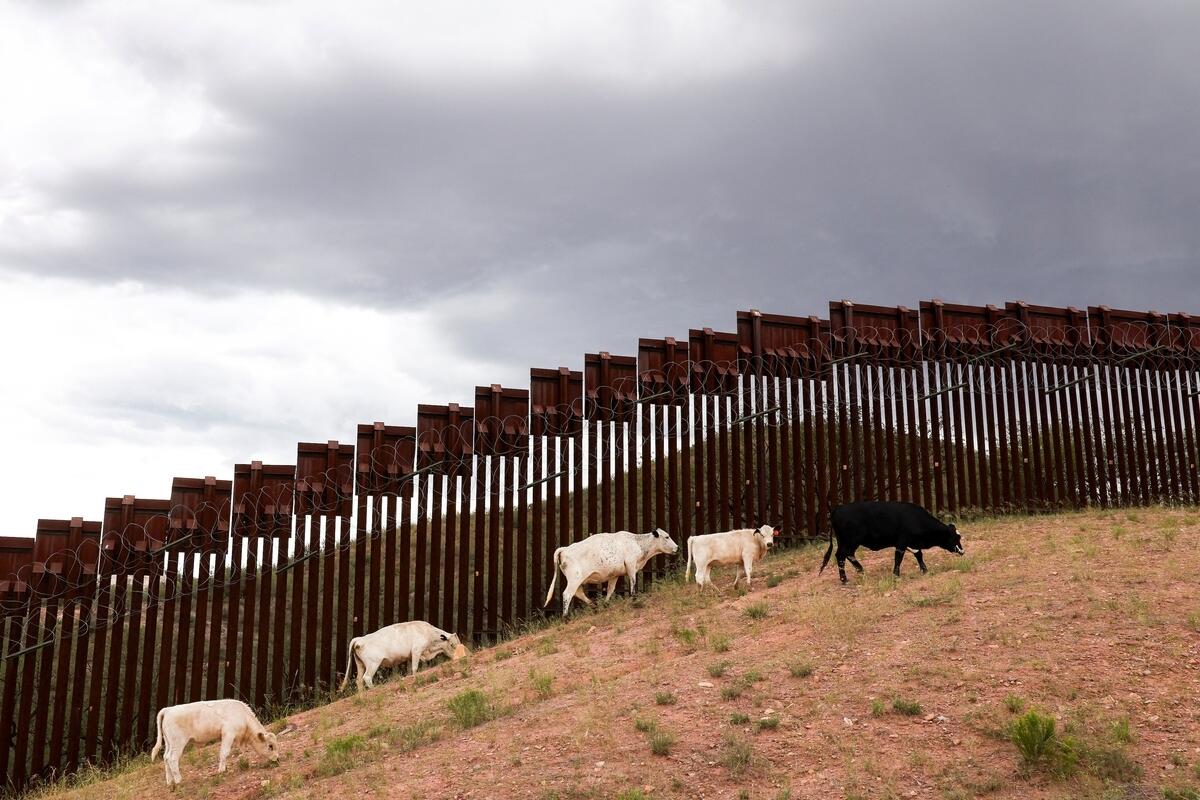
Arizona Border Wall Construction Begins, Targets Smuggling Corridor

The short version
- A federal judge permitted the government to move forward with construction earlier this month.
- Authorities said the desert spanning the Tohono O'odham Nation is a hotspot for drug smuggling.
- "The project will close one of the most dangerous smuggling and trafficking corridors on the Southwest border: remote desert that has facilitated decades of drug loads…
- SLSCO, the Texas-based construction company building the section in Arizona, has secured over $390 million in funding from the Department of Homeland Security (DHS) to build the…
- The construction company is building 22 miles of primary border wall system and approximately 13 miles of detection technology.
The story
Authored by Owen Evans via The Epoch Times,
The Trump administration has begun work on a project to build a stretch of border wall in southern Arizona.
U.S. Customs and Border Protection (CBP) said on Aug. 25 that the wall project is located along "one of the most dangerous smuggling and trafficking corridors on the Southwest border."
The wall segment is part of a $46.6 billion effort by the Trump administration to fill the border with 30-foot steel bollard walls, vehicle barriers, and technology designed to stop illegal immigration.
A federal judge permitted the government to move forward with construction earlier this month.
Authorities said the desert spanning the Tohono O'odham Nation is a hotspot for drug smuggling.
"The project will close one of the most dangerous smuggling and trafficking corridors on the Southwest border: remote desert that has facilitated decades of drug loads, migrant deaths, and cartel activity," CBP Commissioner Rodney Scott said in an Aug. 25 statement.
SLSCO, the Texas-based construction company building the section in Arizona, has secured over $390 million in funding from the Department of Homeland Security (DHS) to build the border wall since 2023.
The construction company is building 22 miles of primary border wall system and approximately 13 miles of detection technology. These contracts were awarded using funds from the One Big Beautiful Bill Act.
The project ran into opposition from the Native American tribe, the Tohono O'odham Nation, who said the project would inflict lasting damage on its land, culture, and religious practices.
The Tohono O'odham Nation filed a motion in June to block construction of the border wall. However, a federal judge on Aug. 14 declined to do so.
In an Aug. 24 statement, the Tohono O'odham Nation said that at 4 a.m on Tuesday, border wall contractors and approximately 20 masked, armed CBP agents from the Tucson Sector entered the Tohono O'odham Nation and began "engaging in pre-construction activities."
It said that CBP, the Bureau of Indian Affairs (BIA), and the Border Patrol Tactical Unit SWAT Team were deployed to the Nation to protect the contractors, and that federal authorities are using a tethered balloon for enhanced monitoring.
It added that DHS coordinated with Mexican police to have them deploy personnel to protect the area from the southern side while border wall contractors were working.
Sen. Ruben Gallego (D-Ariz.) said in an Aug. 26 statement that dozens of armed agents on the Nation's land had been sent "without so much as a heads up or warning."
A CBP spokesperson previously told The Epoch Times that the agency's priority is to implement President Donald Trump's executive order 14165, "Securing Our Borders," and proclamation 10142, "Declaring a National Emergency at the Southern Border of the United States."
"We are building border infrastructure faster and smarter than ever before to ensure there are no gaps and no easy pathways for illegal entry," he said.
Shadow Wolves
The Tohono O'odham Nation covers 2.8 million acres, including a 76-mile stretch of land shared with Mexico.
Between 2010 and 2020, interdiction and investigative efforts that trained DHS officers, known as Shadow Wolves, have led or participated in have resulted in 437 drug and immigration arrests, along with the seizure of over 117,264 pounds of drugs, 45 weapons, 251 vehicles, and $847,928 in U.S. currency.
The Shadow Wolves are the DHS's only Native American tracking unit assigned in Sells, Arizona, located on the Tohono O'odham Nation that runs along the Mexico - United States border
Shadow Wolves use modern technology and a traditional Native American tracking technique called "cutting for sign," which means they locate and interpret any physical evidence left by smugglers and decode its meaning. Examples of physical evidence include footprints, tire tracks, thread, and clothing.
According to Immigration and Customs Enforcement (ICE), the name "Shadow Wolves" refers to the unit's hunting style, similar to that of a wolf pack.
The team specializes in the "interdiction of human and drug smugglers who conduct their illegal operations through the rugged terrain of the Sonoran Desert."
ICE said that all of the Shadows Wolves must have at least one-fourth Native American ancestry.
Related Markets
All MarketsMarket data may be delayed. Not financial advice.
Powered by Gab AI
The Story At A Glance
Reading this article now — analysis appears below
💡 AI analysis provides alternative perspectives on current events