Have We Really Learnt The Lessons Of The GFC?
The short version
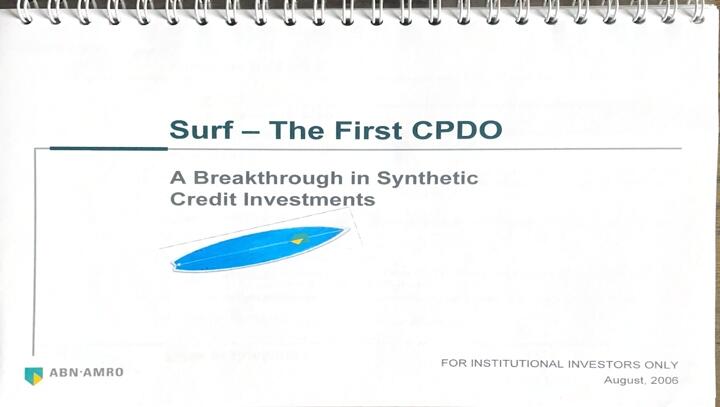
- Authored by Richard Ryan via BondVigilantes.com, It is 20 years ago this month that I sat in a pitch and listened to an investment bank describe their latest stroke of genius.
- In 2006, the Constant Proportion Debt Obligation (CPDO) was hailed as a financial innovation that appeared to offer something for nothing: a AAA-rated security paying a meaningful…
- It was a structure that increased leverage as credit markets weakened .
- Investors embraced it because the future seemed visible.
- Credit spreads had been stable for years, liquidity was abundant, and sophisticated models suggested that extreme market moves were so unlikely as to be almost impossible.
The story
Authored by Richard Ryan via BondVigilantes.com,
It is 20 years ago this month that I sat in a pitch and listened to an investment bank describe their latest stroke of genius.
In 2006, the Constant Proportion Debt Obligation (CPDO) was hailed as a financial innovation that appeared to offer something for nothing: a AAA-rated security paying a meaningful premium over cash.
It was a structure that increased leverage as credit markets weakened. Investors embraced it because the future seemed visible.
Credit spreads had been stable for years, liquidity was abundant, and sophisticated models suggested that extreme market moves were so unlikely as to be almost impossible.
Sound familiar?
Today’s market shares many of the same ingredients.
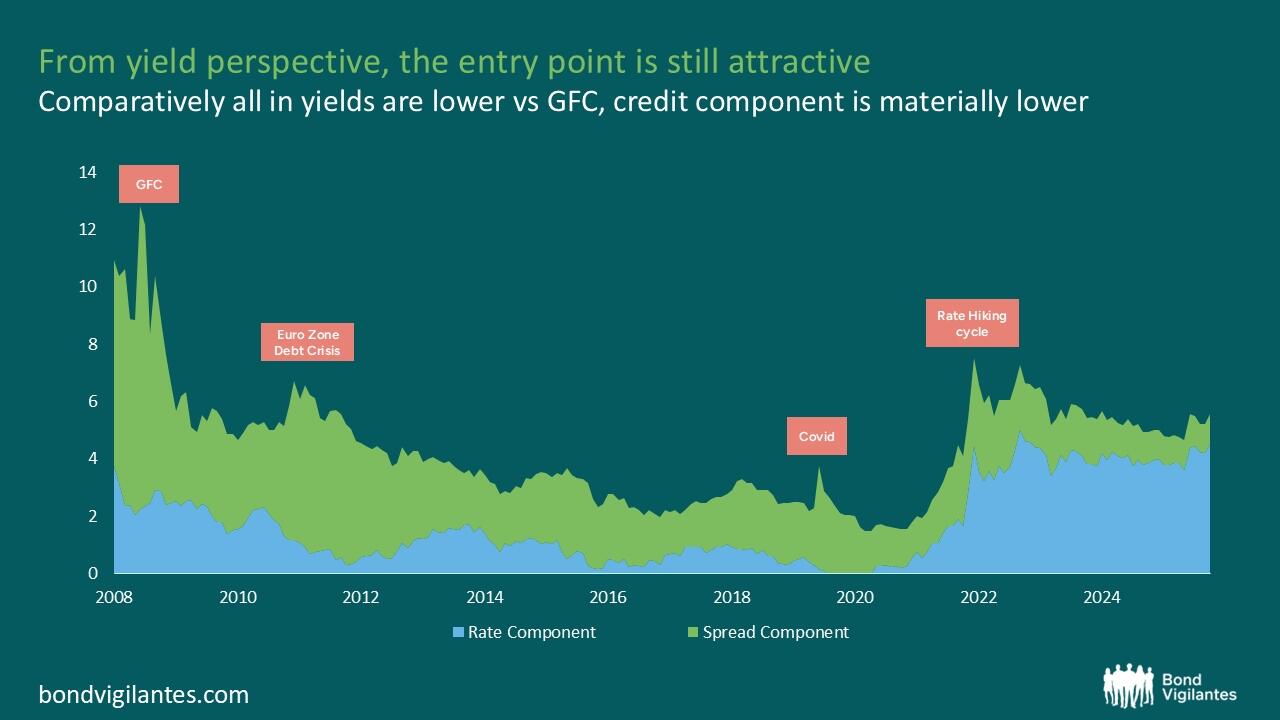
Liquidity remains plentiful, credit spreads are tight, expected returns are compressed, leverage is rising, and a new generation of financial innovation is attracting capital. As investors search for return whilst yields remain relatively compelling, the temptation is the same as it was twenty years ago: to assume that recent experience provides a reliable guide to the future.
Source: Bloomberg, ICE BoA Indices, 31 July 2026. Investment Grade: Yield components – 5 year treasuries and credit spread (%)
That same mindset sat at the heart of the CPDO story. The problem was not that investors ignored risk. It was that years of benign conditions narrowed the range of risks considered plausible. That narrowing became embedded in the models themselves. Severe spread widening was assigned vanishingly small probabilities, not because it was impossible, but because it was considered too unlikely to matter. When spreads eventually widened, reality exposed the difference between a risk that is unlikely and a risk that is merely inconvenient to consider. A product whose success depended on stable spreads was judged using assumptions that effectively ruled out the possibility of meaningful spread widening. These structures suffered catastrophic failures and led to significant investor losses. One such structure, focused on the financial sector was launched in March 2007, rated AAA at issuance, defaulted in November of the same year.
Perhaps the most important lesson is how investors framed the question. Rather than asking, “What is the likely return on this investment, and is it sufficient compensation for the risks?”, many inverted the problem: “This investment does not return enough. How do I increase the return to an acceptable level?”
The distinction is crucial. Returns are visible and enticing.
Risks are often hidden, nonlinear and revealed only under stress.
To quote a blog my colleague published in 2025, while investors may recognise the risk correctly – no cognitive failure – but acting on that view can be commercially painful. This contributes to expensive markets remaining expensive for longer than they should, and finally repricing with extreme volatility -because, at that point, everybody suddenly finds the courage to shout ‘the king has no clothes!’
We have seen this pattern repeatedly. Abundant liquidity and the search for yield led high yield investors to abandon covenants designed to protect bondholders, only for subsequent default cycles to remind everyone why those protections existed. We have repeatedly witnessed enthusiasm for investment strategies become dependence on them. The yen carry trade is a good example: a strategy celebrated for years until leverage and crowded positioning turned a seemingly manageable risk into a violent unwind. Today we see the continuing rise of leveraged ETFs, single-stock ETFs and leveraged single-stock ETFs. Different structures, same instinct: use innovation and leverage to manufacture returns in an environment where underlying assets offer less and less.
We are often told that the financial system is stronger than it was in 2008.
That is undoubtedly true. Banks are better capitalized, balance sheets are cleaner and many of the vulnerabilities that defined the GFC have been reduced.
But investors often focus on the transmission mechanism they fixed and overlook the ones they did not.
Risk is ultimately transmitted through the owners of that risk. If a leveraged investment falls in value and additional collateral must be raised, investors rarely sell the asset that has already collapsed. They sell what they can. Assets that have not yet fallen become sources of liquidity. Distress spreads not because securities are directly linked, but because investors are.
The CPDO experience reminds us that markets are often most vulnerable when confidence is highest. When liquidity is abundant, spreads are tight and innovation is flourishing, risk can appear smaller than it really is. Perhaps we should spend less time asking what might cause credit spreads to widen and more time accepting that they can. From today’s historically tight valuations, is that really a risk worth betting against?
Gordon Brown once claimed to have ended the economic cycle. Events proved otherwise. Are today’s investors equally confident that the credit cycle has finally been defeated?
Powered by Gab AI
The Story At A Glance
Reading this article now — analysis appears below
💡 AI analysis provides alternative perspectives on current events