China Expands Online Content Controls, Putting More Pressure On Creators
.jpg?itok=VpRIPlg5)
The short version
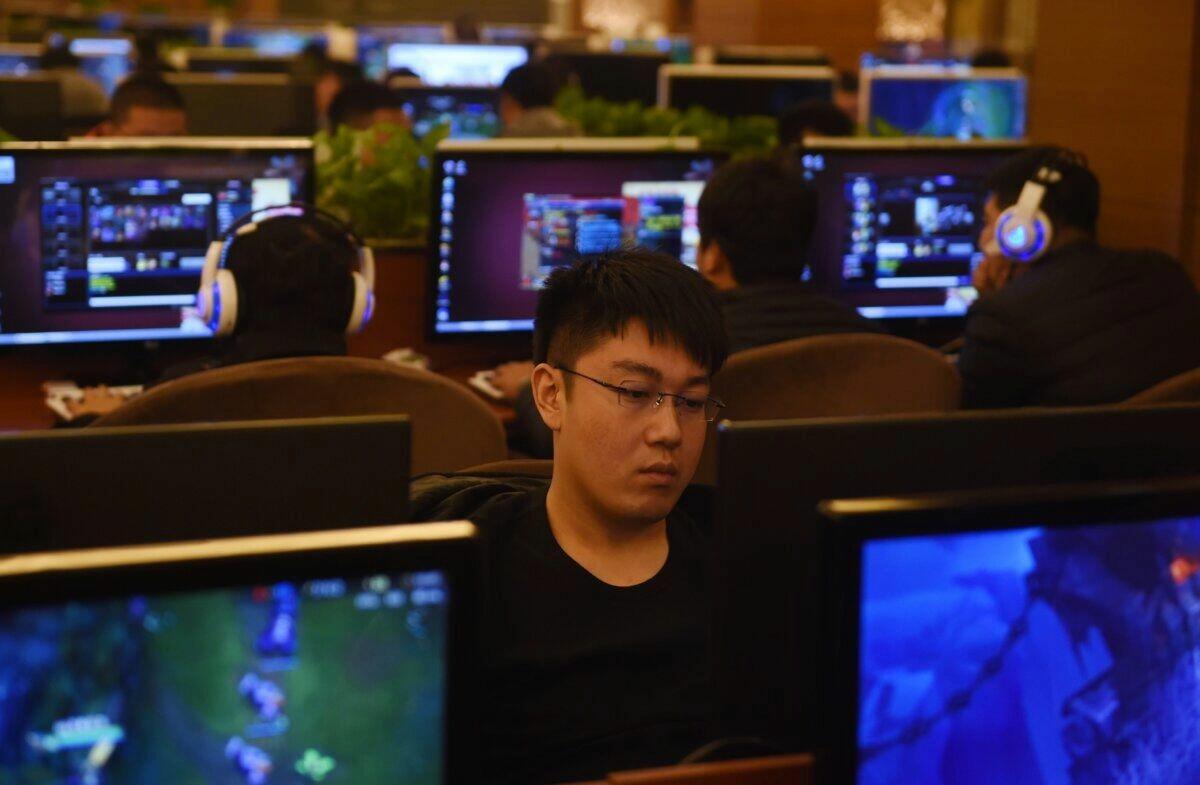
- Men play games on computers in an internet bar in Beijing on Dec. 16, 2015.
- Greg Baker/AFP via Getty Images The regulations require companies providing services such as content planning, production, distribution, marketing, promotion…
- They spoke on condition of anonymity out of fear of reprisal.
- Under the new rules, companies already registered to provide such services have 30 days from the regulations' effective date to amend their business registrations.
- Companies involved in online performance management, publishing, audiovisual services, or internet news services must also obtain the relevant licenses.
The story
Authored by Michael Zhuang via The Epoch Times,
China's new rules governing companies that produce and distribute content for social media took effect on Sept. 1, potentially exposing both independent content creators and the accounts they manage to penalties for violations.
The regulations require companies providing services such as content planning, production, distribution, marketing, promotion, and talent management to register as service providers.
Critics and independent content creators told The Epoch Times that the rules could broaden the communist regime's control over online content, particularly information about sensitive social issues such as unemployment, unpaid wages, unfinished housing projects, and protests.
They spoke on condition of anonymity out of fear of reprisal.
Under the new rules, companies already registered to provide such services have 30 days from the regulations' effective date to amend their business registrations.
Companies involved in online performance management, publishing, audiovisual services, or internet news services must also obtain the relevant licenses.
The rules require covered companies to appoint a person responsible for content management and establish a management team, as well as procedures governing employees and emergency responses.
When signing contracts with online creators, companies must verify their identities and clearly define their management responsibilities.
Platforms can also impose measures on both the companies and the content creators they have contracted with when alleged violations of laws, regulations, platform rules, or contractual agreements occur.
Those measures can include restricting account functions, suspending monetization, or shutting down accounts.
Risks to Online Creators
For people working in China as independent content creators, the new requirements have raised concerns about both income and uncertainty over what content is permissible.
A content creator in Shenyang, China, told The Epoch Times that the rules could directly affect the livelihoods of people who depend on online traffic for income.
"Many people doing livestreams don't know what they can say and what they can't say. Once the traffic gets high, the risks come with it," she said.
The content creator explained that she has seen other creators have their accounts blocked after their livestreams began attracting substantial audiences.
She also questioned how regime authorities and platforms would determine what constitutes prohibited content.
"What does it mean to incite emotions, and what does it mean to make false propaganda? Who decides? There is no clear standard," she said.
The regulations are formally framed as a system for managing businesses involved in the distribution and operation of online content.
However, critics say the requirements could extend beyond large multi-channel networks (MCNs), and apply to smaller operations that may not previously have considered themselves part of the industry.
A Chinese online commentator told The Epoch Times that the rules could encompass small studios, account-management teams, and small livestreaming accounts.
"In the past, many small studios simply helped people obtain advertising, edit videos, and do promotions. They didn't consider themselves MCNs," the commentator said.
"This time, the regulations are very broad. As long as you participate in producing content for online accounts, or help distribute it, you could be required to register and file records, and you would have to assume them as a condition for operating."
In his view, the system shifts part of the regime's censorship responsibilities onto platforms and content-operations companies. Rather than directly intervening in every piece of content, the regime can require companies and platforms to police the accounts under their control.
Concerns Over Reporting on Social Issues
The potential impact could be particularly significant for creators who cover social and economic problems in China.
An independent content creator in Harbin, China, who focuses on analyzing social issues and asked to be identified only by his surname Li, told The Epoch Times that he regularly follows issues including gig employment, difficulties facing restaurants and other businesses, unfinished housing projects, and problems withdrawing money from banks.
Such topics, he said, could potentially be interpreted by platforms as negative information or as an attempt to exploit social issues for attention.
"If influencers continuously follow these things, the network regulators may think you are hyping up a social incident, seeking attention, and making money from traffic," Li said.
"I can only speculate this way. The regime has not clearly stated the standards."
Although Li primarily analyzes information from the perspective of a reader, rather than reporting firsthand on every incident, he said he remains concerned about the restrictions.
"Some content is not false; it's just different from what the official releases say," he said. "Creators are afraid of losing their accounts or income, so they may simply give up publishing. This is self-censorship."
Li said the result could be that social events increasingly have only the version of events permitted by regime authorities.
Once creators face the possibility of having their accounts closed, losing their ability to earn money, or effectively losing their livelihoods, he said, they may choose not to publish information even when they believe it to be accurate.
The regulations impose penalties for violations under existing laws and regulations. Where no specific penalty is provided, the regime can issue warnings and impose fines ranging from 10,000 yuan ($1,490) to 200,000 yuan ($29,800).
For creators and critics, however, the greater concern may be the effect of the rules before any formal penalty is imposed.
If platforms and companies are held responsible for the content produced by the accounts they manage, they have an incentive to remove material that could attract regulatory scrutiny.
That could leave creators increasingly reluctant to report on sensitive social issues, not necessarily because the information is false, but because the potential loss of an account, audience, or income may make publishing it too risky.
Xiao Bin contributed to this report.
Powered by Gab AI
The Story At A Glance
Reading this article now — analysis appears below
💡 AI analysis provides alternative perspectives on current events