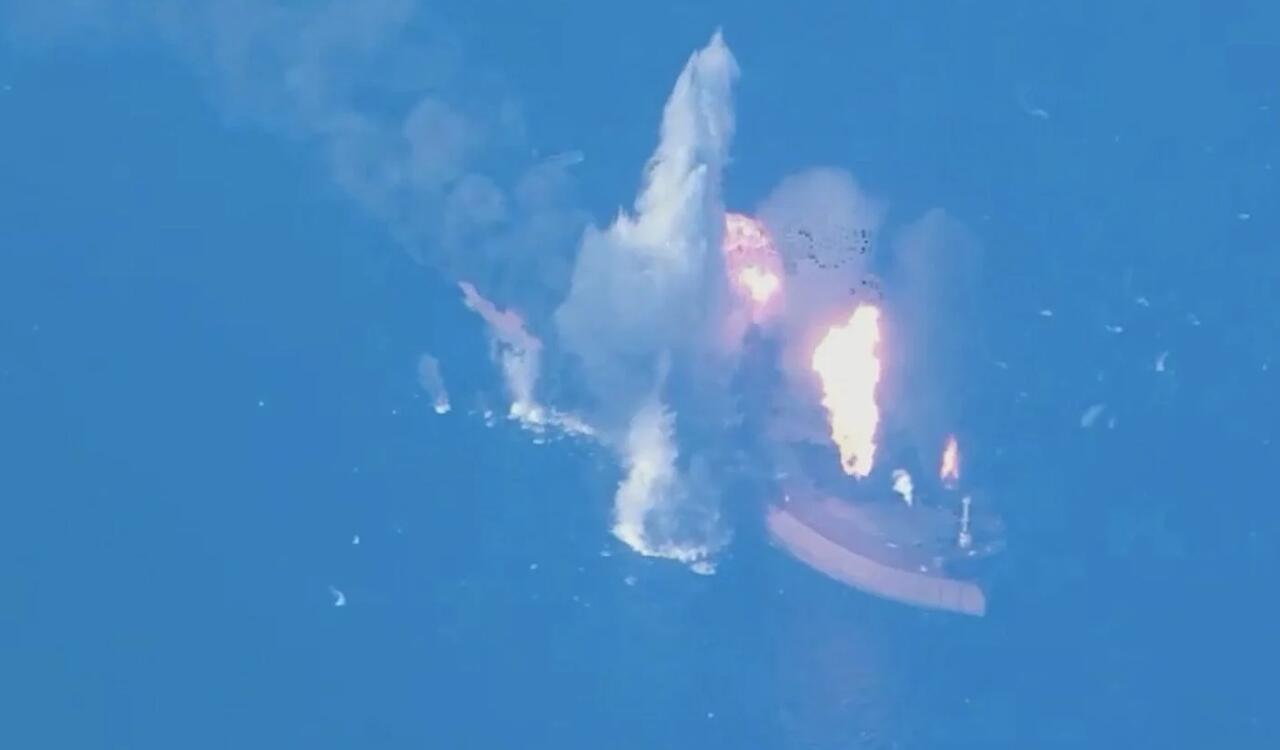
Iran Vows 'Faster, More Painful' Response To US Attacks After Weekend Sea Battle

The short version
- He has warned that Iranian retaliation will no longer be "proportionate" .
- Source: US Central Command Ghalibaf also conceded that Iran faces severe economic pressures amid US-led sweeping sanctions and the campaign of 'strangulation' and isolation…
- "Severe fluctuations in the exchange rate, inflation, unemployment, and market management are fundamental challenges that have put serious pressure on people’s livelihoods,"…
- Ghalibaf's words come a day after the Islamic Revolutionary Guard Corps (IRGC) said it attacked three American military ships and three oil tankers using an "unauthorized" route…
- The Iranian parliament speaker continues to try and troll Trump and Bessent on X: Wheels up.
The story
Iran's Parliament Speaker Mohammad Bagher Ghalibaf on Sunday announced a heightened military posture in the war with the US, saying that new attacks on the country will "meet a faster, heavier and more painful response."
"If they haven't understood by now, they should understand before it’s too late that the rules of the game have changed and that from now on, any violation of Iran’s interests and security will receive a ‘faster, heavier, and more painful’ response,” Ghalibaf said in a post on Telegram. He has warned that Iranian retaliation will no longer be "proportionate".
Ghalibaf also conceded that Iran faces severe economic pressures amid US-led sweeping sanctions and the campaign of 'strangulation' and isolation efforts.
"Severe fluctuations in the exchange rate, inflation, unemployment, and market management are fundamental challenges that have put serious pressure on people’s livelihoods," Ghalibaf said.
He also laid out that the Islamic Republic must aim to bolster domestic production and use technology to "devise short-term and permanent solutions." Iran's military has all along touted that it never stopped manufacturing missiles and drones, even as US-Israeli bombs decimated many industrial sites.
Ghalibaf's words come a day after the Islamic Revolutionary Guard Corps (IRGC) said it attacked three American military ships and three oil tankers using an "unauthorized" route in the Strait of Hormuz. Also, in the latest:
Iran said Sunday it struck an unmanned U.S. vessel trying to enter the Strait of Hormuz, a claim that the U.S. military dismissed as a "total lie."
The US military earlier on Saturday had struck three Iranian oil tankers, M/T Downy, M/T Stark 1, and M/T Kylo - in a major first of the conflict (that is, a US attack on civilian vessels).
The Iranian parliament speaker continues to try and troll Trump and Bessent on X:
Wheels up. Warm-ups before liftoff:
— محمدباقر قالیباف | MB Ghalibaf (@mb_ghalibaf) September 6, 2026
Diesel ATH: Short it
Your biggest creditor dumping: Good luck with Yentervention++
NOR cutting $80B: Rename Norway to Americaway
Low recruitment: Debt-to-Service w/ DO[Israel's]W, per your puppeteers
Oh. Fed's dot plot flashing red 😁 https://t.co/E1KzG1T6Yf pic.twitter.com/zJb56tsd7p
Washington is meanwhile touting more and more energy flow through the Strait of Hormuz, while also appealing for other nations to help:
US Energy Secretary Chris Wright says on average nine million barrels of oil a day are getting through the Strait of Hormuz that should help relieve pressure on rising energy prices.
Wright told CNN with oil also moving through pipelines in the region, “we’re probably two-thirds or more of pre-conflict flows”.
Those flows, however, depend on the presence of the US Navy to help escort tankers and provide some protection against possible Iranian attacks. Wright said he expected other countries will eventually support the Navy’s efforts.
But events like this weekend are likely going to continue to escalate the crisis. "There’s going to be more clashes between the Iranians and the Americans. There can be miscalculations. There can be more civilian casualties" especially on the Iranian side, Sina Azodi, the director of the Middle East studies program at George Washington University, has explained.
The "small potatoes" conflict according to the Commander-in-Chief...
Reporter: Can you explain to the American people, if this is not a war, what exactly is it?
— Acyn (@Acyn) September 4, 2026
Trump: A lot of people don’t call it a war. I call it a military conflict because it's small potatoes for us. It's not a big thing.
Reporter: It certainly doesn’t feel like small… pic.twitter.com/a4hvccNCoD
"The [US] secretary of defense can send more troops to the region, but I don’t think the Iranians are going to back down. They’re going to resist that blockade and impose further costs on the United States," the analyst said.
Indeed every escalation step ordered by Washington has typically resulted in the Iranians 'answering' with significant missile and drone attacks on US bases in the Gulf, and as far away as Jordan. Some analysts are calling this a successful 'debasification' campaign that has existed since the war's start.
Related Markets
All MarketsMarket data may be delayed. Not financial advice.
How this story developed
Full timelineAlto has tracked this across 4 days of coverage from 1 outlet.
- Iran Vows 'Faster, More Painful' Response To US Attacks After Weekend Sea BattleYou are here
Powered by Gab AI
The Story At A Glance
Reading this article now — analysis appears below
💡 AI analysis provides alternative perspectives on current events