Six Nuclear Bills Clear House Committee Without A Single 'No' Vote

The short version
- The measures target fuel recycling, uranium enrichment, licensing delays, regulatory staffing and transparency.
- The vote to get it to the House floor is another testament to the lack of divide among the Republicans and Democrats regarding the need for more nuclear energy in America.
- As we highlighted in a report from Goldman, the Western nuclear revival is gathering momentum across microreactors, small modular reactors and larger designs.
- But turning announcements into operating infrastructure requires fuel supplies and a regulatory system capable of processing the projects.
- The six bills pushed to the House attempt to address at least some of the standing issues: H.R. 3978, Nuclear REFUEL Act , 44 yes - 0 no.
The story
The House Energy and Commerce Committee advanced six nuclear-industry bills on September 2nd, all without a single opposing vote. The measures target fuel recycling, uranium enrichment, licensing delays, regulatory staffing and transparency.
The vote to get it to the House floor is another testament to the lack of divide among the Republicans and Democrats regarding the need for more nuclear energy in America.
As we highlighted in a report from Goldman, the Western nuclear revival is gathering momentum across microreactors, small modular reactors and larger designs. But turning announcements into operating infrastructure requires fuel supplies and a regulatory system capable of processing the projects.
The six bills pushed to the House attempt to address at least some of the standing issues:
- H.R. 3978, Nuclear REFUEL Act, 44 yes - 0 no. This would simplify licensing for facilities that recycle spent nuclear fuel without isolating plutonium. Qualifying projects could use the single-step fuel-cycle licensing route instead of separate construction and operating approvals. The potential payoff is a clearer path to reusing nuclear material and developing domestic recycling capacity.
- H.R. 9612, American Enrichment Deployment Act, 43-0. Enrichment plants would receive treatment closer to other fuel-cycle facilities, including permission to begin construction before licensing under the same conditions. Developers would build at their own risk, but NRC approval would still be required. The aim is to bring additional domestic enrichment capacity online sooner.
- H.R. 5549, Efficient Nuclear Licensing Hearings Act, 44-0. This removes mandatory hearings when nobody with an affected interest requests one and requires informal procedures for covered hearings. It’s an opportunity to trim legal costs and delays without making public participation disappear.
- H.R. 9613, Nuclear Advisory Committee Reform Act, 41-0. This refocuses the NRC’s Advisory Committee on Reactor Safeguards on significant, novel reactor-design safety issues and changes membership and term rules. The idea is to reduce repetitive reviews.
- H.R. 9614, NRC Staff Pay Alignment Act, 42-0. The NRC chairman could pay career senior executives up to 110% of the applicable Senior Executive Service pay ceiling. It gives the regulator more room to retain experienced leadership as the industry competes for expertise.
- H.R. 9084, Department of Energy Nuclear Transparency Act, 41-0. DOE would have to announce covered nuclear-facility authorizations and safety-rule changes, and publish safety analyses, within 72 hours. It's unclear what the real benefit of this one is besides maybe providing more opportunity for nuclear skeptics to complain about faster regulatory actions. More transparency can be a good thing, but the benefit is less clear in this situation.
In July, ranking Democrat Frank Pallone, and even AOC, singled out the advisory-committee overhaul over concerns about weakening safety oversight. Pallone also sought implementation changes to the enrichment bill, while crediting the transparency measure with helping keep bipartisan nuclear legislation moving.
Surprisingly, those concerns never translated into recorded opposition at the full committee.
All this goes to highlight the dramatic change in opinion for the expansion of nuclear energy generating capacity in the US in recent years...
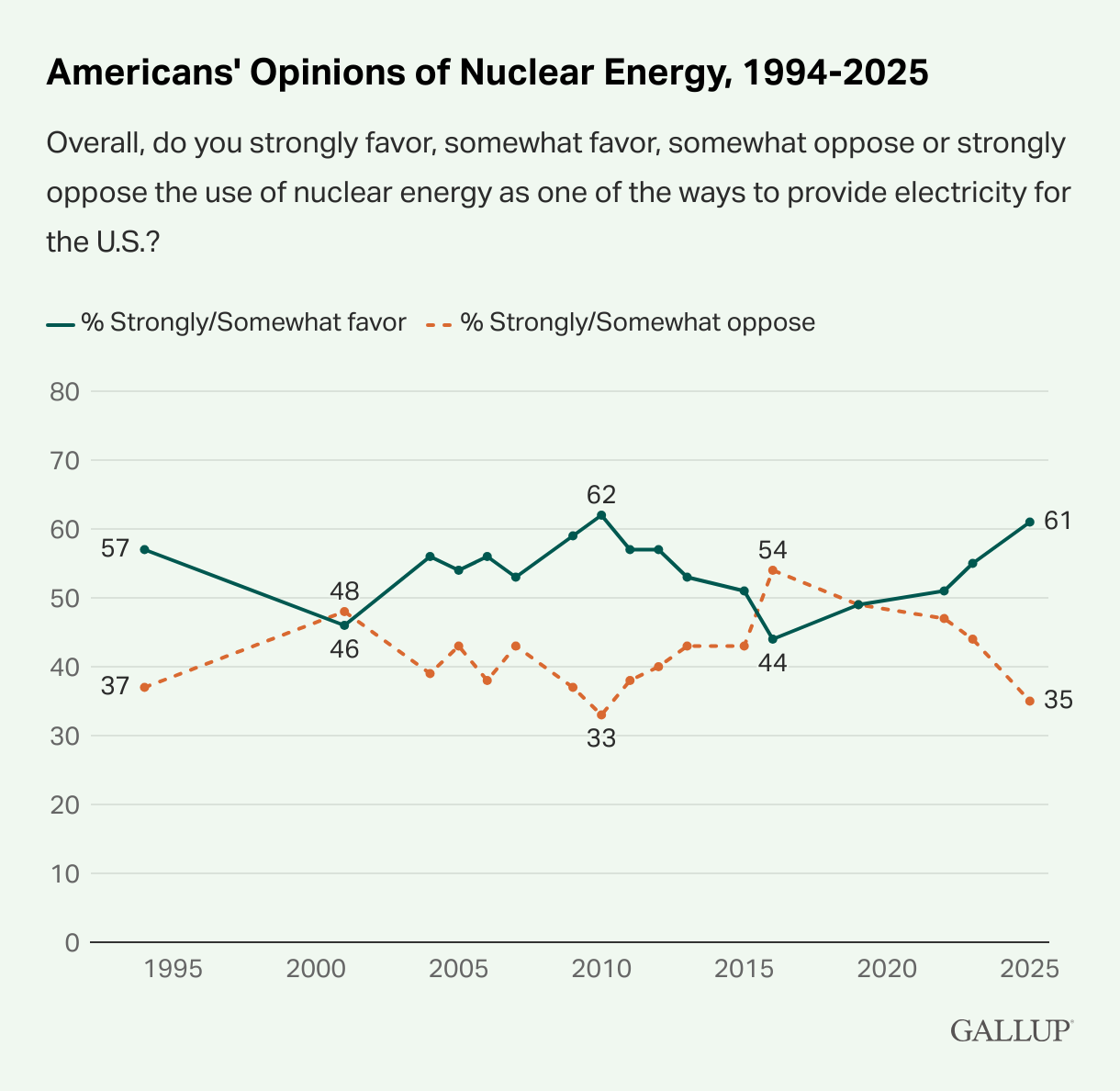
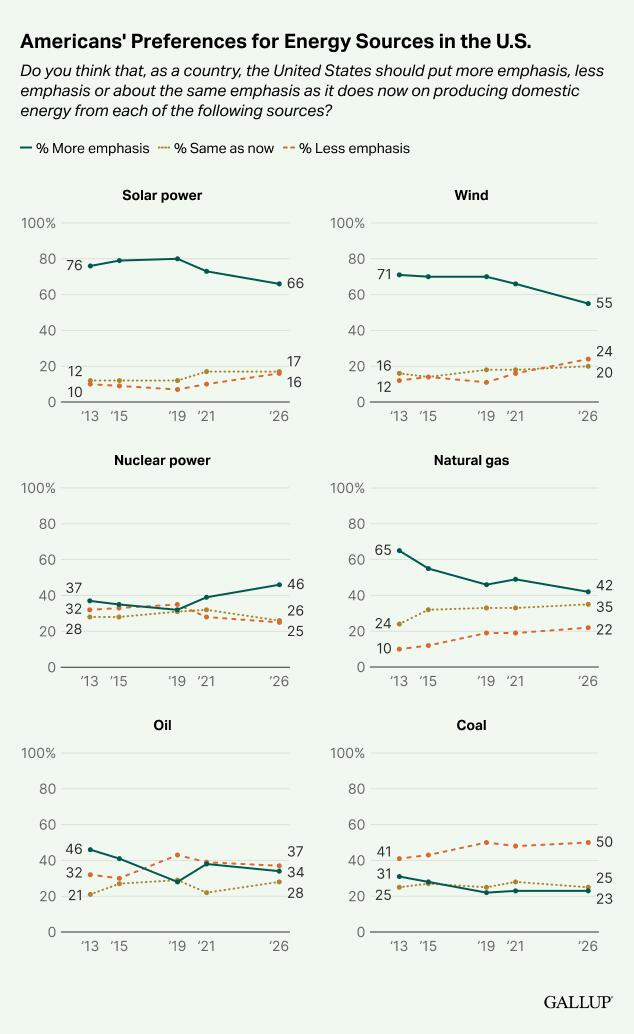
Gallup found in 2025 that 61% of Americans favor nuclear energy, only a single point away from the highest level recorded in the poll's three-decade history. Gallop then ran a similar poll in April 2026, asking whether the U.S. should put more emphasis on various energy sources…
Nuclear was the only one of the six energy sources Gallup tested whose "more emphasis" support increased since 2021.
Related Markets
All MarketsMarket data may be delayed. Not financial advice.
How this story developed
Full timelineAlto has tracked this across 2 days of coverage from 1 outlet.
- Six Nuclear Bills Clear House Committee Without A Single 'No' VoteYou are here
Powered by Gab AI
The Story At A Glance
Reading this article now — analysis appears below
💡 AI analysis provides alternative perspectives on current events