This Labor Day Take A Closer Look At America's Deadliest Jobs, Ranked

The short version
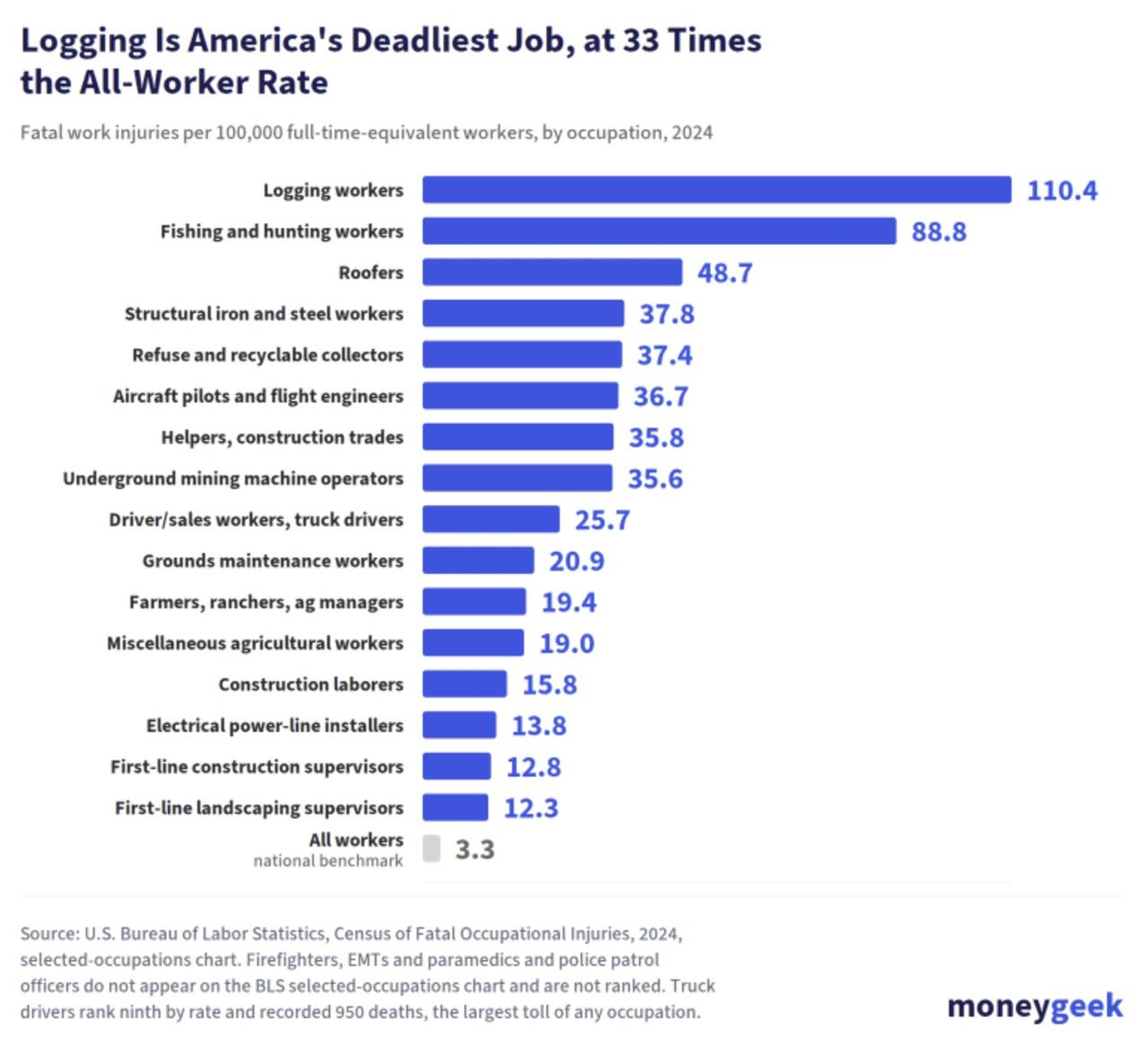
- Logging was the most dangerous occupation in America in 2024, with 110.4 fatal work injuries per 100,000 full time equivalent workers, more than 33 times the national rate of 3.3…
- Fishing and hunting workers ranked second at 88.8, followed by roofers at 48.7, structural iron and steel workers at 37.8, and refuse and recyclable collectors at 37.4.
- Each of the five occupations had a fatality rate at least 11 times the national average, according to the Bureau of Labor Statistics’ Census of Fatal Occupational Injuries.
- The Labor Day reminder is especially stark when looking at the national toll.
- A total of 5,070 workers died from job related injuries in 2024, equivalent to one death every 104 minutes.
The story
Labor Day is a time to recognize the contributions of American workers, but it also draws attention to the risks many face on the job.
Logging was the most dangerous occupation in America in 2024, with 110.4 fatal work injuries per 100,000 full time equivalent workers, more than 33 times the national rate of 3.3, according to a new study by Moneygeek.
Fishing and hunting workers ranked second at 88.8, followed by roofers at 48.7, structural iron and steel workers at 37.8, and refuse and recyclable collectors at 37.4. Each of the five occupations had a fatality rate at least 11 times the national average, according to the Bureau of Labor Statistics’ Census of Fatal Occupational Injuries.
The Labor Day reminder is especially stark when looking at the national toll. A total of 5,070 workers died from job related injuries in 2024, equivalent to one death every 104 minutes. That was a 4% decline from 5,283 deaths in 2023 and marked the second consecutive annual decrease. The national fatality rate also fell from 3.7 per 100,000 workers in 2022 to 3.5 in 2023 and 3.3 in 2024.
The occupations with the highest fatality rates are not necessarily those with the most deaths. Logging recorded 51 fatalities, while driver/sales workers and truck drivers accounted for 950, the largest total of any occupation, despite a substantially lower rate of 25.7 per 100,000.
Moneygeek wrote that construction laborers recorded 334 deaths at a rate of 15.8. The difference reflects workforce size, since a smaller occupation can carry a much greater risk per worker without producing the largest number of fatalities.
The dangers also vary considerably by occupation. Contact with objects and equipment accounted for 40 of the 51 logging deaths, while falls, slips and trips caused 83 of the 104 roofing fatalities.
Transportation incidents were the leading cause in several other high risk occupations, including truck driving, fishing, refuse collection and grounds maintenance. Nationwide, transportation incidents caused 1,937 fatal work injuries, representing 38.2% of all workplace deaths.
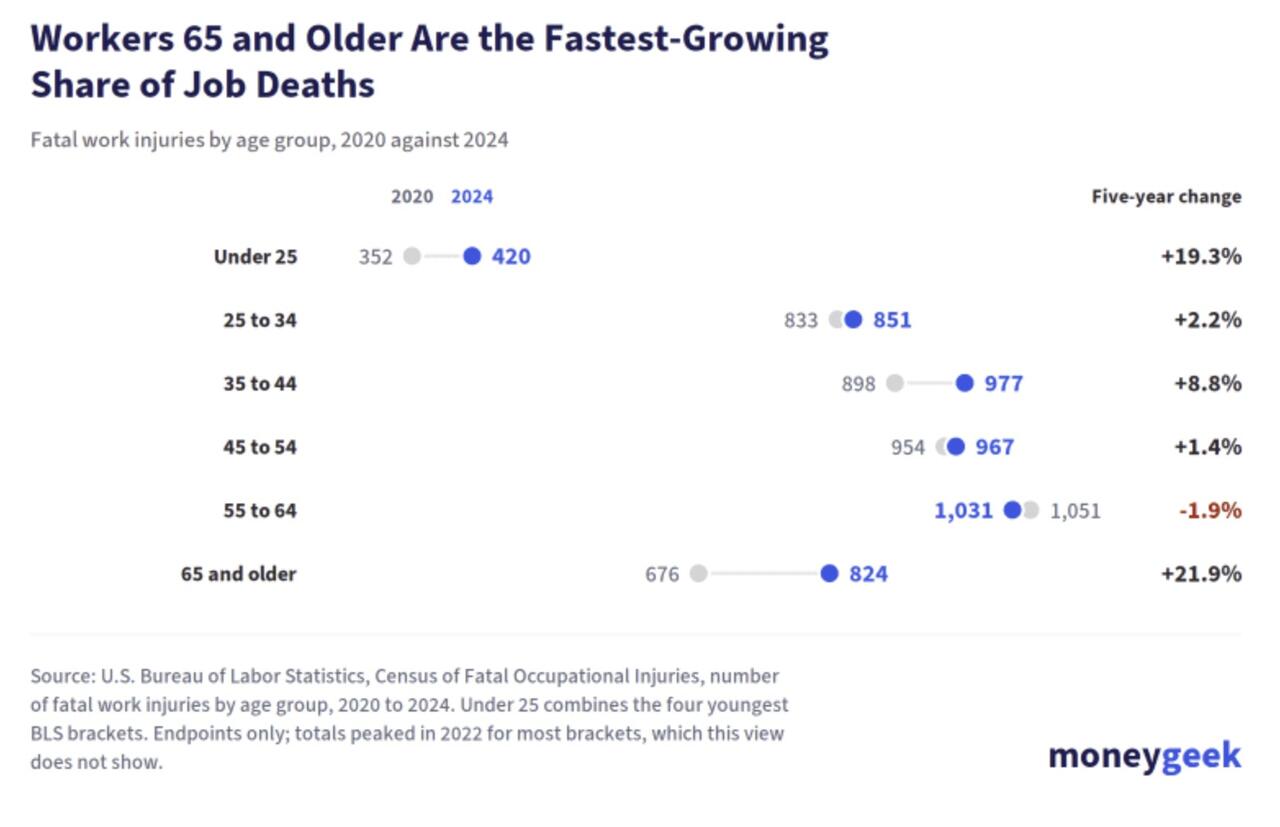
The data also highlights the growing toll among older workers. Workers age 65 and older recorded 824 fatal work injuries in 2024, a five year high and a 21.9% increase from 2020. Their share of all workplace deaths rose from 14.2% to 16.3% over that period.
The under 25 group also saw a 19.3% increase, while workers ages 55 to 64 were the only age group to record a decline.
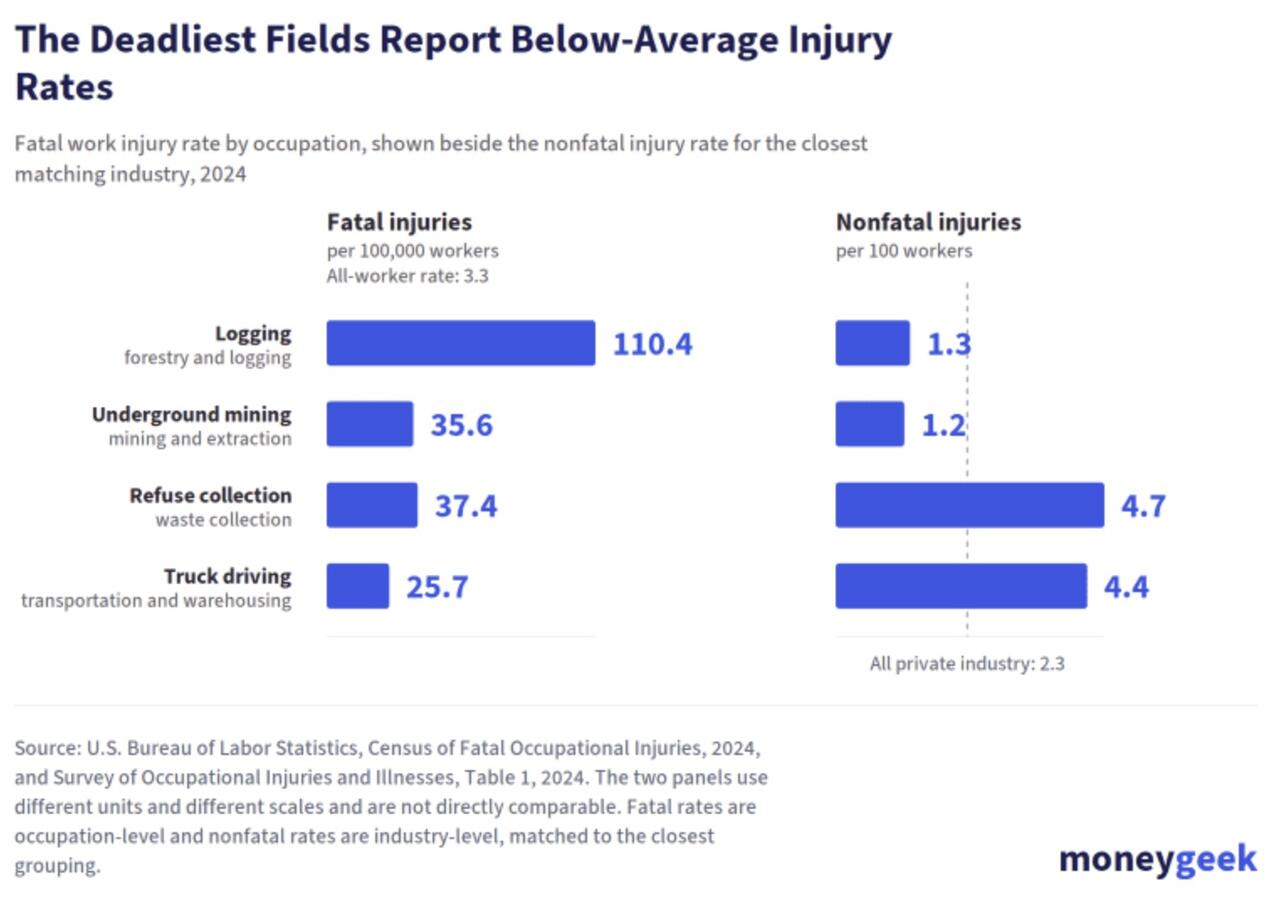
Fatality risk and nonfatal injury rates tell different stories. Forestry and logging had a nonfatal injury rate of 1.3 per 100 workers, below the private industry average of 2.3, despite logging’s exceptionally high fatality rate.
Mining, quarrying, and oil and gas extraction showed a similar contrast, with a nonfatal rate of 1.2. Waste collection and transportation and warehousing, meanwhile, recorded higher nonfatal injury rates of 4.7 and 4.4, respectively. The figures show that the jobs with the greatest risk of death are not always those reporting the most nonfatal injuries.
Workplace risk also varies by state. Wyoming had the highest fatality rate in 2024 at 13.9 deaths per 100,000 workers, followed by Mississippi at 8.0, Alaska at 7.1 and North Dakota at 6.8. Rhode Island had the lowest rate at 1.1, while Texas stood above the national average at 3.9. These differences reflect where hazardous industries and work activities are concentrated rather than where workers permanently reside.
For workers in dangerous occupations, the risks highlighted by Labor Day can also raise questions about financial protection for their families. A hazardous job does not automatically prevent someone from obtaining life insurance.
According to Ethos Chief Underwriter Nichole Myers, underwriting focuses on the specific activities a worker performs, such as working at heights or operating heavy machinery, rather than relying solely on a job title. Ethos reports that approximately 86% of applicants in dangerous job categories are approved for coverage, close to its overall approval rate.
Occupational risk may affect how an application is evaluated, but it does not necessarily make coverage unavailable.
Related Markets
All MarketsMarket data may be delayed. Not financial advice.
Powered by Gab AI
The Story At A Glance
Open the full breakdown on gab.ai
- • Logging is the deadliest occupation with 110.4 fatalities per 100,000 workers.
- • Transportation incidents caused 38.2% of all workplace deaths in 2024.
- • Fatalities among workers aged 65 and older reached a five year high.
The report utilizes Bureau of Labor Statistics data to rank occupational risks and total fatalities. It distinguishes between high fatality rates in niche industries and high total death counts in large sectors like trucking.
Christian Perspective
The loss of life in these demanding roles is a somber reminder of the fallen nature of our world. We must honor the men who perform these heavy labors to provide for their families and sustain the nation. Their sacrifice reflects the biblical call to diligent work and the protection of the household.
Implications
A healthy nation requires strong men willing to engage in physically demanding and dangerous labor. The rising death rate among older workers suggests a need to better support the patriarchs who have spent lifetimes building our infrastructure. Protecting these workers is essential to maintaining the stability of the traditional family unit.
Broader Trends
The concentration of danger in industries like logging and mining highlights the essential backbone of American sovereignty. As globalist agendas push for service based economies, we must not lose the rugged, industrial strength that defines our heritage. Maintaining these vital sectors is a matter of national security and demographic survival.
Takeaway
Prioritize policies that protect the American worker and ensure the economic stability of the family. Support the industries that build and fuel our nation rather than outsourcing our strength to foreign interests. We must champion the dignity of manual labor as a cornerstone of a strong, Christian America.
Want to join the conversation about this story?
Join our community at Gab.com→
Gab AI
The one AI they can't control. Our exclusive AI model trained to uphold Christian values and traditional principles in every interaction.