FDA Recalls IV Fluids Over Possible Fiberglass, Stainless Steel Contaminants
The short version
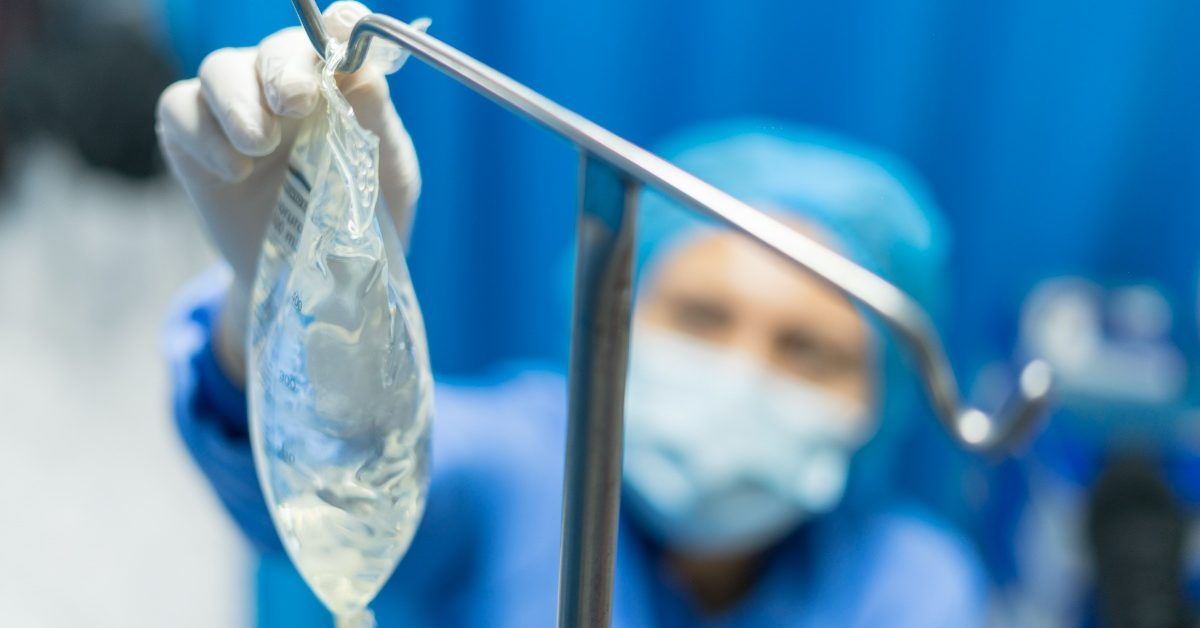
- RicardoImagen/E+/Getty Images Two companies recalled saline and other IV fluids over a 10-day period in August 2026.
- Fiberglass, stainless steel, rust, cotton, wood fibers, and plastic are the reported contaminants.
- Both companies said they had not received any reports of adverse events related to the recalled products, according to their announcements.
- Fiberglass, stainless steel, and other hazardous materials in intravenous (IV) fluid infusions prompted five recalls from two manufacturers that supply hospitals nationwide…
- Baxter International announced three of the recalls on August 25, an d B.
The story
- Two companies recalled saline and other IV fluids over a 10-day period in August 2026.
- Fiberglass, stainless steel, rust, cotton, wood fibers, and plastic are the reported contaminants.
- Both companies said they had not received any reports of adverse events related to the recalled products, according to their announcements.
Fiberglass, stainless steel, and other hazardous materials in intravenous (IV) fluid infusions prompted five recalls from two manufacturers that supply hospitals nationwide, according to the Food and Drug Administration (FDA).
Baxter International announced three of the recalls on August 25, an d B. Braun Medical announced one on August 19 and a second on August 27. Neither company said it has received reports of injury, death, or other adverse events related to the recalled fluids.
A Baxter spokesperson told Healthline the company identified the fiberglass in its saline through its own particulate testing, which uses filtration and microscopic analysis, and said Baxter is investigating potential root causes. B. Braun did not reply to a request for comment.
The implicated IV fluids went to healthcare providers, hospitals, and distributors, according to the five recall announcements.
“The recent recalls concern the manufacturing quality of particular lots — not the basic safety of saline itself,” said Robert Glatter, MD, assistant professor of Emergency Medicine at Zucker School of Medicine at Hofstra/Northwell, and emergency physician at Northwell Health.
“The broader message is not that saline has suddenly become dangerous. Normal saline remains a fundamental component of hospital care. These recalls instead highlight why sterile manufacturing, visual inspection, lot tracking and rapid removal of potentially contaminated IV products are essential patient-safety safeguards,” Glatter told Healthline.
Which IV fluids are being recalled?
B. Braun distributed its recalled saline nationwide to hospitals and healthcare facilities from February 27 to August 3, 2026, and announced the recall August 27, according to the company’s notice.
B. Braun first identified the particles as zinc oxide, then corrected the identification to iron oxide — a form of rust — on August 28, according to an update on the FDA posting.
Baxter distributed its recalled saline to 14 states over four days, July 31 to August 3, 2026, and announced the recall on August 25. Those bags were recalled for possibly containing fiberglass.
Other recalled fluids are less common
Not all of the affected lots involved in the IV fluid recall are widely used. Here’s a closer look.
- 70% dextrose injection — is a source of calories and fluid replenishment used in providing nutrition to patients through an IV. Baxter recalled one lot of 70% dextrose injection on August 25. Stainless steel particles floating in the solution prompted that recall.
- Lactated Ringer’s injection — is a source of water and electrolytes used for hydration and fluid replacement. The company recalled one lot of Excel Lactated Ringer’s injection on August 19 after finding particles identified primarily as cellulose cotton fiber, with individual particles of cellulose wood fiber and polystyrene.
- Anticoagulant sodium citrate solution — is used with the equipment that collects plasma and platelets from blood donors. It is not intended to enter a vein directly. A single recalled lot went to one customer for possibly containing fiberglass.
Who is affected by the IV fluid recall?
The IV fluid recall may impact individuals currently receiving intravenous fluids at home or in nursing facilities.
Baxter’s dextrose notice stated that home care facilities that had used the recalled lot to compound IV nutrition should contact their patients, tell them to stop using those solutions, and replace them with solutions made from a different lot.
The recall may also affect people who were recently hospitalized.
Anyone who felt unwell after an IV should mention it to a doctor. The recall notices advise patients to contact their healthcare professional if they suspect they’re experiencing problems that may be related to IV fluids.
“For someone specifically concerned about the recall, the most useful first step is to contact the hospital, infusion center or healthcare facility where the IV was administered. The facility can determine whether the saline came from one of the recalled lots,” Glatter said.
“Contact a healthcare professional if the IV site develops increasing redness, warmth, swelling, significant pain, drainage or red streaking, particularly if accompanied by fever or chills. These findings can indicate inflammation of the vein, leakage of fluid into surrounding tissue or, less commonly, infection.”
Glatter noted that more serious symptoms warrant immediate medical attention. These may include:
- new or unexplained shortness of breath
- chest pain
- fainting
- coughing up blood
- severe weakness
- sudden neurologic symptoms
“These symptoms have many possible causes and would be unusual after an uncomplicated IV, but they can also signal serious cardiovascular or pulmonary problems,” Glatter said.
“Patients with significant heart or kidney disease should additionally be alert for worsening shortness of breath or marked swelling after receiving large quantities of IV fluid because excessive fluid administration can occasionally contribute to fluid overload.”
Who is most at risk from IV contaminants?
Draft FDA guidance issued in December 2021 on inspecting injectable products for visible particles said different patient populations carry different risks of harm.
The guidance lists conditions that raise the risk of harm, among them:
- a personal or family history of blood clots
- recent major surgery
- cancer
- trauma
- active infection
- autoimmune disease
- diabetes-related vascular disease
Children and older adults may also face an elevated risk.
“Patients should also understand that simply having received normal saline recently does not mean they received recalled saline,” Glatter said. “Hospitals and healthcare facilities are expected to identify affected lot numbers, remove them from inventory and stop using them.”
What happens if particles enter the bloodstream?
The FDA’s draft guidance explains what happens when particles reach the bloodstream.
Citing published case reports, it lists infection, blockages in veins and arteries, microscopic blockages and abscesses in internal organs, and inflammation at the injection site.
Particles delivered into a vein generally cause more problems than ones injected under the skin or into a muscle, according to the guidance.
“The concern is that foreign particles should never be introduced directly into the bloodstream,” Glatter said.
“Depending upon their size and number, particles could theoretically irritate a vein, trigger inflammation or an allergic response, or obstruct blood vessels. In a severe situation, obstruction of the pulmonary (lung) circulation could produce a pulmonary embolism or organ injury.”
Baxter’s notices for sodium chloride injection and dextrose injection named the most severe outcomes. Both said the fiber glass or stainless steel particles can cause blockages and clotting in blood vessels, which in turn can:
- cut off blood flow to vital organs
- lead to a life-threatening blood clot in the lungs
- cause permanent organ damage or death
Both notices added that the particles may also irritate the vein, trigger swelling and redness, make an existing infection worse, and cause an allergic reaction.
B. Braun’s notices for sodium chloride injection and excel lactated ringer solution said there is a reasonable probability the particles could cause:
- a blockage in the blood vessels of the lungs
- blockages in other blood vessels, which can cause tissue to die and may damage organs
- inflammation of the vein walls, which can lead to clotting
Both notices added that particles carried through the bloodstream can also set off the immune system. Neither the companies nor the FDA have reported an injury from any of the recalled products.
What to know about saline IVs
Sodium chloride injection, better known as normal saline, is salt water mixed to match the concentration of the body’s own fluids.
Clinicians use 0.9% sodium chloride to hydrate patients, prime dialysis machines, and dilute other drugs before they go into a vein, according to DailyMed. It also has specialized uses in blood transfusion procedures.
Most people who receive routine IV fluids experience no significant problems. Mild bruising or tenderness where the IV was inserted may occur, Glatter said.
This versatility, he noted, is one reason why massive quantities of saline are used across emergency departments, operating rooms, intensive care units and hospital wards each day.
“Because its concentration is close enough to that of body fluids to be considered isotonic, it can be given directly into the bloodstream when clinically appropriate,” Glatter said. “It’s one of the workhorses of modern medicine.”
Recalled IV fluid lot numbers and expiration dates
Below is a full list of the IV fluid products affected by the recall:
Baxter International
0.9% Sodium Chloride Injection, USP, 500 mL VIAFLEX
- Lots: Y495523 and Y495523A
- Expiration: October 31, 2027
- Distributed: July 31 to August 3, 2026
- States: Florida, Illinois, Indiana, Louisiana, Maryland, Missouri, Nevada, New Jersey, New York, North Carolina, Ohio, South Carolina, Texas, and Virginia
- Recall announced: August 25, 2026
- Contaminant: Fiberglass
70% Dextrose Injection, USP, 2000 mL VIAFLEX
- Lot: Y495066
- Expiration: July 31, 2027
- Distributed: July 25 to July 28, 2026
- States: Alabama, Georgia, and Tennessee
- Recall announced: August 25, 2026
- Contaminant: Stainless steel
Anticoagulant Sodium Citrate 4% w/v Solution USP, 250 mL VIAFLEX
- Lot: Y493475
- Expiration: December 31, 2027
- Distributed: July 2 to July 11, 2026, to a single U.S. customer
- Recall announced: August 25, 2026
- Contaminant: Fiberglass
B. Braun Medical
0.9% Sodium Chloride Injection USP, 100 mL in 150 mL PAB container
- Lots: J6B435, J6B444, and J6B457
- Expiration: April 30, 2027
- Distributed: February 27 to August 3, 2026, nationwide
- Recall announced: August 27, 2026
- Contaminant: Iron oxide (corrected from an earlier identification of zinc oxide)
Excel Lactated Ringer’s Injection, 1000 mL
- Lot: J4H077
- Expiration: November 30, 2026
- Distributed: August 29 to September 30, 2024, nationwide and to Canada
- Recall announced: August 19, 2026
- Contaminant: Cellulose cotton fiber (with individual particles of cellulose wood fiber and polystyrene)
How to report a problem about IV fluids or ask a question
- Baxter takes calls at 888-229-0001 on weekdays from 7 a.m. to 6 p.m.
- Central. B. Braun answers by email at [email protected] on weekdays from 8 a.m. to 5 p.m. Eastern.
- People can report a problem to the FDA through MedWatch at www.fda.gov/medwatch/report.htm or by calling 1-800-332-1088.
Related Markets
All MarketsMarket data may be delayed. Not financial advice.
Powered by Gab AI
The Story At A Glance
Reading this article now — analysis appears below
💡 AI analysis provides alternative perspectives on current events



