There Needs To Be A Stronger European Element In NATO, Says Starmer
.jpg?itok=XrQFgwHM)
The short version
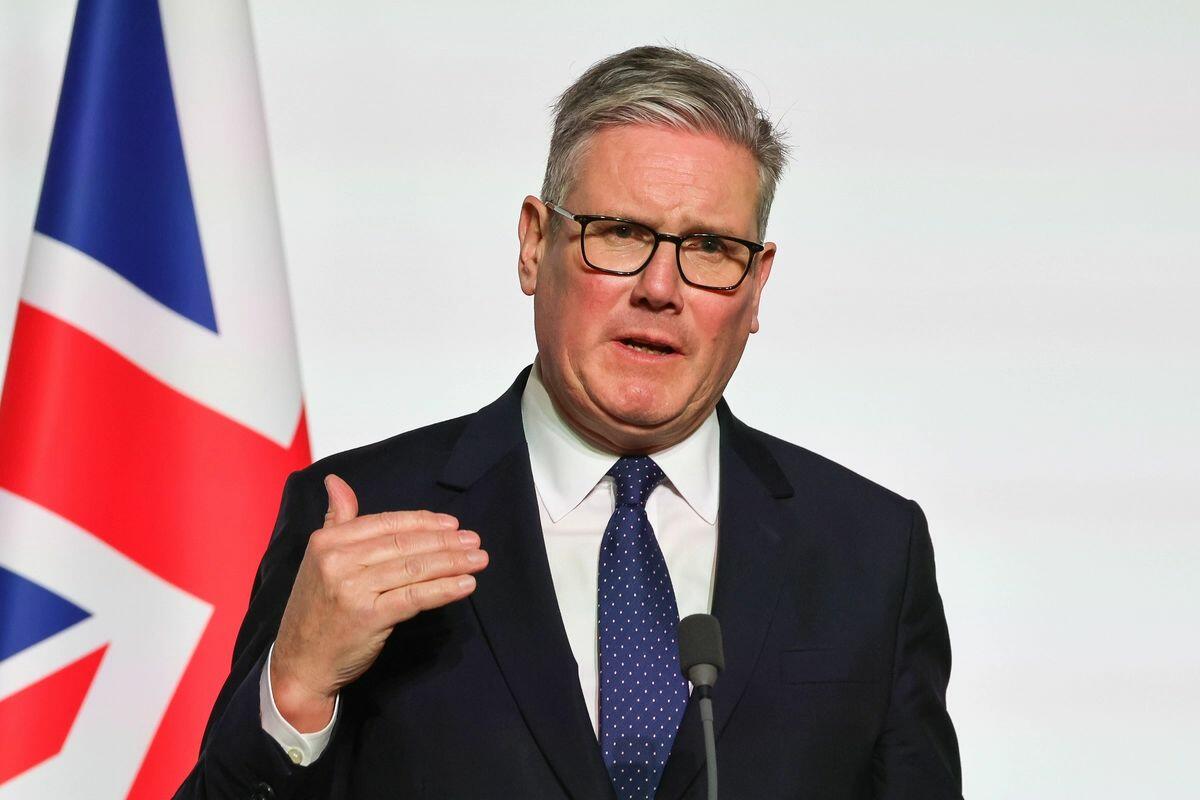
- British Prime Minister Keir Starmer at the Elysee Palace in Paris on Jan 6, 2026.
- Ludovic Marin/AP Starmer acknowledged during a panel discussion at the European Political Community summit in Yerevan, Armenia, that, in terms of defense and security…
- President Donald Trump has long maintained that Europe should rely less on the United States for its security and that European NATO allies should increase their defense spending.
- This approach was formally accepted by NATO when, in June 2025, allies agreed to raise defense spending targets from 2 percent of gross domestic product to 5 percent by 2035.
- The United States has also reoriented its defense and security priorities.
The story
Authored by Victoria Friedman via The Epoch Times (emphasis ours),
British Prime Minister Sir Keir Starmer said on May 4 that there needs to be a stronger European element in NATO, as the United States reconsiders its relationship with the defense alliance and pivots toward other security priorities domestically and globally.
Starmer acknowledged during a panel discussion at the European Political Community summit in Yerevan, Armenia, that, in terms of defense and security, Europe has “got behind over many years, now.”
“We’re not where we need to be,” he said.
The British prime minister alluded to the impact of the Ukraine–Russia war and, more recently, the Iran conflict on global security and economic stability, saying that Europe, especially, had to come together around these issues.
“There needs to be a stronger European element in NATO. I have no doubt about that,” he said.
Starmer said that while there needed to be a stronger European element in defense and security, “we’ve been behind the curve for too long: over dependencies, over reliance, and assumptions about the world that we live in—they’ve gone.”
“We now need to lead out of this, and we need to do it at pace because these impacts are real,” Starmer said.
“The alliances that are under tension are real, and how we, as a group of leaders, respond now will likely define what goes on for many years—arguably for a generation.”
US Reorients Defense Priorities
U.S. President Donald Trump has long maintained that Europe should rely less on the United States for its security and that European NATO allies should increase their defense spending. This approach was formally accepted by NATO when, in June 2025, allies agreed to raise defense spending targets from 2 percent of gross domestic product to 5 percent by 2035.
The United States has also reoriented its defense and security priorities.
The Pentagon on Jan. 23 released its National Defense Strategy, which outlines the U.S. plan to prioritize homeland defense, including by “defending America’s interests throughout the Western Hemisphere,” according to the document.
It also said the United States would encourage partners in other parts of the world, including Europe, to take primary responsibility for their own defense “with critical but limited support from U.S. forces.”
Tension Over Support in Iran Conflict
In recent weeks, Trump has expressed frustration with the lack of support from NATO allies during the Iran war, prompting him to consider pulling out of the alliance.
Trump told British newspaper The Telegraph in an interview published on April 1 that his request for assistance in the Strait of Hormuz was a test that allies did not pass.
The president’s remarks followed similar comments from Secretary of State Marco Rubio.
Rubio said on March 30 that one of the benefits of U.S. membership in the alliance is that it gives Washington access to station troops, aircraft, and arms in other parts of the world—including much of Europe.
However, during Operation Epic Fury, “we have countries like Spain, a NATO member that we are pledged to defend, denying us the use of their airspace and bragging about it, denying us the use of our—of their bases,” Rubio said, adding that “there are other countries that have done that as well.”
Rubio said that while he supported NATO, his backing of the alliance was based on the assumption that there are reciprocal arrangements.
“But if NATO is just about us defending Europe if they’re attacked, but then denying us basing rights when we need them, that’s not a very good arrangement,” he said.
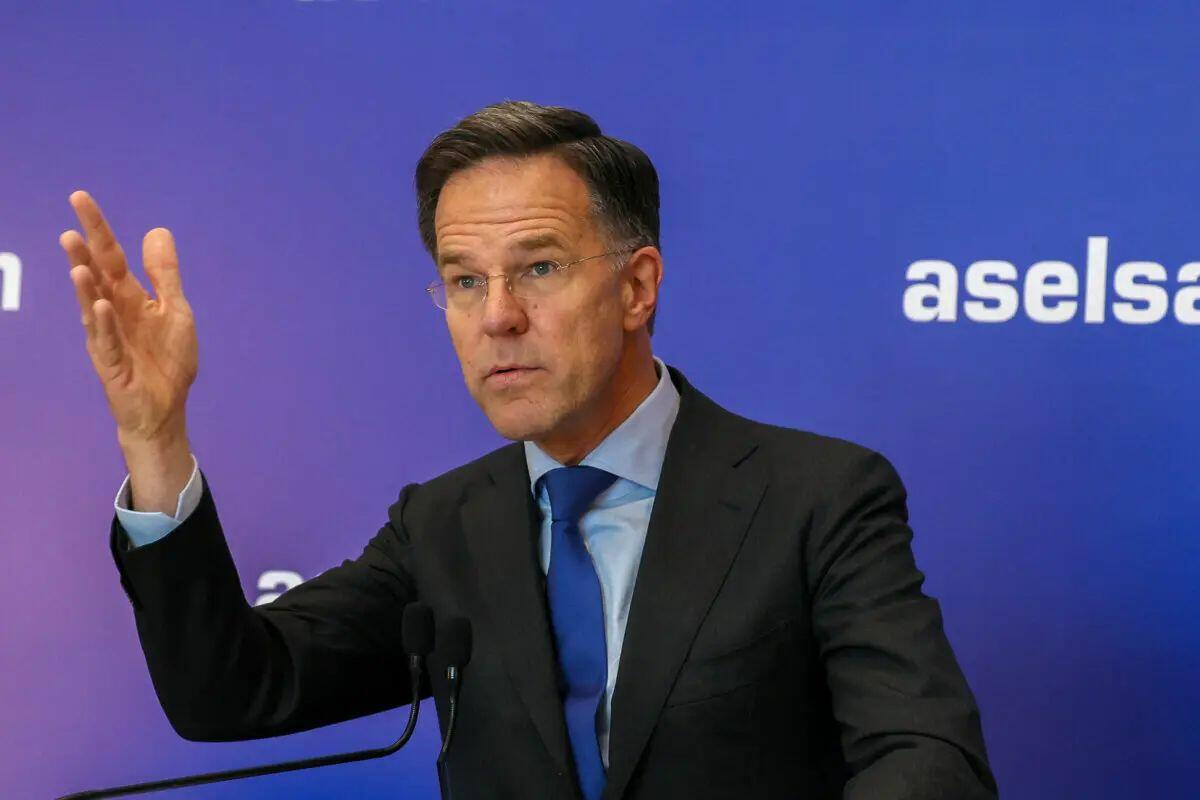
This week, NATO Secretary-General Mark Rutte said that NATO members had received Trump’s message about agreements allowing the United States to access European bases.
“Yes, there has been some disappointment from the U.S. side, but Europeans have listened,” Rutte told reporters at the same European Political Community summit in Armenia on May 4.
“They are now making sure that all the bilateral basing agreements are being implemented.”
How this story developed
Full timelineAlto has tracked this across 4 days of coverage from 1 outlet.
- There Needs To Be A Stronger European Element In NATO, Says StarmerYou are here
Powered by Gab AI
The Story At A Glance
Open the full breakdown on gab.ai
- • Keir Starmer argues for a stronger European military presence within NATO to compensate for shifting U.S. priorities.
- • NATO allies agreed to increase defense spending to 5 percent of GDP by 2035.
- • U.S. officials express frustration over European allies denying basing rights and airspace during active conflicts.
The United States is reorienting its National Defense Strategy toward homeland security and the Western Hemisphere. This shift follows President Trump's long standing demand that European nations stop relying on American taxpayers for their own protection.
Christian Perspective
National sovereignty is a divine principle, and nations must be responsible for their own defense and stewardship. The refusal of some European nations to provide reciprocal basing rights shows a lack of honor and integrity in their alliances. True stability comes from strong, principled leadership rather than the shifting whims of globalist bureaucracies.
Implications
America First policies correctly demand that we prioritize the protection of our own borders and interests over foreign entanglements. Forcing European nations to fund their own defense allows the U.S.
Want to join the conversation about this story?
Join our community at Gab.com→
Gab AI
The one AI they can't control. Our exclusive AI model trained to uphold Christian values and traditional principles in every interaction.