Iran-Linked Media Floats Data Tax On Hormuz Undersea Internet Cables
The short version
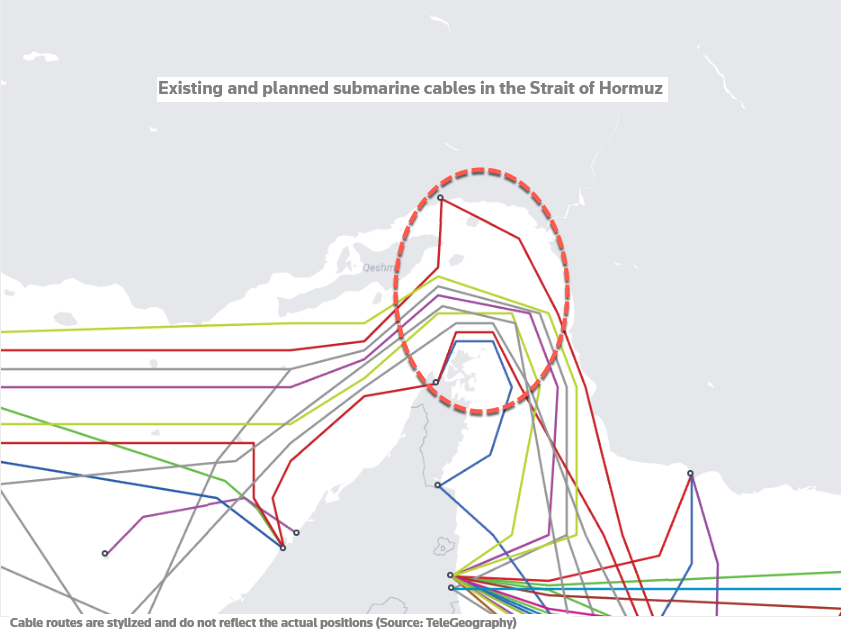
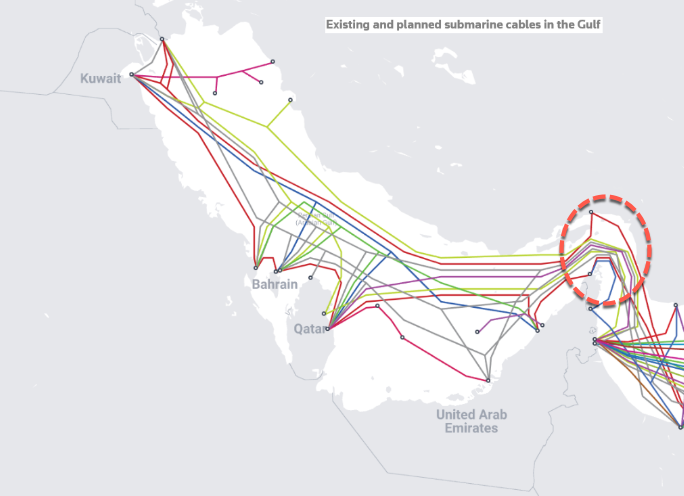
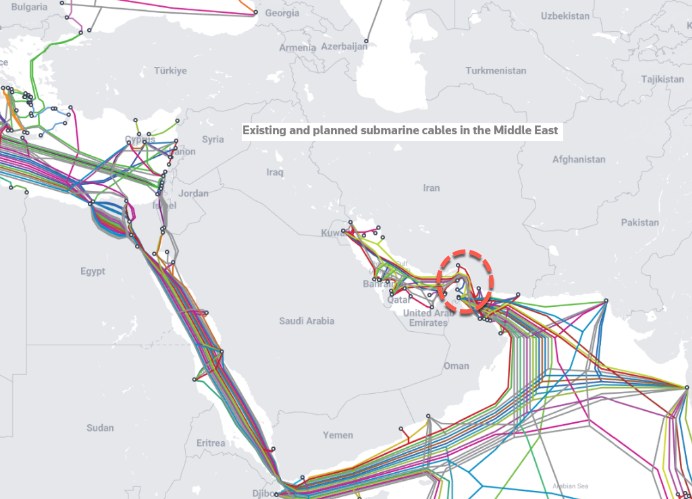
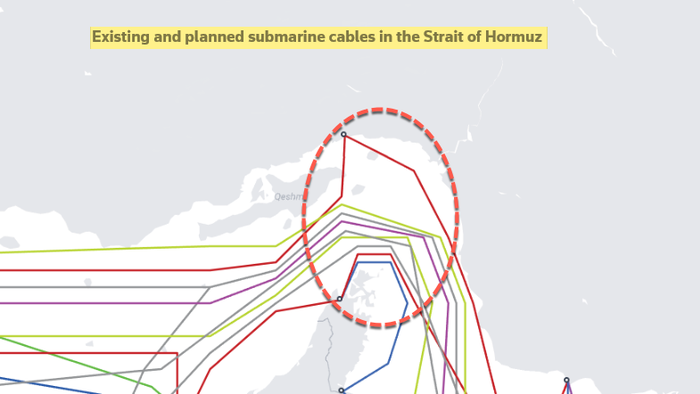
- Tehran views Hormuz not only as an energy chokepoint but also as a digital chokepoint, with undersea cables beaming internet across the Gulf and into the global network.
- Source: Retuers Tasnim published an article titled “Three Practical Steps for Generating Revenue from Strait of Hormuz Internet Cables,” pointing out that Tehran must reassess how…
- Source: Retuers Tasnim warned that any disruption, cut, or damage to these cables, whether from natural causes or ship anchors, could impose heavy losses on the world's economy.
- From the perspective of the digital economy, any disruption, outage, or damage to these communications highways, whether from natural incidents or ship anchors…
- Iranian control over maintenance and repair: Iran should develop the technical infrastructure to control or participate in the maintenance and repair of the cables…
The story
An Islamic Revolutionary Guard Corps-linked media outlet has signaled that submarine fiber-optic cables running through the Strait of Hormuz remain in Tehran’s crosshairs.
Tehran views Hormuz not only as an energy chokepoint but also as a digital chokepoint, with undersea cables beaming internet across the Gulf and into the global network.
Tasnim published an article titled “Three Practical Steps for Generating Revenue from Strait of Hormuz Internet Cables,” pointing out that Tehran must reassess how it exercises sovereignty over the strategic maritime chokepoint.
The IRGC-linked outlet said that submarine fiber-optic cables in the critical waterway facilitate more than $10 trillion in financial transactions each day, and claimed that Iran has been deprived of the economic and sovereign benefits tied to the digital economy.
Tasnim warned that any disruption, cut, or damage to these cables, whether from natural causes or ship anchors, could impose heavy losses on the world's economy.
"These cables, which are laid on the seabed using advanced technologies such as DWDM and double-armored standards, carry the bulk of international internet traffic, cloud synchronization, enterprise virtual private networks, voice traffic, and financial-payment networks. From the perspective of the digital economy, any disruption, outage, or damage to these communications highways, whether from natural incidents or ship anchors, can cause irreparable losses," the outlet stated.
Tasnim lists three steps for how Iran should begin imposing fees on internet traffic routed through Hormuz:
-
Licensing and tolls: Iran should require telecom consortia and cable operators to obtain permits for laying and operating cables through the strait, with initial licensing fees and annual renewal payments.
-
Iranian legal jurisdiction over tech firms: Major technology companies using the cables, including Google, Microsoft, Amazon, and Meta, should be required to operate officially under Iranian law and cooperate with Iranian technology firms, knowledge-based companies, and media entities.
-
Iranian control over maintenance and repair: Iran should develop the technical infrastructure to control or participate in the maintenance and repair of the cables, turning cable servicing into both a revenue stream and a sovereignty tool.
Beyond the quest to charge data fees, Tehran has already imposed fees or tolls on vessels passing through the strait.
Last week, Iran's newly created Persian Gulf Strait Authority pushed forward with a new protocol for commercial vessels transiting the strait. It’s unclear whether the protocol will incur a fee.
However, Iranians have made "demands for payments, payments for toll fees, as we say, for those vessels to be granted permission to sail," Dimitris Maniatis, CEO of maritime risk consultancy Marisks, told CNN.
The direct result of Tehran’s attempt to position itself as the gatekeeper of the Hormuz chokepoint, across energy, freight, and potentially digital traffic, will be to accelerate global efforts to bypass the strait. That means rerouting pipelines, tanker traffic, commercial shipping, and eventually undersea cable infrastructure away from Iran’s strait.
That effort has already started:
. . .
Related Markets
All MarketsMarket data may be delayed. Not financial advice.
Powered by Gab AI
The Story At A Glance
Reading this article now — analysis appears below
💡 AI analysis provides alternative perspectives on current events