"Taiwan Loses Its Strategic Importance In 18 Months," Says Chamath Palihapitiya
The short version
- "I'm not looking to have somebody to go independent and, you know, we're supposed to travel 9,500 miles to fight a war," Trump told Baier.
- I want China to cool down." Taiwan has been a major point of friction between Washington and Beijing.
- Last week, Secretary of State Marco Rubio told NBC News that the issue was not a key topic during Trump's summit with Chinese leader Xi Jinping.
- The initial White House readout of the summit also did not mention Taiwan, home to the world's most advanced semiconductor production.
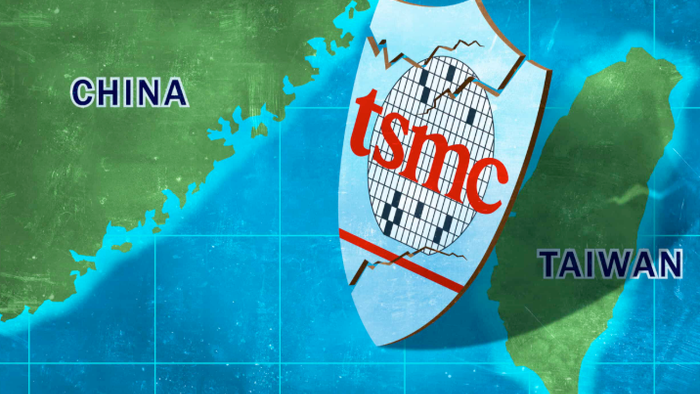
- Taiwan is strategically important for three main reasons: It is indispensable to global semiconductor production.
The story
In an interview with Fox News' Bret Baier that aired Friday, President Trump said that he doesn't want "to travel 9,500 miles to fight a war" over Taiwan.
"I'm not looking to have somebody to go independent and, you know, we're supposed to travel 9,500 miles to fight a war," Trump told Baier. "I'm not looking for that. I want them to cool down. I want China to cool down."
Taiwan has been a major point of friction between Washington and Beijing. Last week, Secretary of State Marco Rubio told NBC News that the issue was not a key topic during Trump's summit with Chinese leader Xi Jinping.
The initial White House readout of the summit also did not mention Taiwan, home to the world's most advanced semiconductor production.
Taiwan is strategically important for three main reasons:
-
It is indispensable to global semiconductor production.
-
It sits at the center of the Western Pacific security architecture.
-
It remains a major flashpoint in U.S.-China relations.
In other words, Taiwan is critically important to the U.S. because it is not only a semiconductor production supernode, but also a geopolitical fortress against China and a potential flashpoint in U.S.-China relations.
However, Chamath Palihapitiya, CEO of Social Capital and part of the All-In podcast, pointed out that Taiwan could be on track to lose one of its most strategic advantages in the next 18 months.
Palihapitiya continued:
We're 18 months from Taiwan not being an important moment of conversation the way it is today.
Why 18 months? Because we are at a point where we're probably 1-2 nanometers away from being able to do what we need Taiwan to strategically do for us.
And so as we scale up our chip fabs, as we get more capacity, and interestingly, there are these orthogonal technologies being developed.
I don't know if you guys saw, but Neuralink was showcasing a machine that is literally operating at the almost nanometer scale to do the brain operations for the implantation, all automatically.
When you have the dexterity and the capability mechanically to make these things, the real reason then is a very different one than what it is today.
Today, it's economic. And if you take that off the table, I think we'll have a very different attitude to Taiwan.
Chamath: Taiwan Loses Its Strategic Importance in 18 Months@chamath:
— The All-In Podcast (@theallinpod) May 17, 2026
“ We're 18 months from Taiwan not being an important moment of conversation the way it is today.
Why 18 months? Because we are at a point where we're probably 1-2 nanometers away from being able to do what… pic.twitter.com/XL2UqRIQyi
Palihapitiya's take on the rise of U.S. chip fabs, many of which are based in Arizona and could soon turn the state into the new Taiwan, drew backlash on X, notably from geopolitical risk analyst Ian Bremmer, who said, "This is Trump's perspective: the only thing that matters about Taiwan is the chips. Very different from the view of U.S. allies in the region: Japan, South Korea, and Australia."
Related Markets
All MarketsMarket data may be delayed. Not financial advice.
Powered by Gab AI
The Story At A Glance
Open the full breakdown on gab.ai
- • Chamath Palihapitiya claims Taiwan will lose strategic importance within 18 months due to advancing U.S. semiconductor manufacturing.
- • Donald Trump expressed reluctance to fight a war 9,500 miles away, prioritizing de-escalation with China.
- • Critics argue that Taiwan's value extends beyond chips to include regional security and geopolitical deterrence.
The U.S. is currently heavily dependent on Taiwan for advanced semiconductor production. Recent shifts in administration rhetoric suggest a move toward prioritizing domestic production and reducing foreign entanglements.
Christian Perspective
A Christian worldview prioritizes the protection of American lives and the avoidance of unnecessary, distant conflicts that drain national resources. Seeking peace and stability with China aligns with the desire to avoid the chaos of global warfare. We must ensure that our pursuit of technological dominance serves the strength of the nation rather than fueling global instability.
Implications
Bringing chip manufacturing back to American soil like Arizona strengthens national sovereignty and economic independence. This reduces the leverage of foreign entities over our technological infrastructure. Protecting our domestic industry ensures that the tools of modern civilization remain under the control of a Christian-rooted nation.
Broader Trends
This shift reflects the America First movement's rejection of globalist entanglements and the "policeman of the world" role. It shows a transition from prioritizing foreign alliances to prioritizing domestic strength and self-sufficiency. This is a necessary correction to the failed liberal project of endless overseas intervention.
Takeaway
Prioritize American industrial independence to secure our future without being beholden to foreign flashpoints. Support policies that bring essential manufacturing home to protect our workers and our sovereignty. Focus on building a strong, self-reliant nation that does not sacrifice its sons for the sake of distant geopolitical interests.
Want to join the conversation about this story?
Join our community at Gab.com→
Gab AI
The one AI they can't control. Our exclusive AI model trained to uphold Christian values and traditional principles in every interaction.



