Switzerland To Vote On Capping Population At 10 Million
The short version
- The " No to a Switzerland with 10 Million" initiative , backed by the right-wing Swiss People’s Party (SVP), seeks to amend the Federal Constitution to keep the population below…
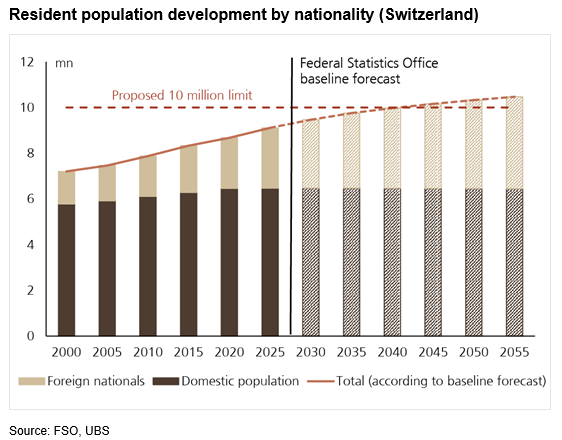
- Rapid Growth Switzerland’s population stands at approximately 9.1 million as of early 2026.
- It has grown by roughly 1.9 million since 2000, with net international migration accounting for about 80% of that increase .
- Natural population growth (births minus deaths) remains very low due to a fertility rate of around 1.3 children per woman.
- Net migration into the permanent resident population has averaged 60,000–90,000 annually in recent years, though it declined modestly in 2025.
The story
In less than four weeks, on June 14, Swiss voters will decide on a proposal that, if passed, would mark a constitutional first: enshrining a hard limit on the country’s total permanent resident population.
The "No to a Switzerland with 10 Million" initiative, backed by the right-wing Swiss People’s Party (SVP), seeks to amend the Federal Constitution to keep the population below 10 million until 2050. If thresholds are approached or breached, the government would be required to tighten asylum and family reunification rules and renegotiate or terminate international agreements—including the landmark Agreement on the Free Movement of Persons with the EU—that contribute to population growth.
Rapid Growth
Switzerland’s population stands at approximately 9.1 million as of early 2026. It has grown by roughly 1.9 million since 2000, with net international migration accounting for about 80% of that increase. Natural population growth (births minus deaths) remains very low due to a fertility rate of around 1.3 children per woman.
Foreign nationals currently make up roughly 27% of the resident population (about 2.5 million people as of late 2024/early 2025 data), a share that has risen steadily:
- Around 2011 (15 years ago): ~22–23%
- Around 2016 (10 years ago): ~25%
- Today: ~27% foreign nationals (foreign-born and migration-background shares are higher, reaching ~40% when including naturalized citizens and second-generation residents)
Most foreign residents come from EU/EFTA countries (around 63–82% of the foreign population), primarily for work. Net migration into the permanent resident population has averaged 60,000–90,000 annually in recent years, though it declined modestly in 2025.
The Case for a Cap
Supporters argue that sustained high immigration, while economically beneficial in many respects, has created tangible pressures in a small, mountainous country with limited space for expansion. Key concerns include:
- Housing shortages and rising rents, especially in urban centers like Zurich and Geneva.
- Overcrowded public transport and congested roads.
- Strain on schools, healthcare, and the environment.
- Questions about long-term social cohesion and infrastructure sustainability.
Proponents frame the initiative as a pragmatic “sustainability” measure—prioritizing quality of life and per-capita prosperity over indefinite aggregate growth. In a nation with one of the world’s highest standards of living, they ask a straightforward question: How big should Switzerland be?
But What About Worker Shortages?
Opponents, including the Federal Council, a parliamentary majority, and much of the business community, warn that a rigid constitutional cap could backfire. Key arguments:
- Switzerland’s economy relies heavily on foreign talent to fill skilled positions in pharmaceuticals, finance, engineering, healthcare, and hospitality.
- An aging society needs workers to sustain pensions and public services.
- Terminating or renegotiating EU bilateral agreements risks damaging market access, research collaboration, and overall economic dynamism.
- Existing tools (quotas, safeguard clauses, and labor market preferences) already allow for managed migration; a blunt population target introduces uncertainty and potential labor shortages.
Critics also note that recent net migration has moderated somewhat and that many immigrants integrate successfully and contribute significantly through taxes and innovation.
Popular Idea
Recent polls show the outcome is too close to call, with support hovering around 47–52% depending on the survey. Parliament recommends rejection, but the decision rests directly with voters in Switzerland’s system of direct democracy.
The referendum reflects a deeper European tension: how to reconcile low native fertility, labor needs, and the desire to preserve national character, infrastructure capacity, and social trust. Unlike fertility policies or temporary immigration quotas tried elsewhere, Switzerland’s proposal is unique in attempting a constitutional limit on total population stock.
Related Markets
All MarketsMarket data may be delayed. Not financial advice.
How other outlets covered this
Compare allAlto found this story at 3 outlets. Same event, different framing — compare the headlines.
- New York Post — ImmigrationSwitzerland just set a great example for America on immigration — we need to have a national conversation2 months ago
- Google NewsSwiss voters set to vote on capping population at 10 million - Euronews3 months ago
- ZeroHedgeSwitzerland To Vote On Capping Population At 10 Million3 months ago
How this story developed
Full timelineAlto has tracked this across 4 days of coverage from 3 outlets.
- Switzerland To Vote On Capping Population At 10 MillionYou are here
Powered by Gab AI
The Story At A Glance
Reading this article now — analysis appears below
💡 AI analysis provides alternative perspectives on current events